
Switzerland’s Migros profits from unique aspects of Swiss property market

Swiss pension fund MPK has withstood a difficult year in bonds and equities thanks to its large allocation to real estate. More people tend to rent than buy apartments creating steady demand for rental properties says chief executive, Christoph Ryter.

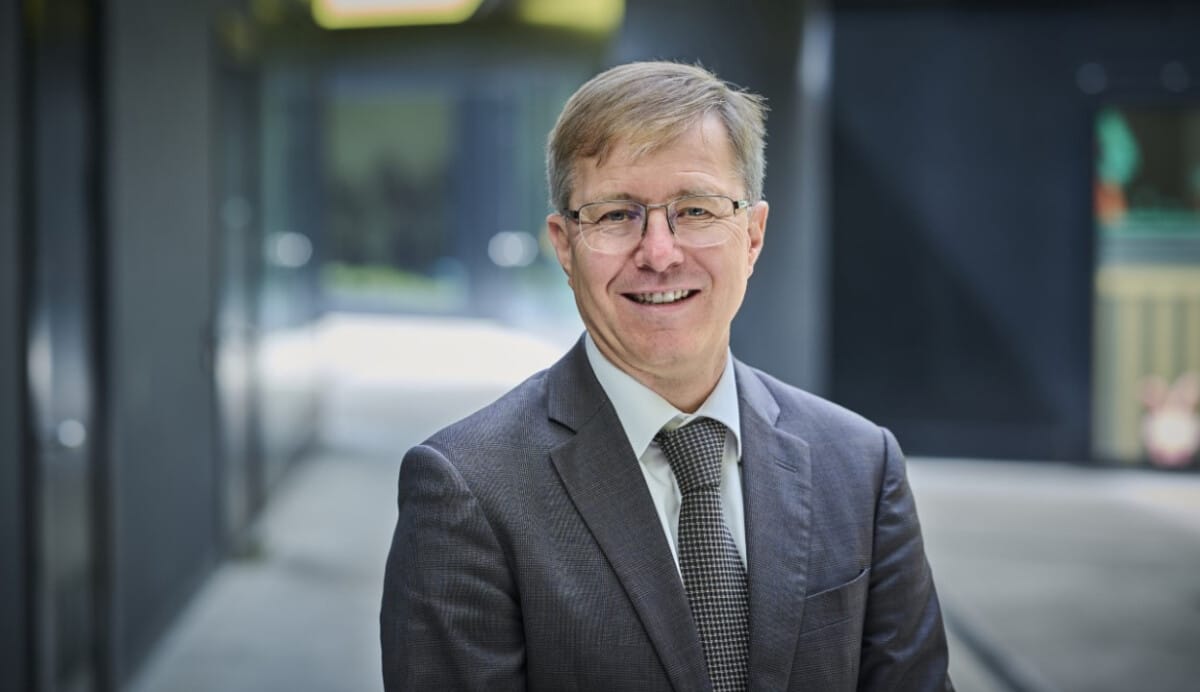
A large allocation to real estate at Migros-Pensionskasse (MPK) the CHF28.25 billion ($30.3 billion) pension fund for Switzerland’s largest retailer, Migros, supported returns in a difficult year, says MPK CEO Christoph Ryter in an interview with Top1000funds.com from his Zurich office.

“Real estate has been helpful in reducing our losses in equities and bonds,” he says. “Our high strategic asset allocation to real estate has been the main reason we performed better than other pension funds.” The fund has just recorded a loss of 5.6 per cent last year and a 9.4 per cent decline in the funding ratio to 124.5 per cent.

MPK’s strategic allocation to real estate and infrastructure (37 per cent) is larger than most of other pension funds in Switzerland. Other allocations comprise nominal value investments (33 per cent) equities (28 per cent) and gold (2 per cent). The real estate allocation is divided between a larger direct investment portfolio in Switzerland managed internally, and an international allocation that includes infrastructure, comprising fund investment and collective vehicles.

Returns

The bulk of MPK’s local real estate allocation is invested in rental apartments where valuations have escaped the impact of rising interest rates, and demand has been buoyant thanks to a jump in the number of people coming to live in Switzerland.

Moreover, unlike the United Kingdom or US market, more people in Switzerland tend to rent accommodation rather than buy their own properties in a cultural norm that means MPK has no plans to tweak the exposure. “In Switzerland, it’s more common to rent,” says Ryter. Around 80 per cent of the local real estate portfolio is rental apartments with the remainder invested in offices and commercial premises.

Sponsored Content

A single apartment lying empty will not really influence the total portfolio, he adds. In contrast, empty shops hit malls hard. “The volatility in rental apartments is much lower than in offices and commercial spaces.”

However, Ryter believes valuations are set to decline ahead. “Real estate valuations will decline over time although there will be some lag,” he predicts. Although he expects enduring rental demand for apartments, long-term, he expects gains in valuations to vanish or turn negative.

Ryter says another ingredient adding to the success of the portfolio comes from the fact most of the people running the properties the pension fund owns (cleaners to estate agents showing people around) are also employees of MPK. The identification with the portfolio is therefore much greater, he says.

One of the biggest challenges to the strategy in recent years has been finding enough properties in Switzerland to fill the target allocation. As MPK’s assets under management grew with buoyant returns from bonds and equities, it struggled to fill the illiquid allocation where buying and selling is slow and finding projects and securing permits time-consuming. Now bonds and equities have fallen back the target allocation is back on track.

“We are under less pressure to find new projects and to increase the allocation,” he says.

ESG

MPK has long-term targets to integrate ESG across the real estate portfolio, retrofitting heating systems and installing installation. However, Ryter charts slow and steady progress  to protect returns.

“We have to be careful, and take the long view,” he says.

“Real estate is the best asset class to do something good for the environment. It is really possible to change things for good, unlike bonds or equities where you can sell but someone else buys it.”


Leave a Comment

TPA to usher in clearer accountability at CalPERS

TPA to usher in clearer accountability at CalPERS

CalPERS chief investment officer Stephen Gilmore said the $650 billion fund’s upcoming shift to a total portfolio approach will sharpen investment accountability and help it focus capital allocation decisions on fund-level objectives.

Sort content by

At a glance: FIS Cambridge day three

An overwhelming number of delegates at the Fiduciary Investors Symposium said the funds management industry was not doing well in innovationMartin Gilbert, who started Aberdeen Standard Investments in 1983 and is now chair, said industry participants needed to innovate and disrupt themselves.

Different ways to navigate risk

Institutional investors are navigating the different risks that can impact their portfolios in different ways, explained chief risk offers speaking at the Fiduciary Investors Symposium in Cambridge. Arjen Pasma, chief risk officer at Dutch asset manager PGGM noted how risks span investment risk, counterparty risk, liquidity risk and ESG risk. Measuring ESG risk in the manager’s large allocation to private markets where each deal is scored on ESG and climate risk is particularly important, he said.

How to build innovation

Innovation is more important than ever given the uncertain and ambiguous times that lie ahead for institutional investors like climate change, political dysfunction and poor returns. “Returns can only come from an ecosystem that works and we need innovation to do this,” said Roger Urwin, global head of investment content, Willis Towers Watson speaking at the Fiduciary Investors Symposium at Cambridge University.

Climate change risk to spur stress test

Mercer has quantified a ‘low-carbon transition’ premium in the sequel to its seminal climate change report, showing that a 2⁰C scenario equates to 11 basis points per annum to 2030 in a typical growth portfolio.

Long-term investors must engage

Long-term infrastructure investors need to engage with the public and do much more to build trust in the value of their capital, said Brett Himbury, chief executive, IFM Investors (Australia), the global infrastructure manager, owned by 27 leading pension funds with $120 billion AUM.

A practical guide to the long-term

Thinking and acting long-term and holding their service providers to account on long-term risk behaviours and measures, is one of asset owners’ most enduring challenges. Speaking at the Fiduciary Investors Symposium at Cambridge University a panel of experts highlighted important tools asset owners can deploy to ensure they stay focused on the long-term.

Previous



