
Switzerland’s Migros profits from unique aspects of Swiss property market

Swiss pension fund MPK has withstood a difficult year in bonds and equities thanks to its large allocation to real estate. More people tend to rent than buy apartments creating steady demand for rental properties says chief executive, Christoph Ryter.

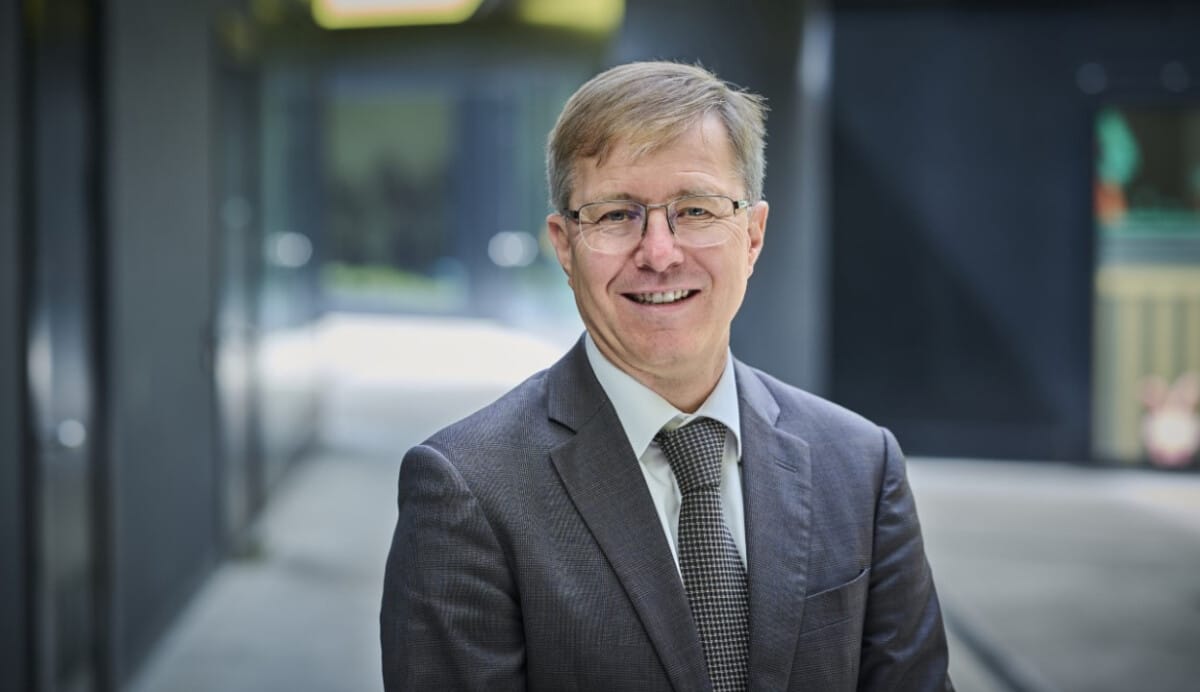
A large allocation to real estate at Migros-Pensionskasse (MPK) the CHF28.25 billion ($30.3 billion) pension fund for Switzerland’s largest retailer, Migros, supported returns in a difficult year, says MPK CEO Christoph Ryter in an interview with Top1000funds.com from his Zurich office.

“Real estate has been helpful in reducing our losses in equities and bonds,” he says. “Our high strategic asset allocation to real estate has been the main reason we performed better than other pension funds.” The fund has just recorded a loss of 5.6 per cent last year and a 9.4 per cent decline in the funding ratio to 124.5 per cent.

MPK’s strategic allocation to real estate and infrastructure (37 per cent) is larger than most of other pension funds in Switzerland. Other allocations comprise nominal value investments (33 per cent) equities (28 per cent) and gold (2 per cent). The real estate allocation is divided between a larger direct investment portfolio in Switzerland managed internally, and an international allocation that includes infrastructure, comprising fund investment and collective vehicles.

Returns

The bulk of MPK’s local real estate allocation is invested in rental apartments where valuations have escaped the impact of rising interest rates, and demand has been buoyant thanks to a jump in the number of people coming to live in Switzerland.

Moreover, unlike the United Kingdom or US market, more people in Switzerland tend to rent accommodation rather than buy their own properties in a cultural norm that means MPK has no plans to tweak the exposure. “In Switzerland, it’s more common to rent,” says Ryter. Around 80 per cent of the local real estate portfolio is rental apartments with the remainder invested in offices and commercial premises.

Sponsored Content

A single apartment lying empty will not really influence the total portfolio, he adds. In contrast, empty shops hit malls hard. “The volatility in rental apartments is much lower than in offices and commercial spaces.”

However, Ryter believes valuations are set to decline ahead. “Real estate valuations will decline over time although there will be some lag,” he predicts. Although he expects enduring rental demand for apartments, long-term, he expects gains in valuations to vanish or turn negative.

Ryter says another ingredient adding to the success of the portfolio comes from the fact most of the people running the properties the pension fund owns (cleaners to estate agents showing people around) are also employees of MPK. The identification with the portfolio is therefore much greater, he says.

One of the biggest challenges to the strategy in recent years has been finding enough properties in Switzerland to fill the target allocation. As MPK’s assets under management grew with buoyant returns from bonds and equities, it struggled to fill the illiquid allocation where buying and selling is slow and finding projects and securing permits time-consuming. Now bonds and equities have fallen back the target allocation is back on track.

“We are under less pressure to find new projects and to increase the allocation,” he says.

ESG

MPK has long-term targets to integrate ESG across the real estate portfolio, retrofitting heating systems and installing installation. However, Ryter charts slow and steady progress  to protect returns.

“We have to be careful, and take the long view,” he says.

“Real estate is the best asset class to do something good for the environment. It is really possible to change things for good, unlike bonds or equities where you can sell but someone else buys it.”


Leave a Comment

Finland’s Elo: Larger equity allocations promise new media scrutiny

Finland’s Elo: Larger equity allocations promise new media scrutiny

As Finland's pension funds prepare to increase their equity allocations to unprecedented levels compared to global peers, they must also navigate a new and unfamiliar risk. Elo's chief investment officer Jonna Ryhänen explains the fund's investment approach going forward and how it will manage stakeholder and media scrutiny as they react to swinging volatility and returns.

Sort content by

Roger Gray reflects on his time at USS

In what will be exactly a decade leading and transforming the Universities Superannuation Scheme investment office, Roger Gray will step down in September. Amanda White spoke to him about investments, governance, the self-possession needed to thrive in funds management, and what’s next.

Infra performance benchmarks wanting

The EDHECinfra/G20 survey of infrastructure benchmarking practices, which included representatives of 130 asset owners accounting for $10 trillion, has found that existing performance monitoring benchmarks are self-defeating for asset owners and managers. But improvement, in the form of a more representative, better defined benchmark, may be possible thanks to recent progress.

Why ATP adopted the FX Global Code

ATP is one of only five pension funds globally to officially adopt the FX Global Code by signing the “statement of commitment to the FX global code”. Thomas Bengtsson, senior portfolio manager at ATP and the fund’s representative on the Scandinavian FX Committee, explains why it is important for the fund.

UK mega fund slashes managers

In line with its strategy to reduce costs, while maintaining returns, one of the UK’s new mega funds, the £45 billion LGPS Central will reduce the number of managers it uses from 250 to 50.

The value creation boundary

The value creation boundary, a margin between innocent bystanders and the parties involved in an economic activity, is a powerful thinking device for asset owners and managers to use in considering their investment responsibilities. So should long-term investors expand the boundary and include more of humanity in the consequences of investment decisions?

Infra risks misunderstood

Investors in infrastructure do know how much risk they are taking and they are not happy about it, according to the 2019 EDHECinfra/G20 survey. This is the first installment of a three part series examining the results according to asset allocation, monitoring and risk management.

Previous



