

Society can reverse the rapid decline in biodiversity by changing habits, of which reducing meat consumption is the most effective. Trade also helps restore biodiversity because it lets land recover by allocating agricultural production to different areas.
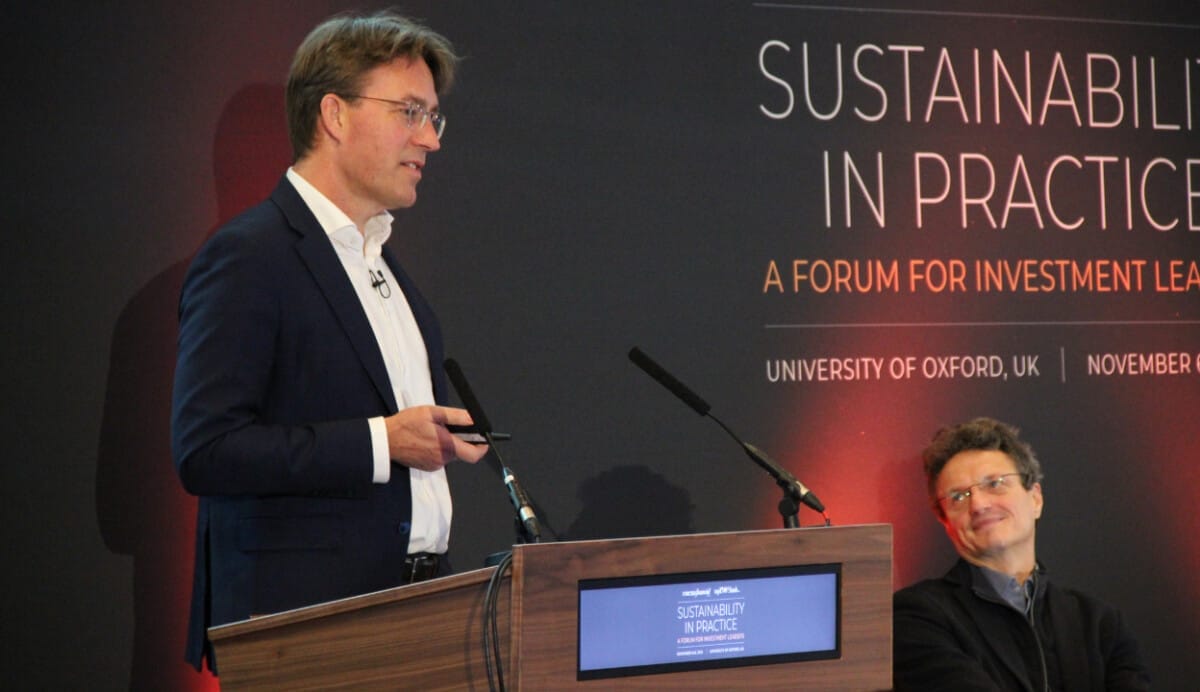
Speaking at Sustainability in Practice at the University of Oxford, Michael Obersteiner, professor of global change and sustainability and director of Oxford’s Environmental Change Institute, sounded a positive note on how investors can help mitigate plunging biodiversity loss.
He said that high-yield agriculture and laboratory-produced foods are key future trends in a modern economy that will support sustainability.
“Plant-based, laboratory meat products hold potential for the planet. If we were to substitute meat products, we could reclaim two thirds of agriculture and give it back to nature.”
Obersteiner detailed a research programme that could support investor analysis of companies doing most to restore nature. Research into palm oil production in Indonesia used satellite images to map the plantations, estimate yields by analysing the age of the plantations, and identify illegal plantations. Continued, detailed research was able to identify the wider ecosystem of supply chains connected to the plantations; trace which multinational corporations own the plantations and calculate profit and loss subject to international policy changes like EU anti-deforestation laws. It was also able to identify the banks (mostly Indonesian) financing the industrial conglomerates.
The technology has also been used to map soy and beef farming in Brazil, gathering information that helps reveal the financial backing of illegal farming. “We can find out which banks are invested in which farms,” he said. Similarly, the research reveals these illegal farms links to the wider supply chains, and export markets in Europe and China.
Obersteiner said the research is accessible to investment teams because it is easy and quick to gather. “Looking to the future, it will be possible to provide this stress-testing analysis on all assets.” He added that the research could also play into forecasting models – the closure of illegal farming and plantations would mean prices could spike – and also provide information on entire supply chains.
The discussion turned to the challenges of investing to protect biodiversity in listed markets. The vast majority of corporate activity harms nature, said fellow panellist Lucian Peppelenbos, climate and biodiversity strategist, at Dutch asset manager Robeco. Rough estimates reveal that only a fraction of the universe of around 40,000 listed companies do no harm to nature. “Finding nature-positive companies to invest in is very difficult,” he told conference delegates.
Not only is channelling capital into wholly nature positive companies close to impossible. It is just as challenging finding companies that will help “bend the curve” on biodiversity.
Peppelenbos advised that investors have a better chance to reduce nature loss by reducing damage and destruction in a pragmatic approach, rather than attempt to become nature positive.
reducing nature loss
Investors need to be ready for the new biodiversity framework from the Taskforce on Nature-related Financial Disclosures (TNFD) that sets out 11 core metrics around risk management and disclosure for business and financial institutions to mitigate nature-related risks and restore damaged ecosystems.
But one of the challenges for investors wanting to integrate biodiversity comes with knowing what is material, as well as the absence of broad based models or a transition models for nature. Those challenges present a contrast with climate change, where the focus is on reducing emissions.
“How much waste do we still accept from the pharmaceutical industry? How much land conversion from agriculture?” asked Peppelenbos. “We need to reduce the complexity and we can’t wait five years.”
His suggested pragmatic approach involves integrating data at a sector level to give a clear picture of which sectors are putting the environment under most pressure. A second building bloc ascertains the underlying drivers of biodiversity loss.
“Nature can restore [itself] as long as we create the right enabling conditions,” he said.
Different industries have different negative impacts. For example, a key source of biodiversity loss in the paper industry comes from change in land use. “Companies can mitigate here by recycling and sustainable sourcing,” he said. KPIs also help measure progress at a company level and classify companies into leaders to laggards. Similarly, in the chemical sector companies can be split into leaders and laggards regarding water and land use, and their use of renewables to create an investable universe.
Robeco’s research reviews KPIs and sets thresholds. The biodiversity team meet with companies and are creating industry guidance in a research paper that will be open access later next year.
“The long-term direction is clear, and it’s clear politicians need to legislate towards the green economy. With a pragmatic approach we can make biodiversity investible,” he concluded.








Leave a Comment
You must be logged in to post a comment.
Login