
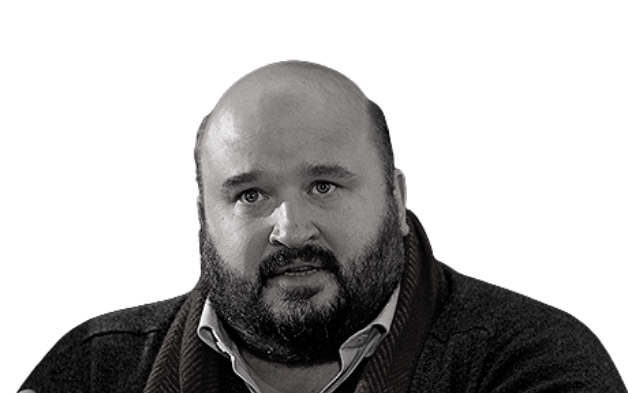

Adam Matthews, chief responsible investment officer at the £3.5 billion Church of England Pensions Board, a UK asset owner and a long-term shareholder in mining giant Anglo American, is concerned about the impact of a potential sale of the 107-year old company to Australian mining industry leader BHP.
Anglo has rejecting BHP’s approaches twice, and in the latest twist, unveiled a sweeping break-up plan. In a bid to defend itself it has laid out plans to focus on energy transition metals like copper and spin out or sell its less profitable coal, nickel, diamond and platinum businesses.
But as the corporate drama continues to play out and if the two firms do merge, Matthews flags worrying long-term consequences to asset owners interests.
“Anglo is a globally significant diversified mining company that operates in key parts of the world, particularly in some important emerging and developing markets, and seeks to do so to the highest standards. Losing Anglo as a distinct entity may serve short-term financial interests, but as an asset owner we are not convinced that such consolidation will serve our long-term interests as a pension fund,” he writes.
Matthews is an expert on the complexities of investing in the hard to abate sector which is also essential to the energy transition. He has previously voiced his concern that risk-averse investors may avoid the sector because they are worried about tripping net zero and ESG pledges.
Yet estimates suggest that over the next decade overhauling electricity transmission will require the equivalent of all the world’s copper used to date. It means capital and finance needs to continue to flow into the mining sector for a successful energy transition.
One area Anglo has played a distinctive role in driving best practice is in tailings dams, the vast toxic lakes used to store the by-products of mining operations and which illustrate one of the sustainability challenges in the industry.
“The company was one of the first to support institutional investor calls for a different approach following the Brumadinho tailings disaster. It recognised that the social license of the sector was under threat and that the key to addressing challenging issues and building trust required multi-stakeholder approaches. It is also Anglo that has championed the development of a multi-stakeholder approach to standards through initiatives such as IRMA Initiative for Responsible Mining Assurance .”
Matthews also draws attention to the enhanced role mining could play in key economies especially in Africa.
“We need more companies like Anglo that are willing to grasp the opportunities of operating in emerging and developing markets such as Africa, not fewer,” he writes. “The sector benefits from there being a race to the top among the major mining companies, and consolidation at this level removes a key actor in pursuit of a socially and environmentally responsible mining sector.”
Anglo employs around 60,000 staff globally of which slightly more than half are based in South Africa, according to its most recent annual report.
“As a UK pension fund we are keen that the LSEG (London Stock Exchange Group) remains a premium market for mining companies. Rather than the prospect of losing Anglo, it would perhaps be more appropriate to consider what enhanced role Anglo and other companies could play in benefitting local and national populations, generating broader long term value and supporting economic development in mineral rich countries.”
Matthews has previously argued that corporates operating in emerging markets can be unfairly treated by investors targeting net zero. Carbon targets that focus on numbers rather than nuance impact these companies because they typically have a higher carbon footprint in a portfolio, and reducing exposure is an easy win on the net zero road.
“Measuring local companies in emerging markets against globalised benchmarks doesn’t allow for these companies’ differentiation in-line with the Paris agreement,” he told Top1000Funds.com, arguing current frameworks, including the Net Zero Asset Owner Framework, need enhancements to ensure they offer differentiated and fair pathways consistent with the science for these companies.
The Church of England Pensions Board recently decided to divest from oil and gas companies following sustained engagement.
In 2021, the Church Commissioners excluded 20 oil and gas majors from its investment portfolio. Then it decided to exclude BP, Ecopetrol, Eni, Equinor, ExxonMobil, Occidental Petroleum, Pemex, Repsol, Sasol, Shell, and Total, after concluding that none are aligned with the goals of the Paris Climate Agreement, as assessed by the Transition Pathway Initiative (TPI).
“It was our fiduciary duty to take the decision we did,” says Matthews.








Leave a Comment
You must be logged in to post a comment.
Login