
Investors debate engagement priorities

Should investors collectively prioritise engagement issues, and if so what is at the top of the list?

This was one of the topics delegates discussed at the 8th Sustainable Finance Forum run by the Oxford University Smith School of Enterprise and the Environment together with The Rothschild Foundation and the KR Foundation.

At the conference, which focused on the future of engagement and active ownership, academics, asset owners, asset managers, consultants and not-for-profits discussed how to progress the effectiveness of corporate engagement and investor stewardship.

Investors at the event agreed that working together was imperative to progressing engagement and having impact.

Delegates heard how companies have said that engagement focuses too much on issues that impacted short term financial results, and not enough on long term strategy or understanding the company.

Investors in the room discussed whether they should be collaborating their efforts on big world issues, such as saving the Amazon, rather than on say executive pay. Does it matter how much someone earns if there’s not enough oxygen in the world to allow for easy breathing? Investors were encouraged to send their ideas to Ben Caldecott, director of the Oxford Sustainable Finance Programme, who would coordinate the priorities.

Sponsored Content

The conference addressed the future of engagement and looked at new approaches to enhance engagement including the use of satellite data and other data sets to enhance decision making.

It addressed the differences in geographical and cultural problems in advancing engagement including the particular nuances of developing economies and investing in companies in emerging markets.

A good deal of discussion was on how investors can be effective stewards of capital and universal owners through engagement as more assets are allocated to unlisted markets.

Caldecott said the conference was also a conduit for prioritising the university’s research program.

“Clearly there is a lot to do. I believe in five years time we can make a big difference to how effective engagement is,” he said.

Leave a Comment

China ESG risk: the next unknown

China ESG risk: the next unknown

One of the most important, upcoming challenges at CalSTRS is how the fund should evaluate Chinese investments from a human capital and environmental standpoint, says Chris Ailman, chief investment officer at the giant pension fund.

Sort content by

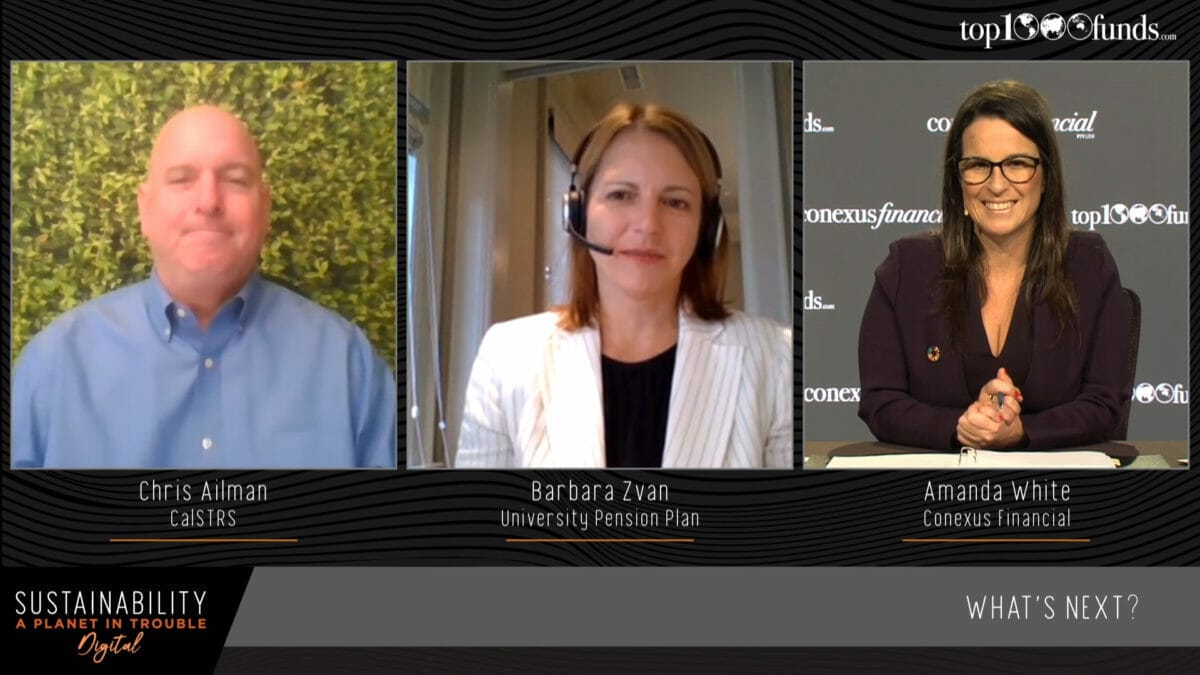
What’s next?

What is required for all investors to use their influence to create a more sustainable economy, and to wake up to the crucial role they play in ensuring a sustainable recovery?

Holistic and lasting sustainability

What is sustainability if not the ability to exist into the future? In this context how sustainable are institutions, organisations, communities and politics and what will the future actually look like?

Understanding complex systems

The climate emergency is so large it requires a rewiring of the whole economic and financial system. But to do this new risk models are required and old paradigms must be abandoned to make way for a better way of understanding complex systems.

The SDGs in action

This session looks at case studies of how investors are using SDGs to shape a view of the future and incorporating that into an investment framework.

In conversation

In this intimate conversation, Paul Polman, SDG ambassador and chair of IMAGINE, discusses the importance of leaders accelerating corporate responsibility efforts.

A company and investor engagement story

This session takes a deep dive into the sustainability lens from a large corporate view and how investors and corporates are working together to create lasting impact.

Previous