[vc_empty_space height=”10px”]
In this intimate conversation, Paul Polman, SDG ambassador and chair of IMAGINE, discusses the importance of leaders accelerating corporate responsibility efforts.[vc_quotes layout=”accordion” quotes=”%5B%7B%22name%22%3A%22Paul%20Polman%22%2C%22job_role%22%3A%22Chair%2C%20IMAGINE%20(The%20Netherlands)%22%2C%22content%22%3A%22%22%2C%22image%22%3A%2233608%22%2C%22linkedin%22%3A%22https%3A%2F%2Fwww.linkedin.com%2Fin%2Fpaulpolman%2F%22%7D%5D” title=”Speaker” el_class=””][vc_quotes layout=”accordion” quotes=”%5B%7B%22name%22%3A%22Colin%20Tate%22%2C%22job_role%22%3A%22Chief%20executive%2C%20Conexus%20Financial%20(Australia)%22%2C%22content%22%3A%22Tate%20has%20been%20an%20investment%20industry%20media%20publisher%20and%20conference%20producer%20since%201996.%20In%20his%20media%20career%2C%20Tate%20has%20launched%20and%20overseen%20dozens%20of%20print%20and%5Cnelectronic%20publications.%20He%20is%20the%20chief%20executive%20and%20major%20shareholder%20of%20Conexus%20Financial%2C%20which%20was%20formed%20in%202005%2C%20and%20is%20headquartered%20in%20Sydney%2C%20Australia.%5CnThe%20company%20stages%20more%20than%2020%20conferences%20and%20events%20each%20year%20%E2%80%93%5Cnin%20cities%20which%20have%20included%20London%2C%20New%20York%2C%20San%20Francisco%2C%20Los%20Angeles%2C%20Amsterdam%2C%20Beijing%2C%20Sydney%20and%20Melbourne%20%E2%80%93%20and%20publishes%20three%20media%20brands%2C%5Cnincluding%20the%20global%20website%20and%20strategy%20newsletter%20for%20global%5Cninstitutional%20investors%20conexust1f.flywheelstaging.com.%20One%20of%20the%20company%E2%80%99s%20signature%20events%20is%20the%20bi-annual%20Fiduciary%20Investors%20Symposium.%20Conexus%20Financial%E2%80%99s%5Cnevents%20aim%20to%20place%20the%20responsibilities%20of%20investors%20in%20wider%20societal%2C%20and%20political%20contexts%2C%20as%20well%20as%20promote%20the%20long-term%20stability%20of%20markets%20and%20sustainable%5Cnretirement%20incomes.%20Tate%20served%20for%20seven%20years%20on%20the%20board%20of%20Australia%E2%80%99s%20most%20high%20profile%20homeless%20charity%2C%20The%20Wayside%20Chapel%3B%20and%20he%20has%20underwritten%20the%5Cnwelfare%20of%2060%2C000%20people%20in%2028%20villages%20throughout%20Uganda%20via%20The%20Hunger%20Project.%22%2C%22image%22%3A%2233547%22%2C%22linkedin%22%3A%22https%3A%2F%2Fwww.linkedin.com%2Fin%2Famanda-white-101a7515%2F%3ForiginalSubdomain%3Dau%22%7D%5D” title=”Moderator” el_class=””][vc_empty_space height=”10px”]
Key takeaways
The SDGs will fail if we don’t create a more inclusive world.
Although we know what needs to be done we are not able collectively to behave at the scale and speed needed to fix known issues.
We only treasure what we measure. The progress in the area of measurement has been too slow.
Achieving the SDGs is hard work. The problem is that we do not have enough leaders in business and finance prepared to place self-interest to one side and focus on the greater good.
The successful company of the future will not focus on being ‘less bad’, it will focus on doing ‘more good’.
‘The world really is in trouble. There are no healthy people on an unhealthy planet.’
Humanity will pay the price if we do not address structural issues.
If issues of unemployment persist, social cohesion issues will escalate. We need to create better and more resilient jobs by investing in R&D and education.
If we all know what needs to be done why is our collective behaviour not reflecting this?
Business and politics alike suffer from short-term goals and assessments.
We need to put a price on scarce resources and social risk.
We cannot rely on governments to bring about the required system change.
The SDGs are the biggest business opportunity in the world.
Seek out your investors, don’t respond to them passively.
‘You don’t have to eat the elephant in one bite’ – have a ten year business model that addresses known social issues.
‘The companies that don’t place sustainability at the forefront of their strategy will be relegated to the graveyard of dinosaurs.’
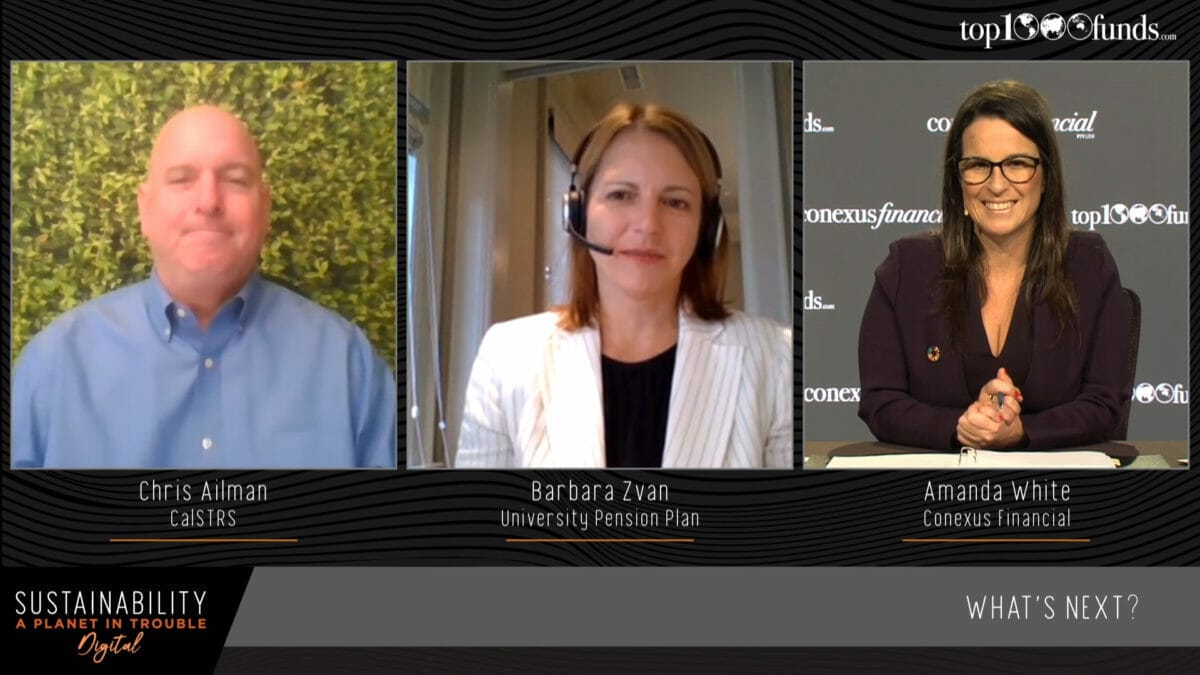
One of the most important, upcoming challenges at CalSTRS is how the fund should evaluate Chinese investments from a human capital and environmental standpoint, says Chris Ailman, chief investment officer at the giant pension fund.
Princeton University Professor of International Affairs, Stephen Kotkin explains why large global investors and multinationals can lead on sustainability but national governments fail.
Integrating the SDGs involves analysing investee companies' core business, the products and services they sell, and mapping that to the SDGs. Two investors, APG and Schroders, outline the indepth process.
In an intimate case study this session at the Sustainability conference profiles the relationship between Robeco and CocaCola and how investor engagement has helped prioritise sustainability issues and drive long-term growth through a focus on the circular economy.
International negotiations like the Paris Agreement no longer work. The world needs a new framework supporting a carbon tax with both carrots and sticks to encourage participation, says William Nordhaus, Sterling Professor of Economics, Yale University and 2018 Nobel Prize winner in Economics.
In a rare insight into the portfolio construction process at Bridgewater, the head of investment research, Karen Karniol-Tambour discusses how to shift from only looking at risk and return to adopting a three-dimensional model that incorporates impact.
The Ford Foundation outlines its ability to achieve impact and returns and announces plans to invest for impact in public markets in the next 18 months. Elsewhere, renown impact investor Pictet Asset Management explains how impact investment is becoming more mainstream.
Leave a Comment
You must be logged in to post a comment.
Login