
CalPERS’ Simpson on Climate Action 100+

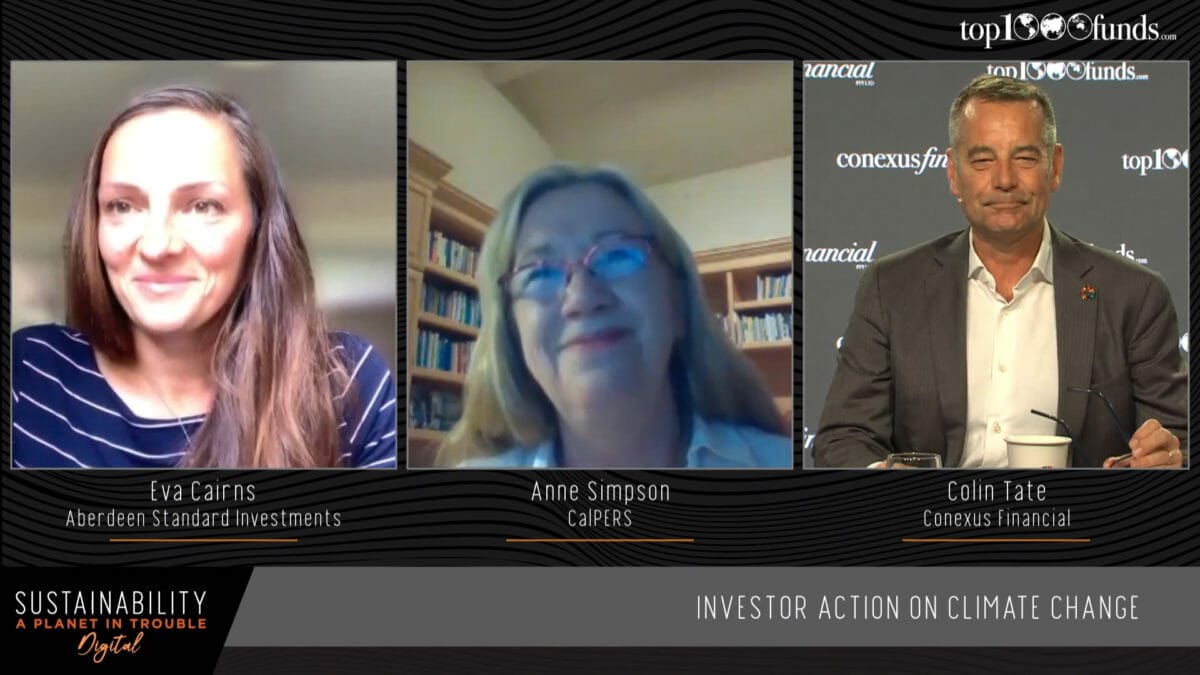
Climate Action 100+ illustrates asset owners’ ability to come together to solve the tragedy of the commons, said Anne Simpson, managing investment director, board governance and sustainability at US pension giant CalPERS. Speaking at Sustainability Digital she said because institutional investors own many of the biggest systematically important carbon emitters in the world, together they can influence change. Climate Action 100+ signatories put pressure on corporate boards to commit to net zero and ensure their corporate governance is aligned with the Paris targets in what Simpson called an often “challenging and painful” process.

The investor collaboration monitors and tracks corporate progress, checking companies do what they say. It also includes a reporting framework. Pressure from the investor alliance has seen companies from across the world make board-level commitments to meet targets and integrate them into their financials, said Simpson. She said that the emissions causing global warming don’t stop at national boarders and companies in emerging markets must work just as hard to meet the Paris targets.

“They don’t live on another planet,” she said.

Here success includes progress in India where two of the country’s biggest emitters have committed to net zero. Simpson told delegates that working with local investors and via local partnerships is key to success in many geographies. Many companies are state-owned, so we need to be in dialogue with regulators and government agencies, she said, adding. “You only make progress with partnerships.”

Simpson told delegates that because of its size, the $400 billion pension fund has “nowhere to hide” and faces systemic risk from climate change.

CalPERS’ sustainability journey began after the GFC when in a back to basics approach the pension fund examined where its value creation came from. Reviewing the evidence it “reframed the agenda” to managing three forms of capital: financial, human and natural.

Sponsored Content

“Once you realise as a fiduciary, risk and return comes from managing these three forms of capital ESG became a fundamental part of how you invest,” Simpson told delegates.

The pension fund has nearly completed carbon foot-printing its whole fund, and is currently in the last stages of carbon foot-printing the private equity allocation.

In public markets the fund tends to pursue engagement strategies. In private equity it has set out sustainable investment practices and engages with managers. In infrastructure and real estate, the pension fund physically maps climate risk while in fixed income the fund has developed a set of sustainable investment guidelines for due diligence.

“We found that taking a sustainable lens to risk and return has made us more intelligent investors,” Simpson said. Around 20 per cent of CalPERS’ assets are in unlisted investments, while 80 per cent of the fund is internally managed.

Simpson also detailed the challenge of balancing the needs of short-term cash generation to meet pension obligations and investing for the long term – the pension fund pays around $25 billion a year in benefits to its members. CalPERS’ 7 per cent return target, in addition to the cash needed to pay benefits, means financial performance “really matters.”

Committing to the Net Zero Asset Owner Alliance, another investor collaboration, goes beyond simply excluding carbon intensive sectors, said fellow panelist Eva Cairns, senior ESG investment analyst, climate change, at Aberdeen Standard Investments.

It involves monitoring carbon within investments and charting how these levels are decreasing over time with short-term and interim targets. It also involves shifting capital to low carbon solutions and transition leaders, as well as engagement.

She said that engagement is key to find out what companies are doing to navigate risk.

“A lot of companies will benefit from the transition,” she said.

Cairns also detailed the process behind TCFD reporting – the climate-related financial risk disclosures used by companies in providing information to investors. Noting it was a “good way to improve internal processes” and she said it required strong internal governance.

She noted, however, that carbon foot printing “doesn’t tell you the whole story” since it only highlights the most carbon intensive companies when, infact, investor also need to know what targets companies have set.

She also noted that different investors define Paris alignment in different ways and said that investors should recognise regional differences and the need for different net zero pathways by sector and region. In regions where policy is not supportive of net zero, achieving real economy decarbonisation is difficult, she said.


For the full recording of this session, all the conference program and white papers and stories visit the Sustainability content hub here.

Leave a Comment

China ESG risk: the next unknown

China ESG risk: the next unknown

One of the most important, upcoming challenges at CalSTRS is how the fund should evaluate Chinese investments from a human capital and environmental standpoint, says Chris Ailman, chief investment officer at the giant pension fund.

Sort content by

Investors continue to align with SDGs

Five years on since the SDGs were launched, an increasing number of investors are putting capital to work to earn returns alongside helping solve global scourges like the climate crisis, poverty and inequality. Sarah Rundell looks at New York Common Fund and Denmark's PKA among others.

Beyond green bonds

The European Union's rescue plan will give a huge boost to an already thriving market for green bonds and other instruments that promote sustainability. But investors need to be wary: green comes in many shades.

Overcoming deepening inequality: CalPERS

How can investors work together to combat inequality? In this podcast episode Amanda White speaks to the president of CalPERS, Henry Jones, about his own experience and the fund's journey in tackling diversity and inclusion, in particular issues of racism.

New investment-led net zero framework

More than 70 investors have collaborated to produce a framework for an investment strategy led approach to decarbonising portfolios and maximising efforts to achieve net zero emissions globally by 2050. The IIGCC, which developed the framework, is seeking consultation.

The EU Commission’s renewed sustainable

Deciphering the jargon of white collar gamblers.

No equality without everyone

This piece is part of Disability Demands Justice, a dynamic, ever-evolving hub by the Ford Foundation to deepen our understanding of how disability intersects with social justice.

Previous