
Khosla warns of disrupted decade before AI boom brings abundance

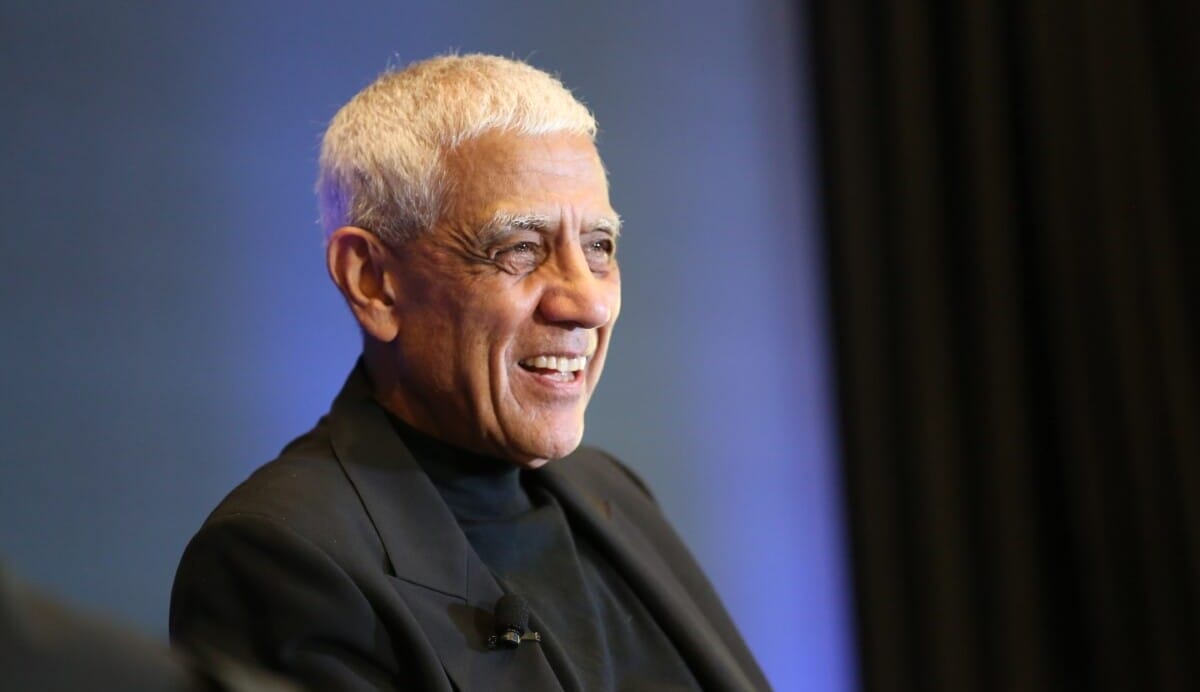
Vinod Khosla.

Vinod Khosla.

Artificial intelligence will boost corporate productivity and cut costs over the next five years before triggering sweeping job upheaval and an extinction event for many blue-chip companies, according to legendary venture capitalist Vinod Khosla.

“The next five years will look very decent from a corporate point of view: increasing productivity, reducing costs, increasing GDP growth, increasing abundance generally,” Khosla told the Top1000funds.com Fiduciary Investors Symposium at Stanford University.

“But in that process, well before 2030 – and people find this shocking – at least 80 per cent of jobs could be done 80 per cent by an AI. So roughly two-thirds of all jobs in the economy like the US – and I mean all jobs: farm workers, line cooks in restaurants, kitchens, home chefs.”

As an example of what’s coming, he cited a company generating $100 million in annual revenue that has already replaced its entire accounting team with one person thanks to an AI-based enterprise resource planning (ERP) system that can do what “armies of accountants” once did.

“We have companies proposing to us they do the same in HR, and every other function in customer support,” he said.

While initially positive, that wave of AI-charged productivity improvements will then usher in a decade of social disruption from 2030 to 2040, and large-scale layoffs.

Sponsored Content

“By 2035, we will have two things happen at a macroeconomic level: a hugely deflationary economy, which will violate all our assumptions because the production of goods and services will go way up, but pricing will go way down because the marginal cost of production has declined so much. Nobody, no economist, is counting on these phenomena, and that’s why I think assuming you don’t know [the future] is a far superior strategy to assuming you believe these forecasts.”

Khosla’s long track record includes investments in companies such as Google, Amazon, Square, Stripe, Affirm, and DoorDash, and his VC firm was the first to invest in OpenAI. Many of the companies he has backed have upended entire sectors of the economy and he foresees the power of AI speeding up that trend.

About 25 companies a year drop out of the Fortune 500 list – a pace that will at least “triple or quadruple by 2035”.

“It’ll be a very fast extinction rate for Fortune 500 companies because of the phenomena we talked [about] and that’s a macroeconomic trend not even remotely talked about.

“If any of you invested in the BPO industry or IT services industry, almost certainly, or customer support, most of that will disappear in the next five years, and those are very large segments today.”

While the decade ending 2040 will be disruptive, the next period will be more stable, but only if governments reassess and change the way they redistribute wealth.

“I think mostly politics will determine what policy gets instituted. That will then constrain AI country-by-country. I think all post 2040 – which is only 15 years away – you’ll see increasing abundance at a level where there’ll be ways to satisfy lots and lots of people if we sign up to redistribute wealth in particular ways, which is also a tricky issue.”

Silicon Valley: a mindset, not a place

Khosla’s broader investment view prizes improbable breakthroughs over linear forecasts, and embracing risk.

“I literally tell people, if you want to reduce risk, go to New York. I’m not going to fund somebody whose goal is to reduce risk. And most people in most parts of the world in business try and reduce risk of failure, but what they do in the process is reduce the consequences of success.

“I’d rather live in a world where I don’t mind a high probability of failure if the consequences of success are consequential – and that’s fundamentally the difference. I’ve seen many investors in the venture business in Europe and elsewhere, they’re trying to reduce risk. They turn great ideas into decent ones.”

He said the success of startups was fundamentally tied to the quality of the team rather than the initial business plan.

“I would guess less than 5 per cent of the companies five to 10 years after they started, are following the plan they presented when they first got funded. So mostly what they’re doing is iterating – tacking left, tacking right – essentially heading in the best direction of flow. That depends on the quality of the team they assemble.”

Khosla is continuing to back big ideas, including nuclear fusion.

“There is no expert who’s forecasting fusion to be proven,” he said. “So another rule I use is most people assume improbables – and this is true of your investing – are unimportant. I argue only the improbables are important… we just don’t know which improbable.”

On energy, he said China’s annual solar-cell manufacturing revenue – roughly $500 billion to $600 billion by his estimate – is now comparable to the size of the US oil industry, a scale few would have predicted a decade ago.

Khosla described Silicon Valley as a mindset where the deep sector experience of established industry executives is viewed as a handicap to innovation.

“I can’t think of a single example in 40 years where somebody who knew a space innovated in it. Could you imagine somebody from Hertz or Avis innovating on Uber or somebody from Hyatt or Hilton innovating in Airbnb, or somebody from Walmart or Target innovating like Amazon did, or somebody like Lockheed or Boeing – pick your favourite airspace company – innovating like SpaceX and Rocket Lab did?”

“I go back to if you have 1000 startups you don’t need to know the 990 that will fail. You just need to be in the curve on the 10 that succeed… and that’s where getting the right teams in these startups matters.”

Be part of the conversation next year – register now for the Fiduciary Investors Symposium Stanford 2026. Asset owners only.

Our next event is at the University of Oxford, November 4-6 2025. Register today – asset owners only.

Leave a Comment

Condoleezza Rice: Globalisation’s borderless era is coming undone

Condoleezza Rice: Globalisation’s borderless era is coming undone

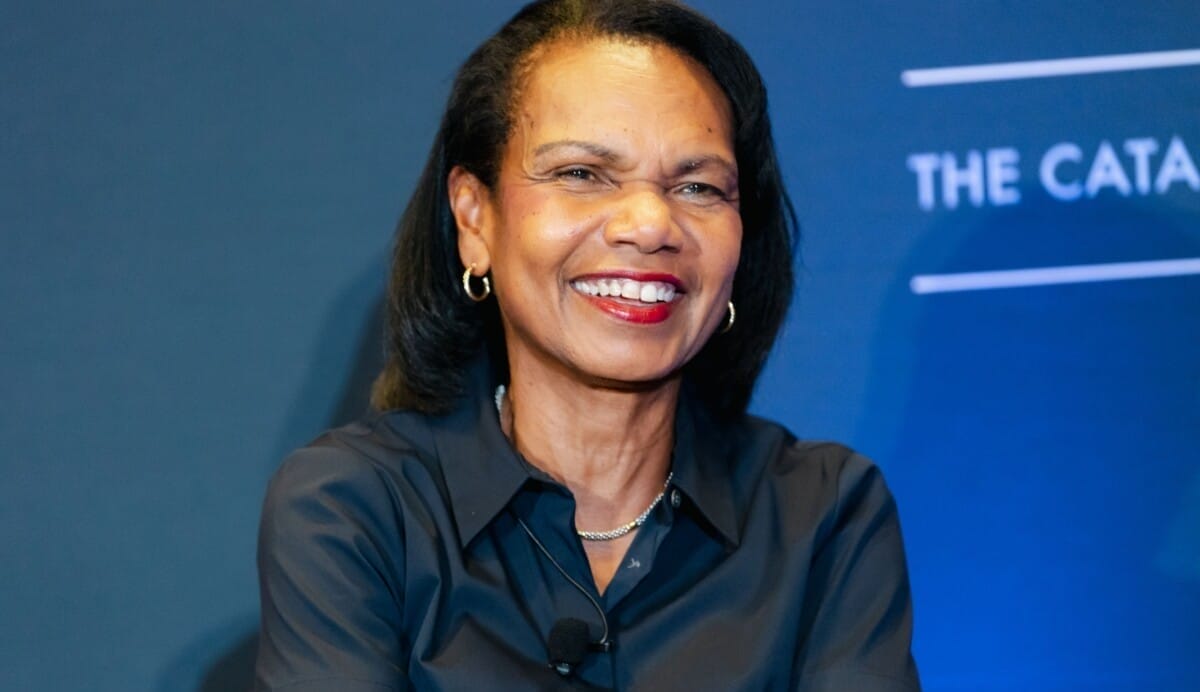
Condoleezza Rice, the 66th US Secretary of State and current director of Stanford University’s Hoover Institution, said the new world order will have several characteristics of which there are already signs: more protectionist trade policies, a redistribution of security burdens, and louder voices for those marginalised in globalisation. 

Sort content by

Investors unpack regime-based portfolio thinking 

Funds are operating in an extraordinary environment, with Scott Chan, chief investment officer of CalSTRS, saying he has never witnessed so many “large shifts stacked on top of the other” in his investment career. Amid the change, investors are increasingly shifting to a scenario and regime-based asset allocation.  

AI investors face post-Moore’s Law reality

Mark Horowitz, a leading computer scientist and electrical engineer at Stanford University, has declared that Moore’s Law is “basically over”, which will have significant ramifications for artificial intelligence investors who are counting on more computing power to feed into more complex models.  

Public-private partnerships key to fixing US infrastructure

The size of the current infrastructure investment gap and the speed at which it is widening mean there is both a desire and a need for more public-private partnerships to unlock funding. Investors say that collaboration with local governments and raising public awareness of private investment benefits are crucial. 

Federal backing vital for US innovation: Stanford president 

Stanford president Jonathan Levin said the university’s top priority is maintaining the partnership with the federal government while safeguarding its operational freedom, as the institution balances financial reliance on Washington and political scrutiny from the Trump administration. 

Debt beats equity in data centre boom as scarce capital lifts credit yields

Asset owners continue to weigh up the shifting risk-return attributes of the booming data centre sector including deal structures, refinancing, energy requirements, and the future of AI.

Why CalPERS doesn’t want to miss the climate revolution

If CalPERS had put more money into the Silicon Valley companies in its own backyard earlier it might be fully funded by now, jokes its sustainable investment head. But it won’t miss the same opportunities in climate investing.