

Pension fund boards are complex, evolving, collective bodies and the individuals that serve them face unique challenges. The Rotman-ICPM Board Effectiveness Program is a week-long course designed specifically for pension fund trustees that showcases how an effective board looks and behaves.
Pension management beneficiaries are delegating to a body that then delegates to an executive, it is a consensus body that is unique in design and function.
The role of, and skills required of trustees and the collective board is constantly evolving, and to be effective requires training and evaluation.
On four occasions the International Centre for Pension Management at the Rotman School of Management at the University of Toronto, has brought together 128 participants from 52 pension organisations and 11 countries for its “Board Effectiveness Program”.
The course, which is held over a week-long period guides trustees through courses on organisation mission, fiduciary duties, board dynamics, role of the board versus management, investment beliefs, risk management, organisation design and HR management and compensation.
They are asked to do role play exercising board dynamics with a particular case study dealing with the issue of incomplete information.
“We give delegates a problem to solve but not everyone gets the information. The only way to solve the problem is by sharing the information,” Ambachtsheer says. “It’s a shocker, most groups fail.”
Critically, through case studies and exercise, it equips graduates with an integrated framework to critically examine how these issues are all linked together.
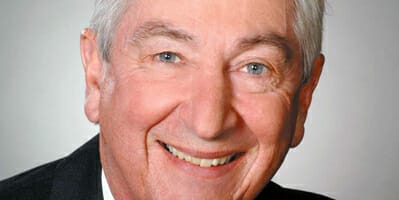
Keith Ambachtsheer, who is the director emeritus of the Rotman International Centre for Pension Management and academic director of the course, says one of the key differentials in the Rotman School’s offering is it is “deliberately strategic” and not just reciting facts.
“We look at case studies and exercises on how to implement the reasonable judgment rule. What does success look like and how do you measure it?” he says.
One of the reasons this training is so important now, Ambachtsheer says, is the evolving nature of fiduciary duty.
“But now rather than a cooker cutter fiduciary duty it is a “reasonable expectations” standard, it is contextual,” he says.
“Boards need to understand the nature of the agreement, who’s contracting who to do what, not just about the here and now but future parties, so how do you do that?”
At the Rotman-ICPM Board Effectiveness Program, participants get to learn from doing.
Ambachtsheer says one of the more interesting exercises is an assignment whereby the chair of a fictitious dysfunctional board asks participants to help fix the board.
“It gets you into the question of why the board is dysfunctional,” he says.
It also raises the element of representation and the idealism of trustees and who they are representing.
“Representation is ok up to a point, boards need to be seen to be legitimate,” he says. “But there is an “and and” as well. It is not enough there also needs to be a collective skill and experience in the requisite skills.”
Ambachtsheer advocates the skill/experience matrix as an easy practical tool to assemble and manage a board.
“If the board needs to make decisions in these areas – it might be strategic decisions, audit experience, risk management, HR function – then what is the skill set that is needed to do that,” he says.
Interestingly, Ambachtsheer believes it is best practice for the entire board to be the investment committee, and points to organisations such as Ontario Teachers’ Pension Plan where this is the case.
“This means you need people on the board who can play a role, they are not experts but need to ask the hard questions.”
Drawing from the Peter Drucker management philosophy, Ambachtsheer believes that one of the key roles and responsibilities of a board is to hire and assess the chief executive.
“You don’t do their job but a board finds and evaluates the chief executive, and holds them to account.”
Ambachtsheer believes the best tenure for a board member is three terms of three-years, and that this ensures not only that an individual’s skills are evolving but the board as a collective is evolving.
“Nothing is forever,” he says. “This structure is long enough to get to know the organisation but know there’s an end. We had a governance committee that was working on who’s leaving and what we were losing when they left.”
While measuring good governance, decision making and delegation may very well be the holy grail in pension management, it is hard to quantify.
“I’ll know it when I see it,” he says.
However Ambachtsheer can say that a functional board will have passion for the cause, collective skill, a diversity matrix which by definition includes behaviour, and a blend between being collegial and individual integrity.
Ambachtsheer is currently working on the third global board effectiveness survey, which measures the responses of pension fund executives to their board’s functionality.
The survey was done in 1997, 2004 and will be initiated later this year, asking a series of statements to reflect the function or dysfunction of the organisation.








Leave a Comment
You must be logged in to post a comment.
Login