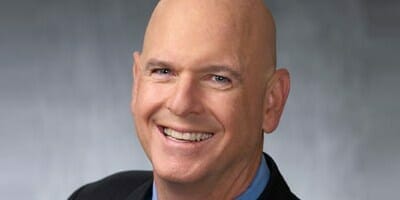
The year that was, a CIO’s perspective

The downgrade of the US took the entire industry by surprise, in a year that confirmed the complexity and unpredictability of markets, CalSTRS chief investment officer, Christopher Ailman, says.

“The entire financial services industry was underweight US Treasuries. We were short duration and underweight sovereign debt. But it turned out it would have been the best decision to be long US debt,” he says.

“It has been a humbling year, we thought we were in a slow recovery, but that completely stalled and for much of the second half of the year we faced the prospect of a double dip.”

Ailman says his team started the year with conviction that inflation would be a key issue for 2011 and had an underweight position in fixed income and a commitment to invest in inflation-sensitive assets.

He says one of the best investment decisions he made this year was to build up the TIPS portfolio, but not because of inflation, because yields were lower.

The decision to be a bit more tactical on asset allocation also paid off for the fund, he says, with a neutral position in global equities from the middle of the year, an example.

Sponsored Content

CalSTRS’ investment team had a creative year working on a number of new initiatives and long-term projects such as the risk overlay, which it will continue to integrate into its investment process next year.

“Diversification is still the centre piece, still our main risk tool, but we need additional tools,” he says.

The fund also created an innovation group and Ailman says the expansion of the investment universe to include opportunities such as micro finance, commodities and global macro hedge funds, has been very interesting.

Ailman says “austerity” will be the key word for 2012, with countries unable to grow their way out of the crisis.

“Austerity is not good for GDP growth, we will have low GDP this year and next,” he says.

With this in mind the fund is debating its equity position, with Ailman’s preference for a neutral position, and will also look at weighting public markets differently.

Ailman says there will be pockets of opportunity in 2012 and that “next year will lend itself more to active management”.

“We have flexibility around our active/passive ranges but will be tilting our portfolio more towards active.”

The best decision for next year will be trying to buy stable cash flows, in whatever form that appears, he says.




Leave a Comment

Sort content by

New method for incentive compensation at CalPERS

CalPERS is contemplating an incentive schedule for senior investment executives that builds in downside risk, by expanding the range of the factor multipliers for the quantitative elements of investment performance plans, a move which could potentially eliminate a small compensation incentive award. mrec4inarticleinline Sponsored Content scnative1 scnative2 scnative3

End of an era as APG appoints new CIO

A focus on governance and sustainability has been recognised by APG Asset Management, in appointing former global chief executive of ING Investment Management, Europe, Angelien Kemna, as successor to chief investment officer Roderick Munsters, the man who has sat at the helm of two of the Netherlands’ biggest pension funds. mrec4inarticleinline Sponsored Content scnative1 scnative2

NYSTRS leaves UNPRI but remains committed to governance

The New York State Teachers Retirement System has voluntarily withdrawn active participation in the United Nations Principles for Responsible Investment (UNPRI) initiative but will continue to support strong corporate governance principles through memberships in the Council of Institutional Investors and Ceres. mrec4inarticleinline Sponsored Content scnative1 scnative2 scnative3

Pastoral musings on investments

Chief research strategist and head of beta research at RogersCasey, Cynthia Steer, takes a summertime look at the “New World” of investing. She compares today’s investment challenges to those of gardening, and in contemplating the stoicism and constancy of long-time gardeners and farmers, she notes that portfolios today need to be re-constituted, the risk within

CalPERS’ securities lending loss

CalPERS will continue its securities lending program following an annual review, despite significant pressure on its collateral pool, with income of $220 million generated for the year to March but unrealised losses on the internal collateral reinvestment of $854 million. mrec4inarticleinline Sponsored Content scnative1 scnative2 scnative3

Does less leverage mean lower returns for listed property?

The financial crisis has put an end to the excessive use of leverage by real estate companies, and the prospect of distressed assets presents opportunities for pension funds. Kristen Paech discusses the outlook for the sector with Ritson Ferguson, CEO and chief investment officer of ING Clarion Real Estate Securities.   mrec4inarticleinline Sponsored Content scnative1

Previous



