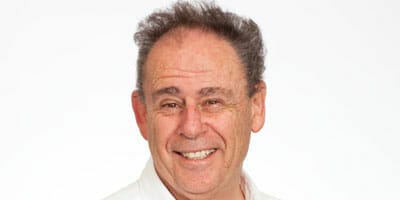

Taking the future into account

At the International Centre for Pension Management
Continue Reading

Access the full content on Top1000funds.com

Join the global institutional investment platform read by the world's largest asset owners, fund managers and consultants.

New here

Create an account

Complimentary to register. We'll verify your details and grant access to the archive, our newsletters and the Asset Owner Directory (enhanced features coming soon).
Create your Top1000funds.com subscription account
Already a member

Sign in

Already activated your account? Sign in to continue reading and access your saved articles, preferences and member-only content.
Or request login link

One response to “Taking the future into account”

  1. Tim MacDonald

    Might Mr. Gray’s confusion be cleared up if we did a little thought experiment?

    Let’s take the Fund Manager out of the equation, hypothetically, and ask ourselves what the agreement would look like if a Pension fund made an equity investment directly into the means of production, partnering directly with business to recover principal and earn at least minimum threshold returns. in increments, over time, from an agreed split in the revenues to be generated in consequence of the investment to be made, with residual sharing thereafter in whatever additional revenues may be earned, as they may be earned, more or less forever (or at least to the limit of the economic useful life of the enterprise invested in).

    To avoid misunderstanding, let’s agree that the Pension fund would be acting through third party investment professionals contracted for their expertise in putting together investments that work (as is already the case, for example, in Real Estate, Real Assets and Infrastructure). That is to say, this thought experiment is not about in-sourcing or out-sourcing. It is just about the values that would come out of a direct agreement between a Pension, or other institutional investor acting as the custodian of other people’s money under a charter of trust, and the organizers of an enterprise for the creation of value in the commercial markets. We still need professionals.

    I think the agreement would not be a simple agreement on price. Instead, the Institution would want agreement on many points of value, some financial, others societal. The enterprise would, as well.

    So, in this experiment, a contract for investment directly into the means of production might address principal protection, programmed performance, threshold returns, constancy, transparency, alignment of interests, sustainability and social responsibility.

    The details, of course, would be custom-crafted to fit the charter of trust for the particular Institution, as a steward of the present and future financial security of its constituents. It may address, among other things, climate stability, resource stewardship, social mobility, financial integrity, global community and economic adaptability. These are all issues of increasing importance for both business and investors in a real economy that has already become truly global, in both scale a limit: a messy place where profit-seeking has to make accommodations for the political, social and other complex issues of being a person.

    Now, let’s re-introduce the Fund Manager, but not a Real Estate or Infrastructure Fund Manager. A Public Equities or Hedge Fund Manager. This manager will securitize the means of production, so that it can buy a securitized asset at a price, for resale, at a later time, or in another market, for another price. It’s a clean, clinical transaction. Mathematical, really. All the values, other than asset price, get pushed out. The investment is commoditized.

    This experiment shows us that it is only the Capital Markets whose “motives are only to drive profits”, and their profits are measured by a single point of value: the market clearing price for securitized assets.

    According to this experiment, allowed to deal direct, neither enterprise nor investment would be so clinically single-minded.

    So here’s the question for our next thought experiment: How do we reconcile the messy complexity of sustainability in the real world with the clinical cleanness of speculative trading on future movements in the market-clearing price for securitized assets in the commoditized environment of the Capital Markets?

    I wonder what Mr. Gray would have to say.

Leave a Comment

Photo gallery: FIS 2026 at Raffles Singapore

Photo gallery: FIS 2026 at Raffles Singapore

Good ESG data requires a framework

Initiatives such as the Sustainability Accounting Standards Board are vital for providing the consistent, regular, high-quality disclosure on the SDGs that investors need, a panel told delegates.

Irish pensions headed for major reforms

Auto-enrolment will put more people into Ireland's public retirement system, while regulatory requirements will include tougher standards for trustees and more disclosure on ESG.

Funds team up on G7 priorities

A group of institutional investors are collaborating to address the G7 priorities of climate change, gender inequality and the infrastructure gap, agreeing to commit resources and expertise.

Trustees answer the tenure question

The Australian Prudential Regulation Authority has given guidance for how long trustees should sit on boards. How well does the theory suit the practice? Stakeholders weigh in.

Whineray takes the reins at NZ Super

New Zealand Super acting chief executive Matt Whineray was named to the position permanently on Tuesday. He replaces long-time fund CEO Adrian Orr and vacates his chief investment officer role.

MSCI leaves out suspended A-shares

A handful of companies halted trading this week, prompting MSCI to drop plans to add them to its emerging markets index as it made the long-awaited inclusion of 229 China-listed stocks.

Previous




