Sustainability among key industry’s tagged for China’s growth

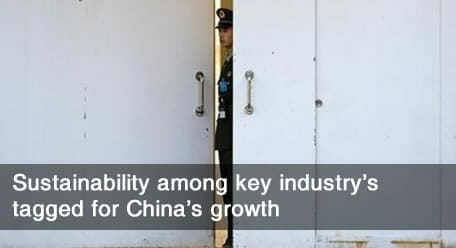
It’s not very salubrious but it’s secure. The four-star Jingxi Hotel in Beijing (pictured), which is owned by the People’s Liberation Army, hosted the annual plenum of the Communist Party’s Central Committee to draft the country’s next five-year plan.

The 12th five-year plan, nutted out by about 300 committee members, will be put to the National People’s Congress in March for ratification. The key themes in the latest plan are sustainability and reducing inequalities between provinces.

Analysts are predicting a lower GDP-growth target to be discussed between now and March, with details of the plan coinciding with a surprise 25bps point rise in the official interest rate last week – the first in China for three years.

A research note from HSBC Global Banking and Markets says more growth is likely to have to come from private consumption which has dropped from 50 per cent of total GDP to an estimated 36 per cent in the past 20 years.

“Expect further efforts to boost household incomes, primarily through higher minimum wages, as well as lower personal taxes,” the bank says.

Notwithstanding the stated concern for poorer provinces, the latest plan intends to speed the demographic shift to the cities, which will further boost consumption.

Sponsored Content

After the meeting, the Government confirmed a list of emerging strategic industries to be at the forefront of a “higher quality” of economic growth. They are: energy-saving and environmental protection firms, next generation IT, biotech, high-end manufacturing, new energy, new materials and composites, and clean-energy cars.

According to Shanghai Securities News, the group of industries currently make up only 3 per cent of GDP but are expected to contribute at least 15 per cent by 2020.


Leave a Comment

Sort content by

Towers Watson and Oxford Uni team up to uncover sustainability impediments

Towers Watson and Oxford University have launched a collaborative research effort to examine the impediments to progress in sustainability integration, with changes to mandate design one of the expected practical solutions. The project is spearheaded by thought-leaders Roger Urwin and Professor Gordon Clark. mrec4inarticleinline Sponsored Content scnative1 scnative2 scnative3

Ag investors release responsible investment principles

A group of eight institutional investors has launched a guiding set of principles for responsible investment in farmland, which forms part of a UN-backed Principles for Responsible Investment (PRI) push to provide practical guidelines for specific asset classes.mrec4inarticleinline Sponsored Content scnative1 scnative2 scnative3

Norges Bank forges closer research links

Some of the brightest investment minds gathered recently in Oslo for the first Financial Research Conference, conducted by the asset management arm of Norway’s central bank.mrec4inarticleinline Sponsored Content scnative1 scnative2 scnative3

Property survey highlights green stars

The Global Real Estate Sustainability Benchmark (GRESB) is being actively used by its investor supporters, including PGGM, to make service providers accountable for ESG performance, with the second annual survey finding a larger proportion of managers in the top quadrant this year. mrec4inarticleinline Sponsored Content scnative1 scnative2 scnative3

Life’s lessons can be applied to pension reform

The UK’s London Pension Fund Authority issued a green paper this week outlining the key ingredients needed to build a better scheme and its successful implementation by 2015. In all corners of the world building a better pension scheme is on the agenda. What then are some of the universal principles for success that all funds can adopt regardless of geography?

UNPRI looks for new horizons

The UN-backed Principles for Responsible Investment (PRI) is focused on expanding into China, India and the Middle East and driving environmental, social and governance (ESG) integration beyond equities and property and into other asset classes, says PRI executive director James Gifford.mrec4inarticleinline Sponsored Content scnative1 scnative2 scnative3

Previous



