Sustainability among key industry’s tagged for China’s growth

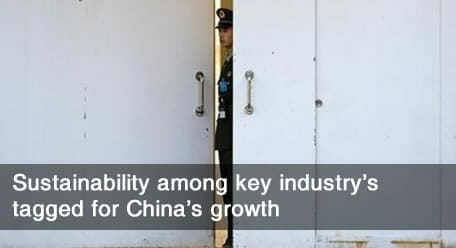
It’s not very salubrious but it’s secure. The four-star Jingxi Hotel in Beijing (pictured), which is owned by the People’s Liberation Army, hosted the annual plenum of the Communist Party’s Central Committee to draft the country’s next five-year plan.

The 12th five-year plan, nutted out by about 300 committee members, will be put to the National People’s Congress in March for ratification. The key themes in the latest plan are sustainability and reducing inequalities between provinces.

Analysts are predicting a lower GDP-growth target to be discussed between now and March, with details of the plan coinciding with a surprise 25bps point rise in the official interest rate last week – the first in China for three years.

A research note from HSBC Global Banking and Markets says more growth is likely to have to come from private consumption which has dropped from 50 per cent of total GDP to an estimated 36 per cent in the past 20 years.

“Expect further efforts to boost household incomes, primarily through higher minimum wages, as well as lower personal taxes,” the bank says.

Notwithstanding the stated concern for poorer provinces, the latest plan intends to speed the demographic shift to the cities, which will further boost consumption.

Sponsored Content

After the meeting, the Government confirmed a list of emerging strategic industries to be at the forefront of a “higher quality” of economic growth. They are: energy-saving and environmental protection firms, next generation IT, biotech, high-end manufacturing, new energy, new materials and composites, and clean-energy cars.

According to Shanghai Securities News, the group of industries currently make up only 3 per cent of GDP but are expected to contribute at least 15 per cent by 2020.


Leave a Comment

Sort content by

How many top100 sustainable companies do you invest in?

The most sustainable 100 companies in the world, as measured by Corporate Knights, outperformed the MSCI by 12.4 per cent since the list’s inception in February 2005, it was announced at Davos last week. From February 1, 2005, to December 31, 2011, the “Global 100 Most Sustainable Corporations” list has achieved a total return of

Real economy the focus of bankers at Davos

A strong financial services sector is an integral part of solving the world’s “real challenges” of unemployment, poverty and global imbalances Josef Ackermann, chief executive of Deutsche Bank and chair of the financial services governor’s group at the World Economic Forum, says. Speaking at the 2102 annual meeting in Davos last week, Ackermann, says “we

Do you get what you pay for?

A pay-for-performance measure of chief investment officers in the US has revealed paying more for an executive does not translate to better performance. Developed by executive recruitment firm, Charles Skorina & Company, the index is calculated by assessing an institution’s investment returns over the past five years, and measuring it against the salary of the

How to tackle pay structures

The remuneration of pension fund investment executives is a sticking point in the industry. To compete with the open market, attract and retain a certain calibre of executive, and compensate them for the peculiarities of being a fiduciary, there is a certain minimum required. At the same time this has to be balanced with communication

Investors collaborate on governance guide

A practical guide to good governance for pension board trustees was one of the results of the Rotman ICPM Board Effectiveness Program which included participants from 21 funds from nine countries.

Can stability bonds save the eurozone?

A majority of investors believe “stability bonds” could provide a partial solution to the euro zone sovereign debt crisis, but are concerned that these bonds carry a high moral-hazard risk, a CFA institute poll reveals. The poll found 55 per cent of European investment professionals believe that the common issuance of stability bonds can help

Previous



