Sustainability among key industry’s tagged for China’s growth

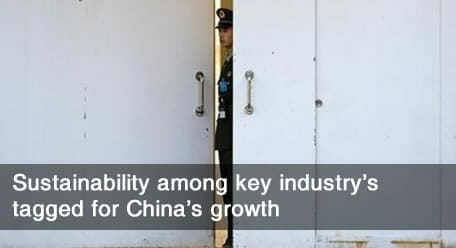
It’s not very salubrious but it’s secure. The four-star Jingxi Hotel in Beijing (pictured), which is owned by the People’s Liberation Army, hosted the annual plenum of the Communist Party’s Central Committee to draft the country’s next five-year plan.

The 12th five-year plan, nutted out by about 300 committee members, will be put to the National People’s Congress in March for ratification. The key themes in the latest plan are sustainability and reducing inequalities between provinces.

Analysts are predicting a lower GDP-growth target to be discussed between now and March, with details of the plan coinciding with a surprise 25bps point rise in the official interest rate last week – the first in China for three years.

A research note from HSBC Global Banking and Markets says more growth is likely to have to come from private consumption which has dropped from 50 per cent of total GDP to an estimated 36 per cent in the past 20 years.

“Expect further efforts to boost household incomes, primarily through higher minimum wages, as well as lower personal taxes,” the bank says.

Notwithstanding the stated concern for poorer provinces, the latest plan intends to speed the demographic shift to the cities, which will further boost consumption.

Sponsored Content

After the meeting, the Government confirmed a list of emerging strategic industries to be at the forefront of a “higher quality” of economic growth. They are: energy-saving and environmental protection firms, next generation IT, biotech, high-end manufacturing, new energy, new materials and composites, and clean-energy cars.

According to Shanghai Securities News, the group of industries currently make up only 3 per cent of GDP but are expected to contribute at least 15 per cent by 2020.


Leave a Comment

Sort content by

Big investors keep faith with hedge funds

Large investors with more than $1 billion allocated to hedge funds plan to maintain or increase their exposure in 2012, a Preqin study has found.mrec4inarticleinline Sponsored Content scnative1 scnative2 scnative3

Divergent strategies have pride of place

About 20 per cent of an institutional investors’ hedge fund exposure should be allocated to “divergent” strategies, according to Rob Covino, senior vice president of SSARIS, which has been managing absolute return strategies for 30 years.mrec4inarticleinline Sponsored Content scnative1 scnative2 scnative3

CalSTRS boosts infrastructure exposure

The unique pension fund-owned structure of Industry Funds Management contributed to it winning a large infrastructure mandate from the $144.8 billion CalSTRS, whose risk-based view of the world has it looking for inflation-hedging diversification.mrec4inarticleinline Sponsored Content scnative1 scnative2 scnative3

Climate risk disclosure project goes global

An original Australian pilot project to benchmark asset owners on their management of climate change risk will be expanded globally later in the year.mrec4inarticleinline Sponsored Content scnative1 scnative2 scnative3

Should US investors have rights offshore?

US institutional investors are discouraged to diversify into offshore shares due to the outcome of a court case which restricts anti-fraud protection. The US case involving the purchase of shares in an Australian bank by Australian investors on an Australian stock exchange has important implications for US institutional investors and their drive to diversify investments

Alternatives the winner of long-term allocation shifts

Allocations to alternative investments of the largest seven pension markets globally (P7) have increased by 15 per cent over the past 16 years, according to Towers Watson. Carl Hess, Towers Watson’s global head of investment, says the study reflects two investment themes in the past few years: globalisation and diversification. While alternatives have increased as

Previous



