Sustainability among key industry’s tagged for China’s growth

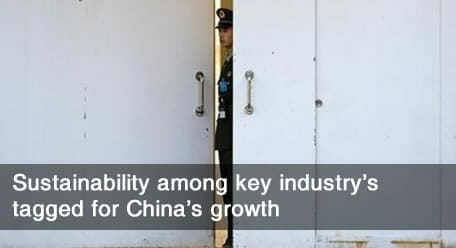
It’s not very salubrious but it’s secure. The four-star Jingxi Hotel in Beijing (pictured), which is owned by the People’s Liberation Army, hosted the annual plenum of the Communist Party’s Central Committee to draft the country’s next five-year plan.

The 12th five-year plan, nutted out by about 300 committee members, will be put to the National People’s Congress in March for ratification. The key themes in the latest plan are sustainability and reducing inequalities between provinces.

Analysts are predicting a lower GDP-growth target to be discussed between now and March, with details of the plan coinciding with a surprise 25bps point rise in the official interest rate last week – the first in China for three years.

A research note from HSBC Global Banking and Markets says more growth is likely to have to come from private consumption which has dropped from 50 per cent of total GDP to an estimated 36 per cent in the past 20 years.

“Expect further efforts to boost household incomes, primarily through higher minimum wages, as well as lower personal taxes,” the bank says.

Notwithstanding the stated concern for poorer provinces, the latest plan intends to speed the demographic shift to the cities, which will further boost consumption.

Sponsored Content

After the meeting, the Government confirmed a list of emerging strategic industries to be at the forefront of a “higher quality” of economic growth. They are: energy-saving and environmental protection firms, next generation IT, biotech, high-end manufacturing, new energy, new materials and composites, and clean-energy cars.

According to Shanghai Securities News, the group of industries currently make up only 3 per cent of GDP but are expected to contribute at least 15 per cent by 2020.


Leave a Comment

Sort content by

Slavery victims look to financial world

Speaking at the PRI in Person in Paris in a panel to highlight the role of finance in addressing social issues, Ghanaian James Kofi Annan, sold into slavery at the age of six, told his story.

Pizza and diversity: How funds move dial

Empowering long-term influential asset owners to invest responsibly is the key to hastening take-up in responsible investment. Delegates heard how some leading asset owners are doing this through their diversity and ESG practices.

Responsible FI promotes good markets

Responsible investment has assumed an increasingly central role in fixed income portfolios and in the experience of Jørgen Krog Sæbø CIO, fixed income, and Lars Tronsgaard deputy managing director at Folketrygdfondet, which manages the Government Pension Fund Norway, one part of Norway’s Government Pension Fund, adopting a responsible investment focus builds more integrated understanding and deeper insight into companies.

At a glance: FIS Cambridge day three

An overwhelming number of delegates at the Fiduciary Investors Symposium said the funds management industry was not doing well in innovationMartin Gilbert, who started Aberdeen Standard Investments in 1983 and is now chair, said industry participants needed to innovate and disrupt themselves.

Climate change risk to spur stress test

Mercer has quantified a ‘low-carbon transition’ premium in the sequel to its seminal climate change report, showing that a 2⁰C scenario equates to 11 basis points per annum to 2030 in a typical growth portfolio.

ATP’s approach to ESG

The giant Danish fund, ATP, takes a comprehensive approach to ESG including voting and engagement, as well as a large investment in green bonds. Ole Buhl is vice president and head of ESG at ATP explains.

Previous



