Sustainability among key industry’s tagged for China’s growth

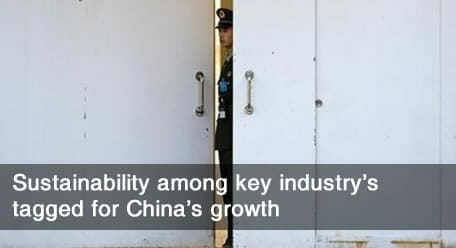
It’s not very salubrious but it’s secure. The four-star Jingxi Hotel in Beijing (pictured), which is owned by the People’s Liberation Army, hosted the annual plenum of the Communist Party’s Central Committee to draft the country’s next five-year plan.

The 12th five-year plan, nutted out by about 300 committee members, will be put to the National People’s Congress in March for ratification. The key themes in the latest plan are sustainability and reducing inequalities between provinces.

Analysts are predicting a lower GDP-growth target to be discussed between now and March, with details of the plan coinciding with a surprise 25bps point rise in the official interest rate last week – the first in China for three years.

A research note from HSBC Global Banking and Markets says more growth is likely to have to come from private consumption which has dropped from 50 per cent of total GDP to an estimated 36 per cent in the past 20 years.

“Expect further efforts to boost household incomes, primarily through higher minimum wages, as well as lower personal taxes,” the bank says.

Notwithstanding the stated concern for poorer provinces, the latest plan intends to speed the demographic shift to the cities, which will further boost consumption.

Sponsored Content

After the meeting, the Government confirmed a list of emerging strategic industries to be at the forefront of a “higher quality” of economic growth. They are: energy-saving and environmental protection firms, next generation IT, biotech, high-end manufacturing, new energy, new materials and composites, and clean-energy cars.

According to Shanghai Securities News, the group of industries currently make up only 3 per cent of GDP but are expected to contribute at least 15 per cent by 2020.


Leave a Comment

Sort content by

KIC partners with Australian, Malaysian sovereign peers

South Korea’s sovereign wealth fund (SWF), the $25 billion Korea Investment Corporation (KIC), has signed cooperation agreements with Queensland Investment Corporation (QIC) and Malaysia’s Khazanah Nasional Berhad to share resources and pursue investments with the government-owned entities. mrec4inarticleinline Sponsored Content scnative1 scnative2 scnative3

FRR completes review, reduces equities

France’s pension reserve fund, the €28.9 billion ($40.6 billion) Fonds De Reserve Pour Les Retraites, has completed a strategic asset allocation review that began last January, resulting in a dramatic reduction in equities. mrec4inarticleinline Sponsored Content scnative1 scnative2 scnative3

CalPERS limits derivatives use

In line with its recently-approved leverage policy, the $181 billion fund for Californian public employees, CalPERS, has reviewed its derivatives policy for global equities, with notional leverage constrained to a new limit of 10 per cent of the value of the global equities portfolio. mrec4inarticleinline Sponsored Content scnative1 scnative2 scnative3

The marginal investor: thoughts from the edge

Getting past past performance In his top1000funds.com blog on outlying investment issues, Jack Gray Adjunct Professor of Finance at the Paul Woolley Centre for Capital Markets Dysfunctionality at the University of Technology, Sydney, contemplates the allure of past performance. mrec4inarticleinline Sponsored Content scnative1 scnative2 scnative3

CFA members vote on short selling rules

As the Securities and Exchange Commission (SEC) ponders various alternative rules on an appropriate limit on short selling in distressed markets, a survey of members by the CFA Institute Centre for Financial Market Integrity shows the least preferred method is a ban on short selling in a particular security for the remainder of the day

ESG progress for large funds: USS

The £23 billion ($37.7 billion) Universities Superannuation Scheme is the UK’s second largest pension fund and a signatory to the UN’s Principles for Responsible Investment. Kristen Paech talks to the fund’s co-head of responsible investment, David Russell, about the role institutional investors are playing in effecting environmental, social and governance change. mrec4inarticleinline Sponsored Content scnative1

Previous



