Sustainability among key industry’s tagged for China’s growth

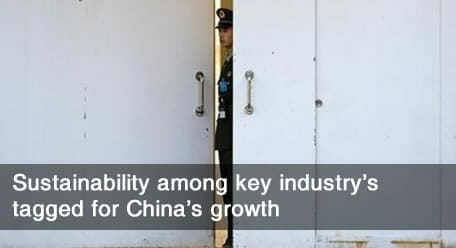
It’s not very salubrious but it’s secure. The four-star Jingxi Hotel in Beijing (pictured), which is owned by the People’s Liberation Army, hosted the annual plenum of the Communist Party’s Central Committee to draft the country’s next five-year plan.

The 12th five-year plan, nutted out by about 300 committee members, will be put to the National People’s Congress in March for ratification. The key themes in the latest plan are sustainability and reducing inequalities between provinces.

Analysts are predicting a lower GDP-growth target to be discussed between now and March, with details of the plan coinciding with a surprise 25bps point rise in the official interest rate last week – the first in China for three years.

A research note from HSBC Global Banking and Markets says more growth is likely to have to come from private consumption which has dropped from 50 per cent of total GDP to an estimated 36 per cent in the past 20 years.

“Expect further efforts to boost household incomes, primarily through higher minimum wages, as well as lower personal taxes,” the bank says.

Notwithstanding the stated concern for poorer provinces, the latest plan intends to speed the demographic shift to the cities, which will further boost consumption.

Sponsored Content

After the meeting, the Government confirmed a list of emerging strategic industries to be at the forefront of a “higher quality” of economic growth. They are: energy-saving and environmental protection firms, next generation IT, biotech, high-end manufacturing, new energy, new materials and composites, and clean-energy cars.

According to Shanghai Securities News, the group of industries currently make up only 3 per cent of GDP but are expected to contribute at least 15 per cent by 2020.


Leave a Comment

Sort content by

Target date funds go to Washington

Last week, Professor of Finance at Griffith Business School at Griffith University, Michael E. Drew*, was the only academic invited to present at the Securities and Exchange Commission and the Department of Labor Joint-Hearing on target date funds. He writes exclusively for conexust1f.flywheelstaging.com on his submission, which questions the conventional use of age-based approaches to

New York fund fulfills green promise with $200m Generation mandate

The $122 billion New York State Common Retirement Fund has allocated $200 million to Generation Investment Management, partly fulfilling the commitment made by New York State Comptroller, Thomas DiNapoli, in April last year to increase commitments to environmentally focused strategies across the whole portfolio by $500 million in three years. mrec4inarticleinline Sponsored Content scnative1 scnative2

Time to rebalance, equities are back: McCaughan

Economic evidence is starting to show the US is emerging from recession, but the really good news, according to Jim McCaughan the chief executive of Principal Global Investors, is that credit is flowing again, which means a sustained recovery. Amanda White spoke to him about the implications for institutional investors. mrec4inarticleinline Sponsored Content scnative1 scnative2

OMERS widens its scope to third-party offerings

The C$43 billion ($38 billion) Ontario Municipal Employees Retirement System (OMERS) has been granted expanded powers by the Ontario government to provide third-party investment and pension administration services, and is at various stages of discussion with a number of plans to provide investment management services. mrec4inarticleinline Sponsored Content scnative1 scnative2 scnative3

CalPERS officially alters asset allocation, reduces discretionary ranges

The $183 billion CalPERS board has made the first formal changes to its asset allocation targets since January 2008, increasing exposures to private equity and cash, and narrowing the discretionary ranges around all asset classes set in December last year. mrec4inarticleinline Sponsored Content scnative1 scnative2 scnative3

Climate change and capital markets: A global opportunity

Tackling the social, environmental and economic risks presented by climate change will require one of the biggest public-private partnerships ever seen.

Previous



