Sustainability among key industry’s tagged for China’s growth

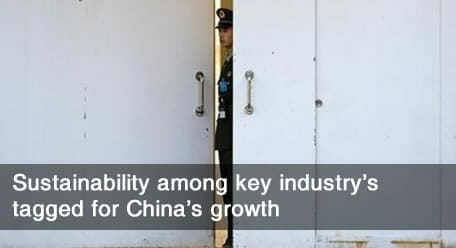
It’s not very salubrious but it’s secure. The four-star Jingxi Hotel in Beijing (pictured), which is owned by the People’s Liberation Army, hosted the annual plenum of the Communist Party’s Central Committee to draft the country’s next five-year plan.

The 12th five-year plan, nutted out by about 300 committee members, will be put to the National People’s Congress in March for ratification. The key themes in the latest plan are sustainability and reducing inequalities between provinces.

Analysts are predicting a lower GDP-growth target to be discussed between now and March, with details of the plan coinciding with a surprise 25bps point rise in the official interest rate last week – the first in China for three years.

A research note from HSBC Global Banking and Markets says more growth is likely to have to come from private consumption which has dropped from 50 per cent of total GDP to an estimated 36 per cent in the past 20 years.

“Expect further efforts to boost household incomes, primarily through higher minimum wages, as well as lower personal taxes,” the bank says.

Notwithstanding the stated concern for poorer provinces, the latest plan intends to speed the demographic shift to the cities, which will further boost consumption.

Sponsored Content

After the meeting, the Government confirmed a list of emerging strategic industries to be at the forefront of a “higher quality” of economic growth. They are: energy-saving and environmental protection firms, next generation IT, biotech, high-end manufacturing, new energy, new materials and composites, and clean-energy cars.

According to Shanghai Securities News, the group of industries currently make up only 3 per cent of GDP but are expected to contribute at least 15 per cent by 2020.


Leave a Comment

Sort content by

SWFs eye offshore deals after quiet Q1

Hurt by mark-to-market losses and exercising caution in the face of an unforgiving investment environment, sovereign wealth funds (SWFs) made only 26 investments, worth $6.8 billion, in the first quarter of 2009 – their lowest deployment of capital since the fourth quarter of 2005. mrec4inarticleinline Sponsored Content scnative1 scnative2 scnative3

Caisse pulls out of risky real estate after $5 billion write-down

Canada’s largest pension fund manager, the C$120 billion ($108 billion) Caisse de depot et placement du Quebec, has restructured its real estate group and ceased investing in the mezzanine and subordinated loans sector after suffering more than $4.5 billion in losses on its real estate and private equity portfolio in the first half of the

….. as 14-member international advisory board named

The CIC has named a 14-member International Advisory Council, which will advise the board and senior management on issues including portfolio development, strategy, and overseas investments. mrec4inarticleinline Sponsored Content scnative1 scnative2 scnative3

CIC to invest cash, as global portfolio returns – 2.1 % for the year…

CIC is poised to invest more than 80 per cent of the assets still allocated to cash in its $100 billion global portfolio, as it outlined in its first annual report to stakeholders it”cannot achieve its goals without productively deploying its capital”. mrec4inarticleinline Sponsored Content scnative1 scnative2 scnative3

UK funds lead charge on ESG

The £3.6 billion ($5.9 billion) London Pensions Fund Authority has recently beefed up its internal environmental, social and governance capabilities, resulting in more effective engagement, including with the Mayor of London. Kristen Paech talks to chief executive Mike Taylor about LPFA’s short, medium and long-term objectives for ESG and why the fund has taken matters

Reorienting retirement risk management

The Pension Research Council, part of the Wharton School at the University of Pennsylvania, recently hosted the 2009 Wharton Impact Conference, where leading academics, public pension sponsors and their advisors met to examine ways to reformulate and restructure retirement risk management. This is a summary of the proceedings, organised by Olivia Mitchell and Robert Clark.

Previous



