Sustainability among key industry’s tagged for China’s growth

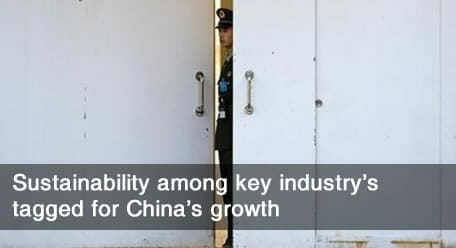
It’s not very salubrious but it’s secure. The four-star Jingxi Hotel in Beijing (pictured), which is owned by the People’s Liberation Army, hosted the annual plenum of the Communist Party’s Central Committee to draft the country’s next five-year plan.

The 12th five-year plan, nutted out by about 300 committee members, will be put to the National People’s Congress in March for ratification. The key themes in the latest plan are sustainability and reducing inequalities between provinces.

Analysts are predicting a lower GDP-growth target to be discussed between now and March, with details of the plan coinciding with a surprise 25bps point rise in the official interest rate last week – the first in China for three years.

A research note from HSBC Global Banking and Markets says more growth is likely to have to come from private consumption which has dropped from 50 per cent of total GDP to an estimated 36 per cent in the past 20 years.

“Expect further efforts to boost household incomes, primarily through higher minimum wages, as well as lower personal taxes,” the bank says.

Notwithstanding the stated concern for poorer provinces, the latest plan intends to speed the demographic shift to the cities, which will further boost consumption.

Sponsored Content

After the meeting, the Government confirmed a list of emerging strategic industries to be at the forefront of a “higher quality” of economic growth. They are: energy-saving and environmental protection firms, next generation IT, biotech, high-end manufacturing, new energy, new materials and composites, and clean-energy cars.

According to Shanghai Securities News, the group of industries currently make up only 3 per cent of GDP but are expected to contribute at least 15 per cent by 2020.


Leave a Comment

Sort content by

Emerging markets drag up ABP’s coverage ratio

A return on investments of 4.5 per cent for the first six months of this year, contributed mostly through emerging markets and commodities, has resulted in the coverage ratio of the €180 billion ($250 billion) ABP increasing from 90 to 98 per cent, well within the 93 per cent by the end of 2009 stipulated

OMERS splits CIO function in strategic revamp

The C$43 billion ($40 billion) Ontario Municipal Employees Retirement System (OMERS) continues its strategic revamp with the appointment of a new chief investment officer, splitting the role from chief executive Michael Nobrega who will focus on the ambitious plans to build co-investment opportunities and offer third-party investment management services. mrec4inarticleinline Sponsored Content scnative1 scnative2 scnative3

Investment decision making framework needs a rethink post crisis

While advising clients not to rebalance throughout much of the financial crisis, RogersCasey now believes investors should reposition to a “normal” asset allocation position, providing they re-examine what that ‘normal” is. Amanda White spoke with chief executive Tim Barron. mrec4inarticleinline Sponsored Content scnative1 scnative2 scnative3

CalPERS and Macquarie in tit for tat property deal

Global Retail Investors (GRI), a joint venture between the $188 billion CalPERS and First Washington Realty has bought a large portfolio of shopping centres from Macquarie CountryWide Trust, a realestate portfolio the joint venture largely sold to Macquarie nearly five years ago. mrec4inarticleinline Sponsored Content scnative1 scnative2 scnative3

Temasek expands co-investment platform

The S$185 billion ($134 billion) Temasek Holdings is considering a long-term plan to develop a co-investment platform for retail investors, on the back of a long history of co-investment with private equity funds and other institutional investors. mrec4inarticleinline Sponsored Content scnative1 scnative2 scnative3

Teachers argues against private placement voting rights

The $C87 billion Ontario Teachers Pension Plan (OTPP) is arguing for the protection of investor voting rights in corporate transactions, as one of its private equity funds is fighting the effects a private placement by an investee company may have on the voting results in a second stage amalgamation transaction. mrec4inarticleinline Sponsored Content scnative1 scnative2

Previous



