Sustainability among key industry’s tagged for China’s growth

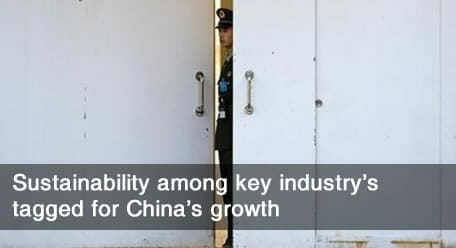
It’s not very salubrious but it’s secure. The four-star Jingxi Hotel in Beijing (pictured), which is owned by the People’s Liberation Army, hosted the annual plenum of the Communist Party’s Central Committee to draft the country’s next five-year plan.

The 12th five-year plan, nutted out by about 300 committee members, will be put to the National People’s Congress in March for ratification. The key themes in the latest plan are sustainability and reducing inequalities between provinces.

Analysts are predicting a lower GDP-growth target to be discussed between now and March, with details of the plan coinciding with a surprise 25bps point rise in the official interest rate last week – the first in China for three years.

A research note from HSBC Global Banking and Markets says more growth is likely to have to come from private consumption which has dropped from 50 per cent of total GDP to an estimated 36 per cent in the past 20 years.

“Expect further efforts to boost household incomes, primarily through higher minimum wages, as well as lower personal taxes,” the bank says.

Notwithstanding the stated concern for poorer provinces, the latest plan intends to speed the demographic shift to the cities, which will further boost consumption.

Sponsored Content

After the meeting, the Government confirmed a list of emerging strategic industries to be at the forefront of a “higher quality” of economic growth. They are: energy-saving and environmental protection firms, next generation IT, biotech, high-end manufacturing, new energy, new materials and composites, and clean-energy cars.

According to Shanghai Securities News, the group of industries currently make up only 3 per cent of GDP but are expected to contribute at least 15 per cent by 2020.


Leave a Comment

Sort content by

Cost saving on radar for Canada’s PSP as more assets come inhouse

The C$41 billion ($38 billion) Public Sector Pension Investment Board plans to bring more assets in house in a bid to lower costs, and will increase the number of direct investments to increase control, the chair Paul Cantor said at the annual public meeting. mrec4inarticleinline Sponsored Content scnative1 scnative2 scnative3

CalPERS, CalSTRS collaborate to build board nomination list

CalPERS and CalSTRS have collaborated to build a network of more than 150 individuals from a diverse pool of sources to act as potential candidates for nomination to corporate boards, as CalPERS’ consultant advises it to synchronise proxy votes between internal and external portfolios. mrec4inarticleinline Sponsored Content scnative1 scnative2 scnative3

CalPERS’ infrastructure consultant cuts fees

CalPERS has appointed a lead infrastructure consultant from its list of four shortlisted candidates that included Meketa Investment Group, Pension Consulting Alliance, RV Kuhns and Wilshire, with the appointed consultant offering a reduced fee structure as part of its contract. mrec4inarticleinline Sponsored Content scnative1 scnative2 scnative3

Alaska fills special opportunities bucket with real return mandates

The Alaska Permanent Fund will appoint four real return managers in March next year to manage a total of $2 billion in mandates that will have very few restrictions, and has shortlisted five managers to fill the brief, as part of its special opportunities bucket that makes up 21 per cent of the total fund.

Performance attribution using a decision hierarchy approach

The increasingly dynamic nature of asset allocation and the combination of internal and external management within pension funds requires a performance evaluation model for deeper insight of the organisation’s results. mrec4inarticleinline Sponsored Content scnative1 scnative2 scnative3

Euro funds think global as risk appetite returns

Investment appetite among European institutions rebounded in 2009, with Mercer Investment Consulting identifying a surge in clients’ demands for new global fixed income, global equity and specialist credit exposures. Andy Barber, global head of manager research at Mercer, tells Simon Mumme about the investment themes driving these searches, and the evident decline of the ‘home

Previous



