Sustainability among key industry’s tagged for China’s growth

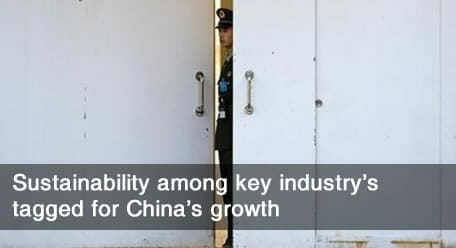
It’s not very salubrious but it’s secure. The four-star Jingxi Hotel in Beijing (pictured), which is owned by the People’s Liberation Army, hosted the annual plenum of the Communist Party’s Central Committee to draft the country’s next five-year plan.

The 12th five-year plan, nutted out by about 300 committee members, will be put to the National People’s Congress in March for ratification. The key themes in the latest plan are sustainability and reducing inequalities between provinces.

Analysts are predicting a lower GDP-growth target to be discussed between now and March, with details of the plan coinciding with a surprise 25bps point rise in the official interest rate last week – the first in China for three years.

A research note from HSBC Global Banking and Markets says more growth is likely to have to come from private consumption which has dropped from 50 per cent of total GDP to an estimated 36 per cent in the past 20 years.

“Expect further efforts to boost household incomes, primarily through higher minimum wages, as well as lower personal taxes,” the bank says.

Notwithstanding the stated concern for poorer provinces, the latest plan intends to speed the demographic shift to the cities, which will further boost consumption.

Sponsored Content

After the meeting, the Government confirmed a list of emerging strategic industries to be at the forefront of a “higher quality” of economic growth. They are: energy-saving and environmental protection firms, next generation IT, biotech, high-end manufacturing, new energy, new materials and composites, and clean-energy cars.

According to Shanghai Securities News, the group of industries currently make up only 3 per cent of GDP but are expected to contribute at least 15 per cent by 2020.


Leave a Comment

Sort content by

Wilshire paints dire picture for state retirement systems

Wilshire Consulting’s annual report on US state retirement systems reveals near-universal underfunding, leavened only slightly by the 19.5 per cent rally in global equity markets in the eight months since its cut-off date. mrec4inarticleinline Sponsored Content scnative1 scnative2 scnative3

OMERS overwhelms with underperformance

OMERS Strategic Investments, the investment entity of the C$47 billion ($45 billion) Ontario Municipal Employees Retirement System (OMERS) focused on co-investment opportunities in private markets, has dramatically underperformed its benchmark for the year. mrec4inarticleinline Sponsored Content scnative1 scnative2 scnative3

Risk parity becomes bittersweet flavour of the month

A risk parity approach to asset allocation is flavour of the month, in spite, and because, of the leverage it requires. Amanda White explores the topic.

Institutions worldwide rethink passive exposures: Towers Watson

The number of bond mandates awarded by institutional funds shot up by more than 50 per cent in 2009 as credit markets provided attractive investment opportunities, while the amount of passive allocations made by institutions increased fourfold in the past two years, according to Towers Watson.   mrec4inarticleinline Sponsored Content scnative1 scnative2 scnative3

DC plans must look at governance and design

Towers Watson’s Roger Urwin and Gordon Clark from the University of Oxford are finalising their fourth collaboration on global best practice for defined contribution plans. Amanda White spoke with Roger Urwin about the inefficiencies in plan design. mrec4inarticleinline Sponsored Content scnative1 scnative2 scnative3

AIMCo splits top job, beefs up investment team

The C$69 billion ($66 billion) Alberta Investment Management Corporation (AIMCo) will split its chief executive and chief investment officer roles, with Leo de Bever retaining the chief executive position, while a search is underway for a new CIO. mrec4inarticleinline Sponsored Content scnative1 scnative2 scnative3

Previous



