Sustainability among key industry’s tagged for China’s growth

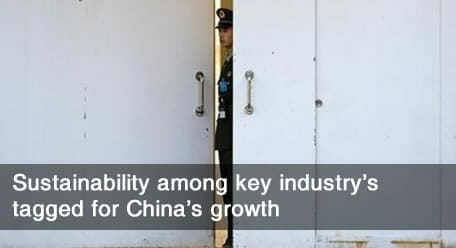
It’s not very salubrious but it’s secure. The four-star Jingxi Hotel in Beijing (pictured), which is owned by the People’s Liberation Army, hosted the annual plenum of the Communist Party’s Central Committee to draft the country’s next five-year plan.

The 12th five-year plan, nutted out by about 300 committee members, will be put to the National People’s Congress in March for ratification. The key themes in the latest plan are sustainability and reducing inequalities between provinces.

Analysts are predicting a lower GDP-growth target to be discussed between now and March, with details of the plan coinciding with a surprise 25bps point rise in the official interest rate last week – the first in China for three years.

A research note from HSBC Global Banking and Markets says more growth is likely to have to come from private consumption which has dropped from 50 per cent of total GDP to an estimated 36 per cent in the past 20 years.

“Expect further efforts to boost household incomes, primarily through higher minimum wages, as well as lower personal taxes,” the bank says.

Notwithstanding the stated concern for poorer provinces, the latest plan intends to speed the demographic shift to the cities, which will further boost consumption.

Sponsored Content

After the meeting, the Government confirmed a list of emerging strategic industries to be at the forefront of a “higher quality” of economic growth. They are: energy-saving and environmental protection firms, next generation IT, biotech, high-end manufacturing, new energy, new materials and composites, and clean-energy cars.

According to Shanghai Securities News, the group of industries currently make up only 3 per cent of GDP but are expected to contribute at least 15 per cent by 2020.


Leave a Comment

Sort content by

Infrastructure – the way out for the west?

Infrastructure investment has not caught on in the US, compared with institutional investing peers such as Canada, Australia and the UK. But Arjuna Sittampalam, research associate with EDHEC-Risk Institute and editor of Investment Management Review, argues infrastructure is perceived as a way out of the morass in which the US finds itself.mrec4inarticleinline Sponsored Content scnative1

US ivy league endowments cling to returns … just

Endowments are back, just. The annual survey of their returns by NACUBO-Commonfund showed an average return of 11.9 per cent for the 850 college and university endowments in the study for the year to June 2010.mrec4inarticleinline Sponsored Content scnative1 scnative2 scnative3

Forget sovereign debt as a safe haven: Mercer

The status of sovereign debt as a safe-haven investment has been put into question and the whole approach to bond investing may need to be revisited, according to Mercer, which has urged institutional investors to focus in the coming year on the ‘new realities’ of the global marketplace, which includes sufficient flexibility in their portfolios.mrec4inarticleinline

Israel’s offshore resources to secure SWF future

Israel is considering establishing its first sovereign wealth fund within one year using revenues from recent offshore natural-gas finds, following calls by the International Monetary Fund to do so.mrec4inarticleinline Sponsored Content scnative1 scnative2 scnative3

Putting your footprint where your mouth is: CalSTRS reports on carbon emissions

In the latest move to demonstrate the same commitment to climate change it expects from its portfolio companies, CalSTRS has signed The Climate Registry, a leading voluntary greenhouse gas registry in North America. The $147 billion fund will report on its carbon footprint, which was dramatically reduced when it moved into its new building in

New Jersey chair calls for allocation review

Chair of the investment council of the $70 billion State of New Jersey’s Division of Investment, Robert Grady, has called for a new asset allocation plan, pointing in particular to the fund’s cash position which sits at around 2.75 per cent. The fund has also been overweight its domestic equity allocation by about 6 per

Previous



