Sustainability among key industry’s tagged for China’s growth

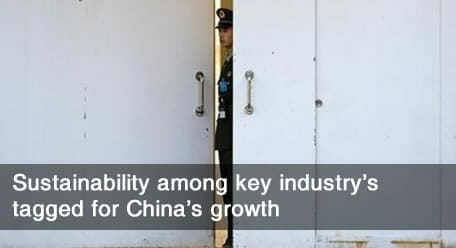
It’s not very salubrious but it’s secure. The four-star Jingxi Hotel in Beijing (pictured), which is owned by the People’s Liberation Army, hosted the annual plenum of the Communist Party’s Central Committee to draft the country’s next five-year plan.

The 12th five-year plan, nutted out by about 300 committee members, will be put to the National People’s Congress in March for ratification. The key themes in the latest plan are sustainability and reducing inequalities between provinces.

Analysts are predicting a lower GDP-growth target to be discussed between now and March, with details of the plan coinciding with a surprise 25bps point rise in the official interest rate last week – the first in China for three years.

A research note from HSBC Global Banking and Markets says more growth is likely to have to come from private consumption which has dropped from 50 per cent of total GDP to an estimated 36 per cent in the past 20 years.

“Expect further efforts to boost household incomes, primarily through higher minimum wages, as well as lower personal taxes,” the bank says.

Notwithstanding the stated concern for poorer provinces, the latest plan intends to speed the demographic shift to the cities, which will further boost consumption.

Sponsored Content

After the meeting, the Government confirmed a list of emerging strategic industries to be at the forefront of a “higher quality” of economic growth. They are: energy-saving and environmental protection firms, next generation IT, biotech, high-end manufacturing, new energy, new materials and composites, and clean-energy cars.

According to Shanghai Securities News, the group of industries currently make up only 3 per cent of GDP but are expected to contribute at least 15 per cent by 2020.


Leave a Comment

Sort content by

Gunning for diversity, dynamism and due diligence

The new low-return, high-volatility environment requires broadly diversified portfolios, dynamic decision-making and rigorous due diligence, which is beyond the internal capacity of most small funds under $10 billion, warns Russell Investment’s global chief investment officer Peter Gunning. He says smaller funds must decide if it is cost effective and even possible to internally manage investment

ESG here to stay

Anyone who thought ESG was a passing fad can think again. The announcement this week that Mercer, which has led the consulting industry on standalone ESG ratings, will now integrate those factors across its ratings process has cemented ESG as an important investment risk and return consideration. The consultant rates more than 20,000 investment strategies

Mercer integrates ESG

Mercer will integrate its proprietary environmental, social and governance (ESG) ratings across all of its manager-search and performance data, cementing ESG as a key investment consideration. The consultant rates more than 20,000 strategies, oversees more than $5 trillion of assets under advice and has $60 billion in its multi-manager products. Mercer has led the consulting

Modern portfolio theory, risk and fiduciary duty

It was only a few decades ago that trustees in many jurisdictions were restricted from investing in certain assets. Fiduciary duty has evolved as the thinking about investments has changed. This is true, then, of how trustees should be applying fiduciary duty to current day investment challenges, including systemic risk and climate change risk. Ed

Singapore’s GIC stashes cash

The Government of Singapore Investment Corporation (GIC) is stockpiling cash as it positions itself to take advantage of any potential opportunities, lifting its cash allocation from 3 per cent at the start of 2011 to 11 per cent of its total portfolio by the earlier part of this year. The sovereign wealth fund’s chief investment

GMO boss warns of food crisis

Global investors should have as much as 30 per cent of their portfolios exposed to natural resources, more than double the current market average, because of a burgeoning worldwide food crisis, GMO’s Jeremy Grantham says. The droughts afflicting farmers in the US and the subsequent spike in food commodity prices are just forerunners to the

Previous



