Sustainability among key industry’s tagged for China’s growth

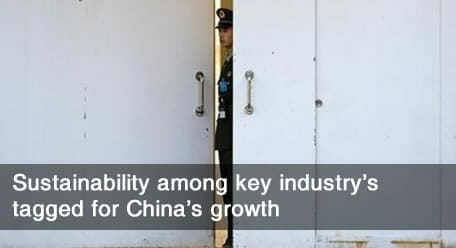
It’s not very salubrious but it’s secure. The four-star Jingxi Hotel in Beijing (pictured), which is owned by the People’s Liberation Army, hosted the annual plenum of the Communist Party’s Central Committee to draft the country’s next five-year plan.

The 12th five-year plan, nutted out by about 300 committee members, will be put to the National People’s Congress in March for ratification. The key themes in the latest plan are sustainability and reducing inequalities between provinces.

Analysts are predicting a lower GDP-growth target to be discussed between now and March, with details of the plan coinciding with a surprise 25bps point rise in the official interest rate last week – the first in China for three years.

A research note from HSBC Global Banking and Markets says more growth is likely to have to come from private consumption which has dropped from 50 per cent of total GDP to an estimated 36 per cent in the past 20 years.

“Expect further efforts to boost household incomes, primarily through higher minimum wages, as well as lower personal taxes,” the bank says.

Notwithstanding the stated concern for poorer provinces, the latest plan intends to speed the demographic shift to the cities, which will further boost consumption.

Sponsored Content

After the meeting, the Government confirmed a list of emerging strategic industries to be at the forefront of a “higher quality” of economic growth. They are: energy-saving and environmental protection firms, next generation IT, biotech, high-end manufacturing, new energy, new materials and composites, and clean-energy cars.

According to Shanghai Securities News, the group of industries currently make up only 3 per cent of GDP but are expected to contribute at least 15 per cent by 2020.


Leave a Comment

Sort content by

Start smelling the chocolates

The intelligent investor, managing director of Bedlam Asset Management, Jonathan Compton, says will look forward not back. Instead of reporting on the rescue of those countries already defaulting, he believes Belgium could be the next nation to default.mrec4inarticleinline Sponsored Content scnative1 scnative2 scnative3

The more foreign the market, the more funds-of-funds

The world’s largest institutional investors are increasingly building their own home-region private equity programs, but turning to fund-of-funds for the rest of the world particularly when it comes to Asia, says a Hong Kong-based partner of the first fund-of funds to ever build a product covering that region.mrec4inarticleinline Sponsored Content scnative1 scnative2 scnative3

AP1 doubles alternatives

mrec4inarticleinline Sponsored Content scnative1 scnative2 scnative3

Nerds must leave herd says PanAgora chief

There is room for more innovation in funds management, says chief executive of PanAgora Asset Management, Eric Sorensen, who believes being different is critical to success.mrec4inarticleinline Sponsored Content scnative1 scnative2 scnative3

Sovereign funds open up cautiously

Sovereign wealth funds have captured the imagination of investment professionals and politicians alike over the past few years. Perhaps because of the large sums of money at their disposal, there has been a degree of wariness about the intentions of some. Most, after all, are controlled by governments.mrec4inarticleinline Sponsored Content scnative1 scnative2 scnative3

CIC sails through global rough seas

Stronger governance, management infrastructure and risk management have steered the China Investment Corporation through the global financial crisis and emerge with a large buffer of cash, the annual report says.mrec4inarticleinline Sponsored Content scnative1 scnative2 scnative3

Previous



