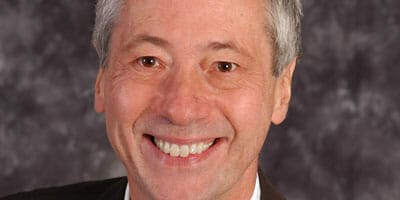
State Street’s Probyn into 2013

The current equity rally is not predicated on a shift in economic performance, according to chief economist at State Street, Chris Probyn, who says it would be reasonable to say the market may “pause for thought”.

Probyn says the move from fixed income to equities has been fostered by some of the “economic areas for concern” being eliminated.

These include the avoidance of a hard landing in China, and a disorderly breakup of the euro, proactive policy responses in Japan and the avoidance of the US fiscal cliff.

“These have all been ticked off,” he says. “But still growth is not great. The fourth quarter earnings reports have been good, with the notable exception of Apple, so there is some fundamental support for equities. But there is no fundamental upshift, so the size and speed of the rally is a little surprising.”

Probyn’s outlook for 2013 is for 0.25 per cent global growth, driven by a 0.5 per cent growth in emerging markets.

His economic outlook for developed markets is zero growth, which he partly attributes to fiscal policy decisions.

Sponsored Content

“We have reinvented economics, when the economy is weak we stop government spending, it is a failure of policy and we are repeating the mistakes of the 1920s,” he says.

Probyn also attributes the equity rally to a certain psychological behaviour.

“People have worry fatigue, they are tired of worrying about the same things,” he says.

State Street doesn’t have a big economics department, three people in fact. One emerging markets specialist plus two who look at the G8, defined as the G7 plus Australia (because of State Street’s presence in that country).

Probyn believes that in order to understand certain asset classes there needs to be an understanding of the global economic story, such as the relationship between resources and China.

He admits that for most economists it is difficult to predict exact growth numbers, but it’s more important to get “the overall story right”. Last year that overall story was further growth moderation, and that is the outlook for 2013 as well.


 

Leave a Comment

Sort content by

Danger signs surround quantitative easing solution

If the unavailability of credit is not the source of the US economy’s problems then the quantitative easing solution put forward by the US Federal Reserve could be ineffective at best, and at worst full of danger, according to broker and quantitative research firm, H.C. Wainwright & Co Economics.mrec4inarticleinline Sponsored Content scnative1 scnative2 scnative3

Fear the Boom and Bust

With a festive tongue firmly in cheek, this video may provide a welcome smile at the end of a challenging year for many fiduciary investors. The global financial crisis triggered a revival in the popularity of interventionist Keynesian economics – but the free marketeers of Friedrich Hayek’s Austrian School won’t give ground easily. Here, Keynes

Agency risk at the fund level … and happy holidays!

If this is a time of year for reflection on a personal level, perhaps with some plans for self-improvement over the next year, whether it be more time with the family, get fit, etc, then it may also be a good time to consider the human element in the management of a fiduciary fund. mrec4inarticleinline

NEST broods on SRI choice

The UK’s National Employment Savings Trust (NEST) will offer members a socially responsible investment fund, one of the first investment decisions the trustee board has made as it finalises its investment strategy.mrec4inarticleinline Sponsored Content scnative1 scnative2 scnative3

Now this is a merger: NZ mulls mega-fund

The New Zealand government could create a single NZ$40 billion ($30 billion) fund under a proposal mooted in its inaugural ‘Investment Statement’ published this month. mrec4inarticleinline Sponsored Content scnative1 scnative2 scnative3

Cancun does not solve key issues: Sorensen

The international climate process survived at COP16, but the  UN Cancun Agreement does not solve key issues such as legally binding emission targets and carbon pricing, according to chair of the Institutional Investors Group on Climate Change, Ole Beier Sorensen.mrec4inarticleinline Sponsored Content scnative1 scnative2 scnative3

Previous



