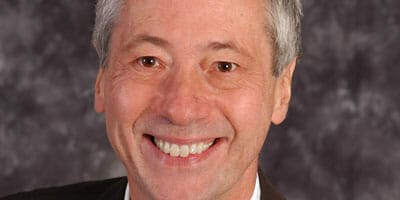
State Street’s Probyn into 2013

The current equity rally is not predicated on a shift in economic performance, according to chief economist at State Street, Chris Probyn, who says it would be reasonable to say the market may “pause for thought”.

Probyn says the move from fixed income to equities has been fostered by some of the “economic areas for concern” being eliminated.

These include the avoidance of a hard landing in China, and a disorderly breakup of the euro, proactive policy responses in Japan and the avoidance of the US fiscal cliff.

“These have all been ticked off,” he says. “But still growth is not great. The fourth quarter earnings reports have been good, with the notable exception of Apple, so there is some fundamental support for equities. But there is no fundamental upshift, so the size and speed of the rally is a little surprising.”

Probyn’s outlook for 2013 is for 0.25 per cent global growth, driven by a 0.5 per cent growth in emerging markets.

His economic outlook for developed markets is zero growth, which he partly attributes to fiscal policy decisions.

Sponsored Content

“We have reinvented economics, when the economy is weak we stop government spending, it is a failure of policy and we are repeating the mistakes of the 1920s,” he says.

Probyn also attributes the equity rally to a certain psychological behaviour.

“People have worry fatigue, they are tired of worrying about the same things,” he says.

State Street doesn’t have a big economics department, three people in fact. One emerging markets specialist plus two who look at the G8, defined as the G7 plus Australia (because of State Street’s presence in that country).

Probyn believes that in order to understand certain asset classes there needs to be an understanding of the global economic story, such as the relationship between resources and China.

He admits that for most economists it is difficult to predict exact growth numbers, but it’s more important to get “the overall story right”. Last year that overall story was further growth moderation, and that is the outlook for 2013 as well.


 

Leave a Comment

Sort content by

Chinese growth prompts further inflation fears

The Chinese economy refuses to slow down. The latest GDP growth figures have once again surprised on the upside, prompting new fears about inflation.mrec4inarticleinline Sponsored Content scnative1 scnative2 scnative3

NEST to offer Sharia option

The UK’s National Employment Savings Trust (NEST) is looking for a Sharia-compliant funds manager to manage a global equity fund as it plans to offer more than its default strategy to members.mrec4inarticleinline Sponsored Content scnative1 scnative2 scnative3

New research on sovereign funds from EDHEC Asia

New thematic research programs examining sovereign investment funds management and a more general initiative on best investment practices will be a part of the academic work of the recently opened Asia office of Europe’s EDHEC-Risk Institute.mrec4inarticleinline Sponsored Content scnative1 scnative2 scnative3

Investors focus on hedge fund correlations: survey

Accessing non-correlated strategies has emerged as the top institutional aim in hedge fund investing, according to a survey by SEI Knowledge Partnership and Greenwich Associates, reflecting a shift in objectives since the 2009 survey, when institutions reported diversification and absolute return as priorities.mrec4inarticleinline Sponsored Content scnative1 scnative2 scnative3

Detecting crowded trades in currency funds

This article by Momtchil Pojarliev and Richard Levich proposes a methodology to measure crowded trades and applies it to currency managers. According to the authors, this methodology offers useful insights regarding the popularity of certain trades among hedge funds and provides regulators with another tool for monitoring markets.mrec4inarticleinline Sponsored Content scnative1 scnative2 scnative3

Investors suffer as Asian hedge funds ossify

As institutions take over from high-net-worth individuals and family offices as the main investors in hedge funds around the world, those hedge fund managers, too, are becoming institutionalised. This is not always a good thing for investors.mrec4inarticleinline Sponsored Content scnative1 scnative2 scnative3

Previous



