
Slow death for Japan’s pension funds

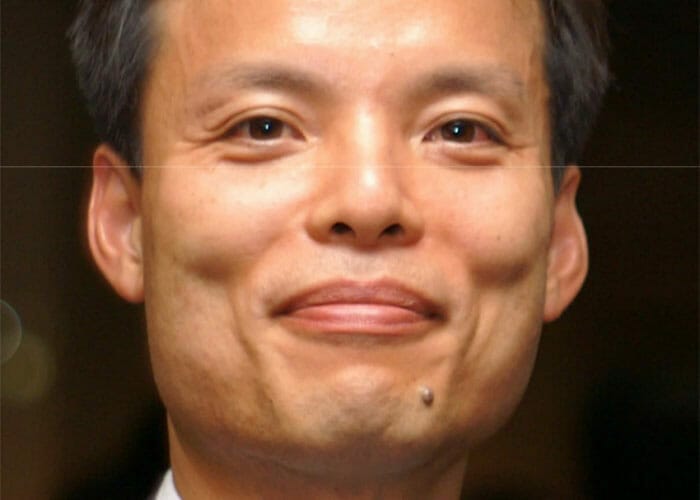
Pensions expert, Hidekazu Ishida, talks about the state of corporate pension funds in Japan – from where they’ve been to where they’re going – and discusses some popular investment strategies.

“Japan’s corporate pension funds are contracting; they used to have half of their exposure in equity, but now they stick to safe assets,” says Japanese pensions expert Hidekazu Ishida, a former investment officer for the ¥320 billion ($3 billion) Osaka Gas Pension Fund, a defined benefit fund for Japan’s second largest gas utility, serving seven million customers in the Kansai area.

Ishida left to pursue his own career in 2015, but during his decade-long tenure, he oversaw the 1990s’ high of deregulation in the industry – when Japanese corporates were allowed to manage their own pension funds for the first time, and asset managers piled into the sector – to today’s gradual shrinking of Japan’s corporate pension funds.

Something he attributes to the ageing population and pension payments exceeding contributions, long-term low interest rates and the rise of defined contribution schemes.

“DB schemes in Japan are a dying species,” he says.

Assets at Osaka Gas are portioned between a 51 per cent allocation to bonds and deposits, with a significant amount dedicated to cash flow, a 31 per cent allocation to equity, and a 17 per cent allocation to real estate.

Sponsored Content

Popular strategies among Japan’s corporate pension funds include: multi-asset strategies offering little risk but stable returns, which although low are a preferred alternative to low bond yields – or equity risk.

Ishida says that corporate pension funds’ success with private equity has been “slow”.

Osaka Gas began investing in private equity in 2000, but didn’t make a meaningful return until 2012, he says.

Ishida observes that corporate funds favour hedge funds in their allocations for the liquidity they offer, with typical allocations of between 5-10 per cent of their assets. He also sees growing demand for smart beta strategies in Japan.

“It is possible to manufacture an alpha stream that seems to be stable, and they are relatively cheap,” he says. “Given the rate of sales activity, I think this is a new area.”

Yen a ‘safe harbour currency’

Many pension funds have also been caught out by not sufficiently hedging assets denominated in foreign currencies.

“Funds should have hedged more of their currency exposure last year. The Yen is a safe harbour currency that has been strengthening for the past six months, hurting overseas asset performance and helping to amplify losses. Hedging costs are so expensive – and it limits investors’ ability to go abroad. Going overseas shouldn’t mean that investors take currency risk, but a lot do.”

Ishida also notes another concern among funds since Japan adopted negative rates in January to spur spending and inflation. Some Japanese banks are poised to start imposing charges on the money they hold for clients such as pension funds, in a bid to limit the costs they are incurring from the Bank of Japan’s negative interest rate policy.

“Negative interest rates have forced banks to introduce a surcharge for deposits and short term liquidity. I don’t know what this means for investors yet,” he says. Mandates are typically outsourced, explains Ishida.

“There is no in-house management, because legally pension funds have to outsource all their mandates. Pension funds are not supposed to stock pick, although they can select their managers. Some large funds are allowed to run their own passive strategies, and firms like Panasonic have developed their own investment management subsidiaries, to run theses passive mandates.”

World’s biggest pension fund

Japan’s government recently put off a plan to let its $1.1 trillion public pension fund, the Government Pension Investment Fund (GPIF), buy and sell stocks directly, following criticism that the move could lead to excessive state influence on the market.

The legislation would have allowed the GPIF to directly buy and sell stocks, in a reform that would cut down on fees paid to managers and allow the fund to constructively interact with corporations and improve governance.

The GPIF is also barred from investing directly in assets such as real estate, infrastructure and private equity.

Current asset allocation at the world’s biggest pension fund is 39 per cent in domestic bonds, 4.5 per cent short term assets, 13.5 per cent international bonds, 21.4 per cent domestic stocks and 21.6 per cent international stocks. The GPIF plans to announce its fiscal-year results at the end of July, with market expectations that the fund will report a loss. In 2014 it announced a shift from bonds into equity as it sought higher returns. The fund posted a 12 per cent return in the year through March 2015, but it has been hit since by the downturn in equities.

Leave a Comment

Sort content by

Global search activity down, but US pension funds hire and fire

US pension funds increased their manager search activity in 2008 on the back of large losses in equity markets, while funds in the UK, Europe and Australia ditched searches to concentrate on strategy issues. mrec4inarticleinline Sponsored Content scnative1 scnative2 scnative3

ICGN appoints Rosen to ex dir as Simpson departs to CalPERS

The International Corporate Governance Council (ICGN) has appointed Carl Rosen, head of corporate governance at the Second Swedish National Pension Fund (AP2), as its new executive director replacing Anne Simpson who will join CalPERS as senior portfolio manager for corporate governance this month. mrec4inarticleinline Sponsored Content scnative1 scnative2 scnative3

Australian Future Fund piles into debt

The $A51.2 billion ($37.9 billion) Australian Future Fund has quintupled its allocation to debt in the past year, significantly upweighting its exposure to debt securities in the last quarter to 21.9 per cent of the fund. mrec4inarticleinline Sponsored Content scnative1 scnative2 scnative3

Governance review to facilitate speedy decisions at SWFs

Sovereign wealth funds are prioritising a review of their internal risk management frameworks and better communication with their stakeholders regarding expectations of financial markets, according to Patricia Pascuzzo, global head of national funds consulting at Mercer. mrec4inarticleinline Sponsored Content scnative1 scnative2 scnative3

The marginal investor: thoughts from the edge

What’s in a Name (or an Acronym)? GFC is in the lexicon. It’s not in mine. I refuse to add to the surplus of investment TLAs in  circulation. I refuse because naming induces a dangerously comforting sense that we’ve understood or even controlled that named. Hurricanes sound less malevolent, friendly almost, when called Kylie or

The stochastic advantage: volatility creates opportunity

Robert Garvy, chief executive officer of Florida-based INTECH Investment Management, talks to Kristen Paech about the benefits of mathematical investing, and the blurring of the line between passive and active investing. mrec4inarticleinline Sponsored Content scnative1 scnative2 scnative3

Previous




