
OTPP deals with underfunding

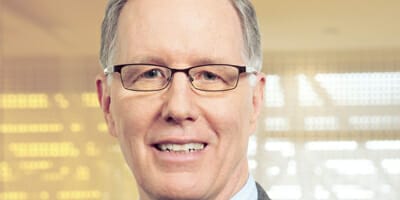
Even the most successful and well run pension plans are facing underfunding challenges. The $129-billion Ontario Teachers’ Pension Plan is the latest to investigate solutions to solve the mismatch between the pension promise and the funds required to meet that, says Jim Leech, chief executive of the organisation .

OTPP has appointed a taskforce – chaired by Dr Harry Arthurs, former dean of Osgoode Hall Law School in Toronto, president emeritus of York University and chair of Ontario’s pension commission – to investigate how to reduce the cost of the mismatch caused by the difference in the time members spend in work and retirement.

Among other generous benefits, OTPP has generous early retirement benefits and on average teachers work for 26 years and retire for 31.

“We can change benefits to deal with these things or change the rules around some of those promises, and this is what the taskforce is all about,” Leech says.

The task at hand

He says the taskforce will look at how to reduce the cost of the mismatch and is investigating about nine different options. This will be reduced to three and then discussed with the membership.

“For example, we have generous re-employment rules, and we fund the mismatch between a member getting the Canadian pension and retirement. Why? It is just encouraging people to retire early,” Leech says. “All of these things impact the demographic of the workforce. It shouldn’t be the pension plan driving this; the employer should be driving it.”

Sponsored Content

The taskforce will also look at intergenerational risk, which now falls on the shoulders of younger and needs to be resolved, he says.

OTPP brought in inflation protection, now 100-per-cent conditional, which Leech says has gone a long way to building in flexibility into the fund.

“We are about 75 per cent to solving these problems, and now the taskforce is completing on that,” he says. “Every year a decision is made whether pensions are increased on the rate of inflation depending on the condition of the plan’s funding status. This is the perfect toggle to use in managing the plan. It is now dialled back to 45 per cent, but it can go as low as zero. If times are good, then it can go up.”

OTPP member benefits are calculated as two times the number of years worked multiplied by the best five-year average. Now there is no guaranteed inflation protection on that.

Leech says by introducing that initiative, the liability has been reduced by about $12 billion.

The fund is in a relatively good position, compared with its global peers, and is currently 97-per-cent funded.

Global context

OTPP is globally regarded as a leader in governance among pension plans, and Leech says it is its governance structure allows the sponsors to address the funding shortfall.

“It is 50-50 shared between the employer and employee, so it is in both of their interests to solve this. With most US pension plans, it’s still part of collective bargaining.”

The fund has produced a documentary that highlights the underfunding issues facing pension funds around the world, educating the public on the effects of the financial crisis, low interest rates and demographic changes.

Part of the impetus of the video was to put OTPP’s problems in context, he says, that this is a global pension phenomenon.

“The fallout of the financial crisis, in particularly low interest rates, means the prognosis for growth is not good. Our plan is extremely interest-rate sensitive. If interest rates go down then our bond portfolio goes up, but our liabilities go up even faster. We are constantly trying to manage that. Our liability-driven investing has increased and in the past five years have pushed that way – real estate, commodities, infrastructure. We also have an enormous bond portfolio, about $60 billion, which is almost entirely in Canadian and US sovereign bonds.”

Meanwhile the fund continues to expand, and has just opened a Hong Kong office.

OTPP allocates about 15 per cent of the fund to emerging markets and will increase that to 20 per cent in the next couple of years.

“It is estimated that 80 per cent of the world’s trade will be intra Asia by 2025. If that is true, then we think you have to be there,” he says.

Leech will retire this year after 12 years at OTPP and a tenure as only the second chief executive of the fund. Head of fixed income and alternatives, Ron Mock, will take over the role.

Leech identifies four factors in OTPP’s success, with the governance structure at the top of the list. He also says the culture, which is very learning-based, and humility of its professionals plays a big part. The fund’s proprietary risk system, which is instrumental in the fund allocating according to risk, not asset classes, is its secret sauce, he says.

OTPP has 1000 employees, about 275 of whom are investment professionals.

Leave a Comment

Sort content by

Slavery victims look to financial world

Speaking at the PRI in Person in Paris in a panel to highlight the role of finance in addressing social issues, Ghanaian James Kofi Annan, sold into slavery at the age of six, told his story.

Pizza and diversity: How funds move dial

Empowering long-term influential asset owners to invest responsibly is the key to hastening take-up in responsible investment. Delegates heard how some leading asset owners are doing this through their diversity and ESG practices.

Responsible FI promotes good markets

Responsible investment has assumed an increasingly central role in fixed income portfolios and in the experience of Jørgen Krog Sæbø CIO, fixed income, and Lars Tronsgaard deputy managing director at Folketrygdfondet, which manages the Government Pension Fund Norway, one part of Norway’s Government Pension Fund, adopting a responsible investment focus builds more integrated understanding and deeper insight into companies.

At a glance: FIS Cambridge day three

An overwhelming number of delegates at the Fiduciary Investors Symposium said the funds management industry was not doing well in innovationMartin Gilbert, who started Aberdeen Standard Investments in 1983 and is now chair, said industry participants needed to innovate and disrupt themselves.

Climate change risk to spur stress test

Mercer has quantified a ‘low-carbon transition’ premium in the sequel to its seminal climate change report, showing that a 2⁰C scenario equates to 11 basis points per annum to 2030 in a typical growth portfolio.

ATP’s approach to ESG

The giant Danish fund, ATP, takes a comprehensive approach to ESG including voting and engagement, as well as a large investment in green bonds. Ole Buhl is vice president and head of ESG at ATP explains.

Previous




