
Organisational change: asset owners 2.0

A key ingredient for success in any organisation is strong leadership. It is common in the corporate world for the chief executive to change every five to 10 years as the organisation evolves. Are the same principles true for large institutional investors?


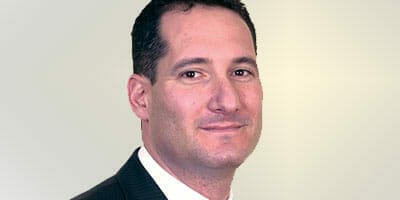
Roger Urwin, global head of investment content at Towers Watson, who also leads the firm’s change consulting to asset owners says external market conditions regularly drive companies to reassess their strategy and re-focus their activities. Asset owners face the same challenges and should look at how their organisations can evolve.

“Asset owners are facing the same pressures to adapt to a changing environment and we have helped a number of them around the world to be more flexible, nimble and prepared for change,” Urwin says.

Similarly, Graeme Miller who is head of investment for Towers Watson in Australia says, different skills and experience is needed in leadership as an organisation becomes larger and more complex.

Sponsored Content

“In the corporate world it would be relatively unusual for CEOs to stay in the role longer than five to 10 years. In all top companies in the world, change is necessary and the same principles apply to institutional investors.”

Miller says it is possible for individuals to develop and grow their skill sets, so it less about organisations out-growing an individual, and more to do with the needs of the organisation evolving.

“If you think of any organisation that you admire – GE, Apple, Ford – you almost always identify the organisation with an outstanding leader, the same should be true in the context of institutional investors,” Miller says.

The qualities of leadership include passion and vision, commitment, integrity, and the ability to form and articulate a strategy and take the organisation along a journey.

In the institutional investment context Towers Watson considers investment leadership as a triangular relationship structure between the chief investment officer, chief executive and the chair.

“All three individuals are points on the triangle and we believe the strong leadership structures are where there are very sharp points and there is a symmetrical structure with competent, visionary, strong leadership at each point.”

While he says there is an exception to every rule, in general these three functions should be separate and delineated, as different roles with different skill sets.

The institutional investment industry is dynamic, and organisations should look for leaders that are energetic and have different perspectives, and in the war for talent there is a convergence between organisations that have traditionally been funds managers and those defined as institutional investors

“Is AustralianSuper a fund manager or an institutional investor? The same could be said of AMP,” he says.

“The two organisations are converging. The days of fund managers having a monopoly to attract and retain staff are gone. There is an artificial distinction between whether the salaries are paid indirectly to the fund manager or directly to the fund’s own employees.”


It is Towers Watson’s belief that the asset owners that adapt to change, and enhance their decision making, will succeed.

“Those asset owners whose decision making has become more flexible and efficient at handling uncertainty and ambiguity will be more adept at exploiting the potential opportunities available,” Urwin says.

But Miller says typically pension funds find it difficult to make material changes.

Also most superannuation funds in Australia have experienced substantial growth because of the compulsory nature of the industry.

“These funds look around themselves and see they must be doing something right, but it is mandated growth. There are clear examples of success but the rising tide raises all boats, I wouldn’t look at assets under management as a measure of success.”

Instead, in the defined contribution world, Miller says risk-adjusted investment performance in the long-term is a better measure of success.

Further he says there other measures that get little attention are important gauges of organisational success. In particular retention of members when they change employment, or move through retirement or when their account balances become material, would be a measure of success.

“If I was ranking the success of superannuation funds it would be their ability to retain members,” he says.

The asset owner industry has grown up in an environment where many investors have operated in a relatively uncompetitive un-commercial environment, this has meant the creative destruction that exists in a commercial and competitive environment hasn’t been present.

“The fact today’s structures don’t fit tomorrow’s challenges, could also be seen that yesterday’s structures don’t fit today’s challenges and they need updating. The structures of 10 years ago are not fit for today,” he says. “One simple fact is that many organisations are now very large investors but they started off small, and they haven’t put structures in place along the way.”

Towers Watson believes “with absolute certainty” that the most reliable predictor of outperformance is the strength of investment governance.

“It is present in everything we have seen working with organisations that the key differentiator of successful investors – which all have different investments, asset allocations and attitudes to risk – is the strength of their governance.”

With this in mind it is prudent for investors to reassess their organisational leadership and decision making structures for competitive positioning.


Asset Owner:AustralianSuper

Leave a Comment

Sort content by

Feeling the force of falling endowments

A number of Ivy League universities – including Yale, Cornell and the University of Pennsylvania (Penn) – are directly feeling the affects of the negative performance of their endowment funds, and are being forced to cut operating budgets for the 2009/10 financial year. mrec4inarticleinline Sponsored Content scnative1 scnative2 scnative3

SWFs experience 18 per cent growth amid global downturn

Despite recent investment losses, sovereign wealth funds (SWFs) collectively grew by 18 per cent in 2008, bringing the sum of assets held by the vehicles to US$3.9 trillion, a report from International Financial Services London (IFSL) found. mrec4inarticleinline Sponsored Content scnative1 scnative2 scnative3

Giant Texas plan defers performance pay for execs

Chief investment officer of the US$81 billion Teacher Retirement System of Texas, Britt Harris, has offered to forego an estimated $167,935 in performance incentive pay for 2008. At the most recent board meeting, the TRS board accepted Harris’ offer and also voted to defer all remaining investment division performance pay until the fund experiences a

US endowment slams consultants

The $4 billion Claremont University Consortium (CUC) has criticised the service small endowment funds in the US are receiving from their investment consultants, labelling the solutions as “cookie cutter, boilerplate answers”. mrec4inarticleinline Sponsored Content scnative1 scnative2 scnative3

Full transparency of big hedge fund positions from now on: AIMA

The peak body for the global hedge fund industry, the Alternative Investment Management Association (AIMA) has backed a proposal mandating the full transparency and disclosure of ‘stematically significant’ positions and risk exposures held by hedge funds to their national regulators. mrec4inarticleinline Sponsored Content scnative1 scnative2 scnative3

Markowitz has plan for gaining insights into complex instrument

At the age of 82, modern portfolio theorist, Harry Markowitz still has a lot to say about the state of play in investment management.

Previous




