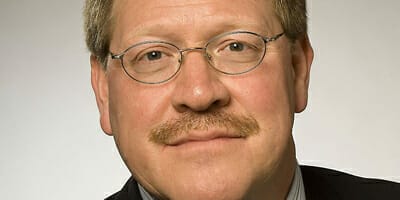
Eijffinger’s decade of financial repression

Financial repression will define the economic landscape for at least another decade, according to professor of financial economics at Tilburg University, Sylvester Eijffinger, which has serious implications for institutional investors.

Eijffinger, who also is also a visiting professor at Harvard, sits on the monetary experts panel of the European Union and is an adviser to the International Monetary Fund, says negative interest rates are the major issue of our time.

Negative real interest rates are here to stay, a realisation that has huge implications for investors.

“Governments have to de-leverage risk in times of low growth and they are not prepared to increase taxes; they have to do it with financial repression,” he says. “As an investor, be prepared. You have to realise that low interest rates are here to stay at the short-end and possibly at the long-end of the yield curve. This has huge implications for investments.”

By way of example, he says the European Central Bank’s policy rate stands at 0.5 per cent, while the eurozone’s annual inflation rate is 2.5 per cent. The Bank of England keeps its policy rate at only 0.5 per cent, despite an inflation rate that hovers above 2 per cent. And, in the United States, where inflation exceeds 2 per cent, the Federal Reserve’s benchmark federal funds rate remains at an historic low of 0 to 0.25 per cent.

This will be the financial and economic environment of the immediate future.

Sponsored Content

He says negative interest rates, which he describes as a kind of wealth tax, are necessary for governments to de-risk, but they come at the expense of savers.

“People who save should be aware that governments need to do this for at least a decade,” he says.

Eijffinger will give a keynote address at the Fiduciary Investors Symposium, an event that brings together institutional investors to examine the power and responsibility of fiduciary investment.

The event, which is convened by Conexus Financial, the publisher of conexust1f.flywheelstaging.com, will be held in Amsterdam from October 20 to 22, 2013. www.fiduciaryinvestor.com

Read an article by Eijffinger on the subject here.



Leave a Comment

Sort content by

Dysfunctional boards should be weaned off implementation: Ambachtsheer

In November the International Centre for Pension Management at the Rotman School, University of Toronto will launch its board effectiveness program, which director Keith Ambachtsheer hopes will help overcome the dysfunctionality of pension fund boards – which have a desire to implement rather than oversee. mrec4inarticleinline Sponsored Content scnative1 scnative2 scnative3

CalPERS sets up new benchmarks

In the first move to implement the new strategic asset allocation approved in December, CalPERS has introduced a raft of new benchmarks including composite benchmarks for the new asset classes of growth, real and liquidity created under the restructure. mrec4inarticleinline Sponsored Content scnative1 scnative2 scnative3

Australia ponders mining SWF future

The wealth generated by Australia’s mining boom is presenting a dilemma for the Australian Federal Government, with decision-makers at the crosspaths of what to do with it. Calls are increasing for the establishment of a sovereign wealth fund, with economists saying the time is right if the Federal Government delivers on its promise of a

Great year for Ontario Teachers still not good enough

Pity the folks at Ontario Teachers’ Pension Plan. They shot the lights out with investment performance last year and the fund is still in the red.mrec4inarticleinline Sponsored Content scnative1 scnative2 scnative3

It’s all good: the lessons of the past three years

The positions have changed, over the past three years, in the food chain of professional funds management, away from the manager and towards the fiduciary. And it is not just the large fiduciary funds which can benefit from the trend.mrec4inarticleinline Sponsored Content scnative1 scnative2 scnative3

Environmental engagement through benchmarking

Engaging real estate fund managers on their carbon footprint will be more easily implemented following the creation of a Global Real Estate Sustainability Benchmark, the result of collaborative work by a group of 11 of the world’s largest pension asset managers and Maastricht University.mrec4inarticleinline Sponsored Content scnative1 scnative2 scnative3

Previous




