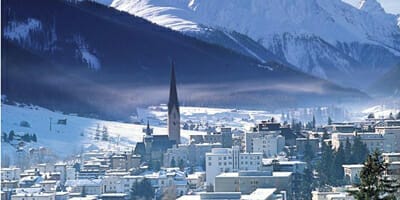
A sustainable financial system on the agenda at Davos

The United Nations Environment Programme’s Inquiry into the Design of a Sustainable Financial System will present its interim report in Davos this week. The report has been initiated to advance policy options to improve the financial system’s effectiveness in mobilising capital towards a green and inclusive economy, and the interim report profiles innovations in five areas including institutional investment.

Here it explores policy changes in three broad areas: capital allocation, investor governance and market incentives in order to align the assets of institutional investors with sustainable development.

The report’s authors are positive about progress, saying that 2015 is poised to be the year of sustainable development, with growing focus on innovative policies to mobilise the trillions of dollars needed for long-term inclusive wealth creation.

The report identifies a number of high potential areas which could contribute to this shift including three major asset pools – banking, bond markets and institutional investors – as well as two emerging policy tools – monetary policy and ‘environmental stress tests’.

The UNEP Inquiry into Design Options for a Sustainable Financial System, now entering the second half of its two-year work program, was created to explore emerging changes and reforms to the financial system that would improve its alignment with sustainable development. Its investigations to date have revealed many innovations in financial and monetary policy, regulation and financial market standards.

The Inquiry is now half way through its work program and will complete its research and engagement at the end of 2015.

Sponsored Content


To access the report, Pathways to Scale, click below

 Inquiry – Pathways to Scale

Leave a Comment

Sort content by

UniSuper defies accepted thinking

Mention any asset class to John Pearce, chief investment officer of Australian superannuation fund UniSuper, and he will doggedly set out the good and bad thinking around it. A common source of his ire is the sight of investors herding around a belief based on a lack of rigorous thinking. Good practice for him involves

OTPP deals with underfunding

Even the most successful and well run pension plans are facing underfunding challenges. The $129-billion Ontario Teachers’ Pension Plan is the latest to investigate solutions to solve the mismatch between the pension promise and the funds required to meet that, says Jim Leech, chief executive of the organisation . OTPP has appointed a taskforce – chaired

Fewer, bigger funds for UK?

Australia, the US, Canada and Denmark have all done it. Kazakhstan and even Oman are talking about it. Increasingly, public sector pension funds are merging or pooling their assets into fewer bigger schemes. It’s no surprise the debate is gathering momentum in the United Kingdom, ripe for consolidation with a Local Government Pension Fund Scheme

Scenario analysis: applicable to anything?

Attempts to apply a formula to asset allocation based on an asset’s historical volatility and relationship with other assets tend to fail when presented with black-swan events. Equities tend to rise along with commodities except when presented with political events such as the price hikes in oil in 1973 that sent equities into free fall.

Kurtzer on Holy Land of opportunity

The Middle East is in a state of dynamic flux, with positive change manifesting itself in the countries going through an economic and financial revolution as much as a political one. Institutional investors from all parts of the world have a role to play in that revolution, according to former US ambassador to Egypt and

CFA to lead industry out of crisis

Protecting the pension system is one of six key themes at the centre of the CFA Institute’s Future of Finance initiative as it aims to empower the investment industry to take leadership in restoring trust. Speaking at the sixty-sixth annual CFA Institute conference in Singapore this week, president and chief executive of the CFA Institute,

Previous




