
Water crisis deserves the same attention from investors as climate change

The historical undervaluing of water as a resource, combined with climate change, is impacting communities around the world and posing a systemic risk to investor portfolios.

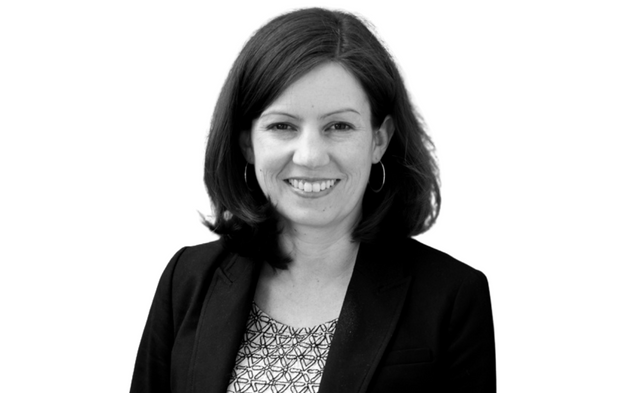
Water deserves the same attention from investors as climate and the growing water crisis poses a systemic risk to portfolios around the world, argued Brooke Barton, a key figure behind the Valuing Water Finance Initiative which has gained the backing of dozens of the world’s largest institutional investors.

Humanity has underestimated the degree to which climate will be a threat multiplier to freshwater resources, said Brook Barton, vice president, innovation and education at the Boston-based non-profit sustainability advocacy organisation Ceres.

Climate change is driving the hydraulics cycle, or water cycle, into overdrive and increasing the intensity and frequency of droughts and floods, she said, speaking at Conexus Financial’s Sustainability in Practice forum held at Harvard University.

This has disproportionate impacts, with 2.1 billion people currently lacking access to fresh water on a reliable basis. Recent examples in the United States include the flooding of a water treatment plant in Jackson, Mississippi which has led to an ongoing public health crisis.

“We have now weeks of residents either without water or on boil water notice in a predominantly black city,” Barton said.

Sponsored Content

Barton said one of the more compelling and simple statistics that illustrates the importance of water is that the average human can only live without it for three days.

“Water and water risks that we are seeing across the world run really fundamentally to the survival of the human species in the near term,” Barton said. Despite this, “we have countless examples of mismanagement and a general tendency to undervalue this resource,” she said.

Companies are finding it increasingly challenging to grapple with water issues in various geographies where there is either too much, too little, or it is too dirty for industries dependent on extremely clean and safe water, she said.

Conflicts are emerging between the rights of companies to water, versus the rights of people and farmers, she said, pointing to Coca Cola’s groundwater pumping in India, Barrick Gold’s closure order and sanctions in Chile, and the impacts on shipping in Europe due to low river levels.

However investors still tend to view water risk as an idiosyncratic risk specific to certain locales, geographies and sectors, rather than a more systemic risk to portfolios, she said.

In response, comprehensive data sets are emerging on corporate disclosure, driven by the CDP. And Ceres in conjunction with the Center for Water Security at the University of Saskatchewan has released the first comprehensive scientific review of corporate water impacts on freshwater.

Ceres is coordinating the Valuing Water Finance Initiative, partly modelled on Climate Action 100+, where institutional investors are committing to engage with the world’s 72 largest corporate water users to convey six expectations around water risk management and stewardship.

These expectations align with the United Nations’ 2030 Sustainable Development Goal for Water, and actions laid out in the Ceres Roadmap 2030.

The initiative was launched with 64 signatories representing US$9.8 trillion in assets under management.

An associated framework for assessing corporate progress against these expectations will soon lead to benchmarking, Barton said.

Leave a Comment

La Caisse’s oil exit pays off as renewables portfolio pulls ahead of fossil fuels

La Caisse’s oil exit pays off as renewables portfolio pulls ahead of fossil fuels

Divesting from the oil sector has been a boon for La Caisse’s performance, as the Canadian pension giant says its energy investments have earned billions in value-add compared to the benchmark since the inception of its climate strategy. Head of sustainability Bertrand Millot unpacks the fund’s approach in an interview with Top1000funds.com.

Sort content by

Net-Zero Asset Owner Alliance chair calls for more action from governments

Five years after signing up to net zero, climate-conscious asset owners have a message for governments: act now, or put global prosperity at risk. As policymakers, investors and climate action advocates descend on NYC for Climate Week, chair of the Net-Zero Asset Owner Alliance, Günther Thallinger, reflects on the progress.

KLP continues the fight to get Chinese mining companies to change

As growing geopolitical tension and government control has caused some investors to exit China, Norway's $78 billion pension fund KLP has stepped up engagement with Chinese mining companies at risk of breaching labour rights and responsible extraction.

Catching up with reality: Investment beliefs need a rethink

Co-founder of the Thinking Ahead Institute, Tim Hodgson, thinks your investment beliefs are out of date. He says if they were written five or more years ago they aren’t grounded in a 2024 reality and inadequately consider climate risk and systems thinking, both essential for a modern day asset owner.

Thailand’s GPF – where sustainability is more important than returns

Thailand’s GPF is a regional leader in ESG integration. Top1000funds.com talks to Man Juttijudata, responsible for GPF’s active investment and outsourced investments about the challenges – like how to treat EV companies – and how uses fund managers for nuanced assessment.

UK’s transition-focused SWF gets green light

UK Chancellor of the Exchequer Rachel Reeves didn’t waste any time approving the UK’s new SWF aimed at funding the energy transition. As it begins to lay down structure and governance frameworks critics point to the challenges of bringing projects to a level where they are investable.

AP2 finds gender diversity takes backward steps at Swedish corporates

The proportion of female board members overseeing listed Swedish companies has edged downwards in the past year, currently back to 2022 levels. AP2's Female Representation Index finds some way to go until companies reach the goal of 40 per cent women on the boards.

Previous




