
More work needed on climate integration

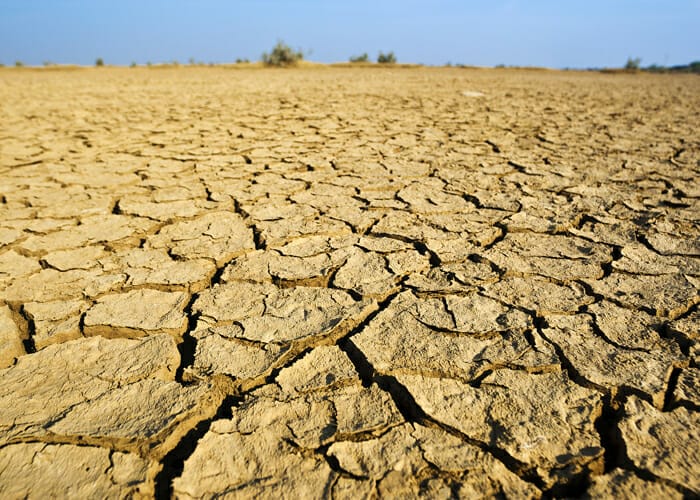
Cracked Ground From The Indian Subcontinent

There has been widespread adoption and more board engagement since the launch of the Task Force on Climate-related Financial Disclosures recommendations in 2017 but more work is needed to get a uniform and comparable approach to climate change disclosure across the investment community.

The $201 billion Ontario Teachers’ Pension Plan said consultants and advisers need to educate themselves on climate change to help the smaller funds integrate the risks into their investment process.

Barbara Zvan, chief risk and strategy officer at OTPP, said the challenge facing the pension industry was no longer about raising awareness but rather how to implement climate change into their organisation. She said it was easier for the bigger plans with more resources to get access to the climate data they need to make investment decisions.

The smaller organisations “can’t always afford to do that,” she said in a telephone interview. “The ecosystems of consultants and advisers need to improve their knowledge on climate change. Bringing groups together will help build the tools needed.”

Canada’s second-largest pension fund was a contributor on a report by the Investor Leadership Network that shows how some of the world’s biggest institutions have implemented the recommendations from the Task Force on Climate-related Financial Disclosures, or TCFD.

It found that while there has been widespread adoption and more board engagement since the recommendations were launched in 2017, more work is needed to get a uniform and comparable approach to climate change disclosure across the investment community.

Sponsored Content

“Traditional risk management is usually a lesson in history, but there is no history in climate change,” said Zvan. “It’s a complicated topic and there are so many scenarios to take into account – that’s the hardest part.”

The report, which coincides with the United Nation’s climate action summit in New York this week, also showed which asset owners were more ahead than others in embedding climate change into their investment process. Canadian funds particularly fared well.

These include Caisse de dépôt et placement du Québec, which has made climate change part of the mandates of board sub-committees, and OTPP, whose investment committee has formalised climate change as part of its mandate for investment strategy and risk. The report also cited CPP Investment Board, which last year set up a formal climate change program that is being overseen by a dedicated steering committee made up of almost half of their senior executive team.

Zvan says by showing how the bigger plans have tackled climate change, it may help drive momentum among the smaller players. She said while a lot of leadership will also come from the private sector in bringing about change, investors played a key role as they were the ones that ultimately own the risk.

“We have to make 4 per cent real every year so we are looking for opportunities to steer the big ship,” she said. “And at the end of the day,  (we) can just pull their capital.”

Leave a Comment

La Caisse’s oil exit pays off as renewables portfolio pulls ahead of fossil fuels

La Caisse’s oil exit pays off as renewables portfolio pulls ahead of fossil fuels

Divesting from the oil sector has been a boon for La Caisse’s performance, as the Canadian pension giant says its energy investments have earned billions in value-add compared to the benchmark since the inception of its climate strategy. Head of sustainability Bertrand Millot unpacks the fund’s approach in an interview with Top1000funds.com.

Sort content by

No single right way: Constructive real-world pragmatism for finance

Examining and learning from the evolution of orthodox finance provides relevant insight to the evolution of ESG data and ISSB standards which like CAPM are simply social conventions. Greg Watson argues that adopting a “no single right way” mindset will create greater resilience in investment by promoting greater differentiation.

Measuring outcomes is what really matters: Serafeim

Investors interested in ESG should be aware of the intensity of the commitment and develop their own deep expertise and impact-weighted accounts, according to ESG pioneer and academic, Professor George Serafeim. He will speak at the Sustainability in Practice event at Harvard University in September.

More ambition needed from asset managers on fundamental labour rights

Sharan Burrow, general secretary of the ITUC and Paddy Crumlin, president of the International Transport Workers’ Federation outline the recently released baseline expectations for asset managers on fundamental labour rights and why pension funds should be holding their managers to account.

The complex science of integrating impact into portfolio design

Incorporating impact into a risk/return framework creates additional dimensionality and significantly increasing the complexity of the portfolio design challenge. David Bell from The Conexus Institute explores the technical challenge of navigating the 3-D investment framework.

BHP chief executive Mike Henry on the energy transition

BHP chief executive, Mike Henry, explores the growing role of mined commodities in the global energy transition. This fireside chat was hosted by Amanda White at the Australian Fiduciary Investors Symposium in June. Henry talks about the company's progress and the challenges of Scope 3 emissions.

Climate change means change

Current strategies to address climate change have been helpful in triggering innovations and greater awareness of the challenge but the truth is emissions continue to rise. Marissa Hall outlines meaningful change asset owners can make to tackle the issues.

Previous




