

Foundations have trillions of dollars in assets but often only leverage 5 per cent towards grant making that advances their mission. Just imagine what we could achieve if we leveraged the other 95 per cent?
The Nathan Cummings Foundation (NCF) is on a mission to find out. Founded by Nathan Cummings, an innovative risk-taker and entrepreneur, the foundation is committed to honoring his legacy by working to create a more just, vibrant, sustainable, and democratic society.
Now, we are one of the largest multigenerational family foundations to publicly commit to align 100 per cent of our nearly half-billion dollar endowment with our mission. We came to this unanimous decision by our board one year ago after a thoughtful and intentional process that led us to three core drivers:
- First, we knew it could be done because of the many examples in the marketplace.
- Second, we knew that the two biggest challenges we face – inequality and the climate crisis – are market-based problems that need market-based solutions.
- Finally, we knew this was not time for business as usual. From the rise in hate crimes to the emerging risks associated with the climate crisis and growing inequality, times like these require visionary thinking and bold action. And we recognised that capital markets needed to evolve to address these issues.
Ultimately, we believe mission-aligned investing is the future of philanthropy and that we have a responsibility to use all of our resources – our investments, our grants and our voice – to make a difference in the world.
When I joined the organisation in 2015, NCF was already a leader in active ownership strategies, and known for finding creating ways to leverage its assets. As a social justice foundation, rooted in Jewish values, we have a long history of pushing companies to effectively manage risks and opportunities associated with environmental and social causes through active ownership.
Guided by our values, the NCF Board created the Assets Aligned for Impact Committee in 2011, which carved out a portion of our endowment for impact investing. When I joined the foundation as its fourth president, I brought with me a steadfast commitment to putting the force of our endowment towards our mission. Before embarking fully on this journey, we brought on Sonen Capital and intentionally created an inclusive learning and decision-making process. We added knowledge and expertise to our board and investment committee, reviewed market trends, engaged with foundation colleagues and networks to learn from their experiences, and partnered with our investment manager, Global Endowment Management, to begin implementing our mission-aligned portfolio in 2018.
As we move towards full alignment, we are using the broadest definition of our mission to open up the widest opportunity set in the marketplace, using all the tools available to achieve market-rate returns. Our investment team is working with the Impact Management Project to make sure stakeholderimpact including employees, community and planet and not just shareholders, is at the center of our approach to mission-alignment across sectors and asset classes. Our multi-generational board has been deeply engaged and energised throughout this process.
I am more convinced than ever that this was the right decision. Every day, we are bucking the traditional playbook, which tells businesses that their highest calling is to generate profit for their shareholders and that it’s too costly for businesses to invest with their values or consider the long-term sustainability of their practices.
At NCF, we’re not buying the old playbook. And neither should you. Here are three reasons why.
First, we can have a market that works for all of us, instead of just a few. As just one example, women only receive a fraction of venture capital, despite launching more than 1,800 new businesses every day in the US. By seeking more aligned investment strategies, including a focus on identifying and investing with diverse fund managers, NCF has added 150 diverse fund managers to our investment pipeline.
Second, we can leverage our power to serve the needs of the people, instead of powerful corporations. For example, our portfolio includes an organic food delivery platform that requires 100 per cent supply chain transparency to ensure fair labor practices and provides equity to all employees. We’ve also redeployed distributions from traditional real estate projects into affordable housing projects that will extend affordability in some of the US’s least affordable areas for the next 40 years.
Finally, we can halt the climate crisis and create an inclusive clean economy that builds wealth for those who have been left out of the dirty one. Businesses and investors cannot afford to ignore environmental and social issues. A recent meta-study found a positive correlation between ESG factors and financial performance in 60 per cent of the studies they examined. In fact, looking at our investments through an ESG lens doesn’t jeopardise our fiduciary role, it strengthens it. Because it’s good risk management, our investment firm has incorporated ESG factors into traditional investment management.
Over the last 27 years, NCF has provided nearly $500 million in grants to support social movements, organisations and individuals pursuing justice for people and the planet. But the extraordinary challenges we face cannot be solved by grant making alone. Capital markets have to change to drive sustainable and inclusive growth and a more just and democratic society.
Foundations have trillions in assets, but often don’t recognise or activate the full extent of their resources. By harnessing the full potential of our assets, whether that’s through active efforts to change corporate behavior, divestment, or intentional investments in companies and strategies that align with your values, we can activate the power of our investments to achieve the future we all want and deserve.
Mission-aligned investing is one powerful and often underutilised tool in our toolbox. I urge you to use it more.
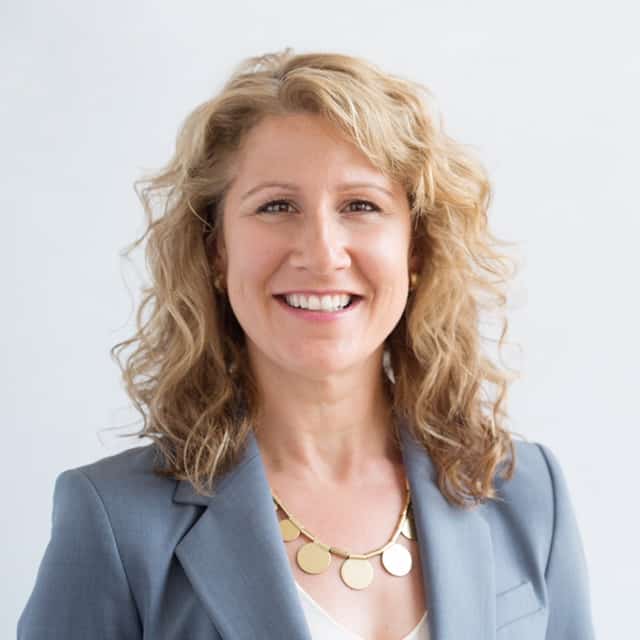
Sharon Alpert became the NCF’s fourth president and first female leader in November 2015.








Leave a Comment
You must be logged in to post a comment.
Login