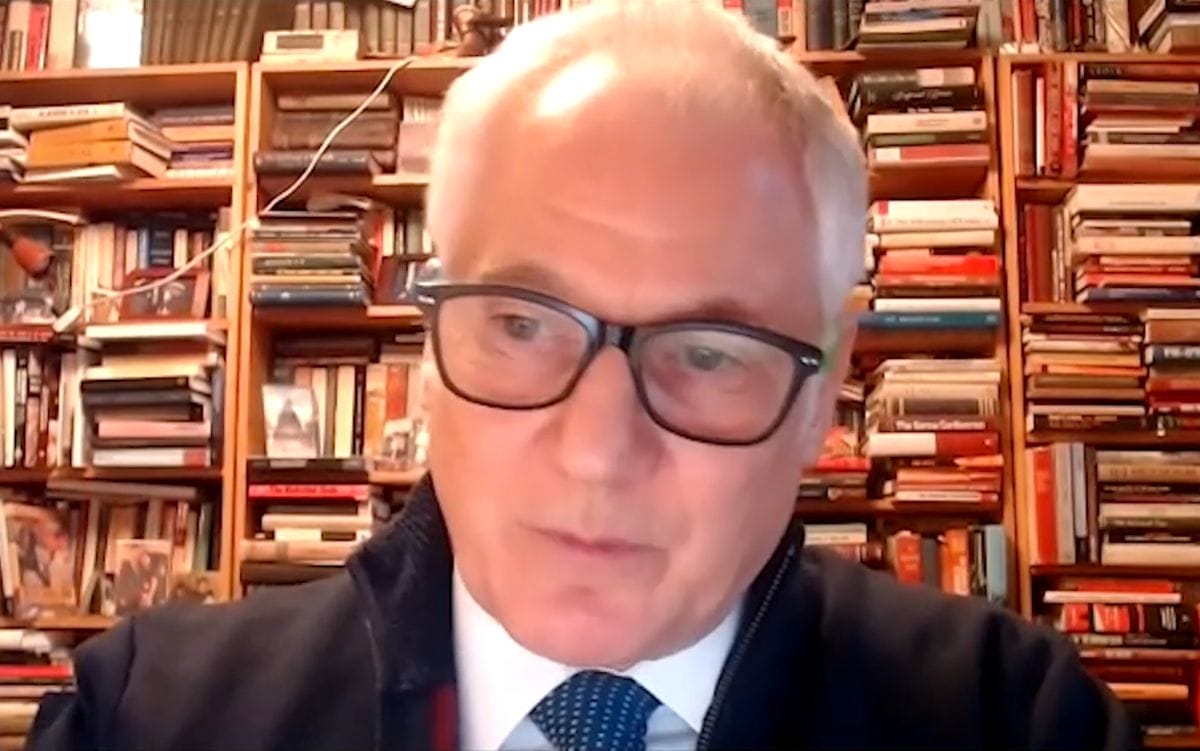

Kotkin warns of Ukraine break up as key geopolitical risk

It is not war between Russia and Ukraine that investors should be concerned about, according to Professor Stephen Kotkin, but the destabilising effects of Russia’s actions that could impact globalisation and harm the west.

“The big geopolitical risk is not the war but that Ukraine gets broken up,” Kotkin, the John P Birkelund Professor in History and International Affairs at Princeton University, told Top1000funds.com in an interview. “A lot of what Russia could do could be very destabilising for investors. Investors should be in favour of cutting a deal.”

Kotkin who is a Russia expert and was shortlisted for the Pulitzer Prize for his book Stalin: Paradoxes of Power, said investors should not looking at the tension itself but what could be done by either side, in particular Russia breaking up Ukraine.

“Things like making their cities unliveable and poisoning the air and rivers, using cyber war to shut down the utilities and repercussions beyond Ukraine because everything is interconnected,” he said. “99% of the world’s communication goes through under sea cables. They are mapped and Russia knows where they are, they could cut them. Globalisation is worth a lot more to the west than it is to the Russians.”

Kotkin said this tension will not stop and Russia can come back again and again.

“I’ve been on record for seven years saying we should cut a deal with Russia over Crimea. It’s the big bargaining chip the western side has for a larger settlement to protect Ukraine but give Russia a stake in the deal.”

Sponsored Content

Kotkin, who among other things is the co-director of the program in history and the practice of diplomacy at Princeton and a senior fellow at the Hoover Institution at Stanford University, believes it is not in Putin’s interest to go to war.

“There is no support in Russia for a prolonged military war in Ukraine,” he said. “There are all sorts of reasons why Putin is in a bit of a bind here. He could undermine himself by going to war. This is a situation where we need to find a way out, not just for the west and Ukraine but for Russia as well.”

He also believes that President Biden also in a bit of a bind because many of the measures the US is threatening, like economic sanctions, against Russia could boomerang against the west.

“The pressure can be as long as Putin wants it to be. And if he withdraws temporarily he can ramp up again. On the sanctions being threated I don’t think it makes sense for Europeans to go without heat and shut their industry down by cutting off gas. It doesn’t make sense for Russia to be excluded from the SWIFT banking system. The international financial system is worth a lot more to the west than it is to Russia.”

He said one option with regards to the economic sanctions, which was effective during the cold war, could be technology transfer limits.

Generally he believes the west is in a better position now.

“Investors can only hope the Biden administration does up its game, that NATO and the EU stay united, that there is an off ramp and more importantly there is pathway to negotiation for a better settlement where Russia has a stake and Ukraine is protected at the same time.”

In the interview Kotkin also discusses the tension between Taiwan and China and reminded investors that the big problems are always perverse and unintended consequences.

Leave a Comment

La Caisse’s oil exit pays off as renewables portfolio pulls ahead of fossil fuels

La Caisse’s oil exit pays off as renewables portfolio pulls ahead of fossil fuels

Divesting from the oil sector has been a boon for La Caisse’s performance, as the Canadian pension giant says its energy investments have earned billions in value-add compared to the benchmark since the inception of its climate strategy. Head of sustainability Bertrand Millot unpacks the fund’s approach in an interview with Top1000funds.com.

Sort content by

Geopolitics: portfolio implications

For most investors recognising whether geopolitical tensions are a short term blip, or a long-term systemic shift is key to understanding how those risks inform investment decisions. Amanda White spoke to investors about the impact of geopolitical risk on their portfolios.

Geopolitics: risk or opportunity?

The challenge around geopolitical risk is determining how sustained or long-lasting any particular risk is. Angela Rodell, CEO of Alaska Permanent sees opportunity in having a view of the world.

Australia’s funds can do better

Australia's profit-for-member superannuation funds are leading the industry, but they could do better says Ian Silk, chief executive of AustralianSuper, the country's largest fund.

Factors are useless without the research

Product providers cite all manner of factors behind the performance of their products but unless those factors adhere to what academics have replicated and standardised, it’s folly for investors to expect persistent returns from them.

Tough times greet new CalPERS CIO

Ben Meng isn’t easing into his role. The new CIO of CalPERS faces three new board members, a stressed private equity program and executive turnover, all under the pressure of a 70 per cent funded status and a maturing membership at the $340 billion fund.

Homogenous behaviour imperils markets

Global markets are more interconnected than ever. That provides many benefits but it also has its drawbacks. Chief among those is the potential for investors to move in lockstep when driven by fear or euphoria, creating feedback loops that can result in crashes.

Previous




