Investors can’t afford to ignore China risk: Kotkin

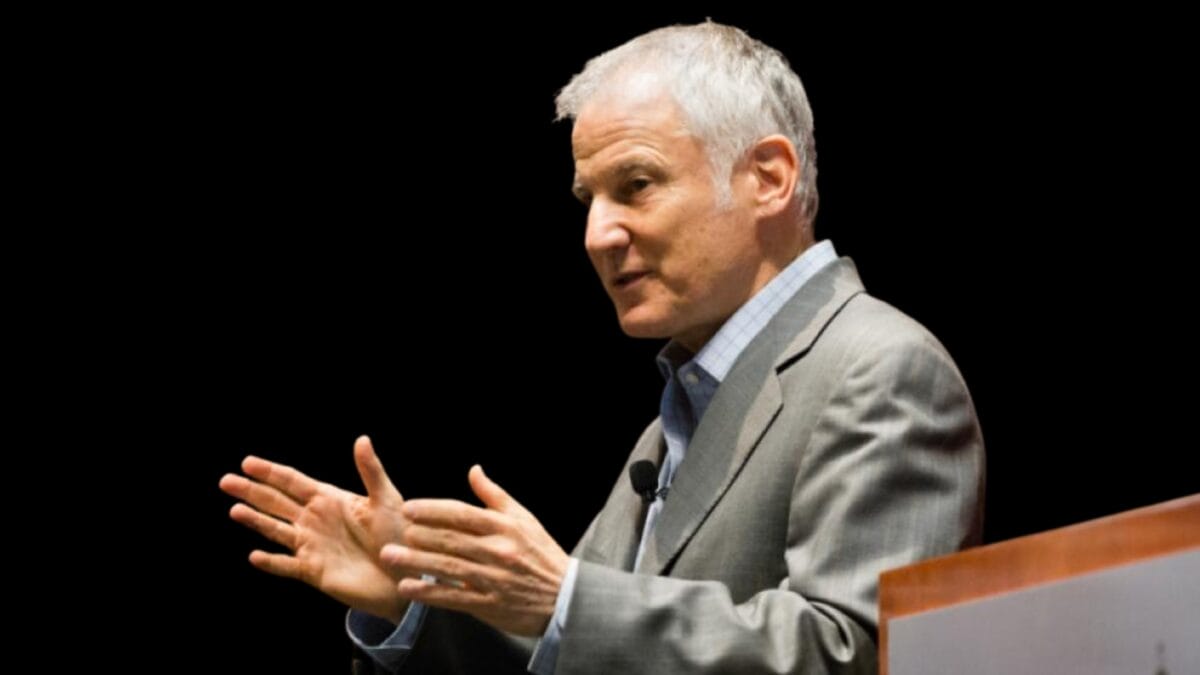
A move away from “naïve engagement” between the US and China affords the opportunity for genuine diplomacy and stabilising relationships over the longer term according to Professor Stephen Kotkin, senior fellow at Stanford’s Freeman Spogli Institute for International Studies and the Kleinheinz Senior Fellow at the Hoover Institution.

Speaking to Top1000funds.com in a video interview on the anniversary of the Russian invasion of Ukraine, Kotkin said a significant armed conflict between the US and China is the “real” geopolitical risk and must be avoided because of its broader systemic impact.

“Geopolitical risk is exaggerated for the most part, most geopolitical risk does not affect markets in the way analysts claim,” he says. “The consequences on a humanitarian level are vast but on an investment level they can often be ignored. With China though it is much larger and systemic and so investors can’t ignore it.”

“I was never one to think that globalisation was at risk but I was one to think that China’s role in globalisation was going to shift radically, that trend was apparent before Russia’s full scale invasion of Ukraine and it has accelerated since.”

Kotkin, who is also the emeritus Professor in History and International Affairs at Princeton University, where he taught for 33 years is a world expert in geopolitics and authoritarian regimes including Russia.

Sponsored Content

He said amid all the atrocities, as well as the heroism, the Ukraine war has two invaluable achievements: it demonstrated both to China and to the West just how much strength the West possesses, and it showcased an outcome no one should want.

“This is no guarantee of statesmanship.  It is, though, a basis for it,” he said. “One can, justifiably, be both more pessimistic and more optimistic at the same time, as a result.”

Kotkin said there were many surprises as a result of the conflict in Ukraine including Russia’s ability to withstand the sanctions. Althought hard to measure accurately he said Russia’s GDP decline was probably 2-4 per cent last year and may even see growth this year, while Ukraine has lost at least a third of GDP.

“The biggest surprise for me is the absence of another area of the world that has tried to take advantage of the situation, that has tried to do something while the world was distracted by Ukraine,” he said. “That hasn’t happened so that has been a pleasant surprise. It shows you have to be careful and humble with your forecasting but it also shows we are early in this war and there is much more that could come including economic dislocation.”


  1. Sanford Rich

    NYCBERS analyzed the last two decades of developed and emerging international allocations in our equity portfolio. The result suggests that historic assumed/projected returns, volatility, and correlation were not even close to being accurate. The historic assumptions led to a 15% allocation to Ex-US developed markets and emerging markets. Performance disappointed on all measures. As we approach a new asset-liability analysis and asset allocation, the question is what assumptions are reasonable for Ex-US developed and emerging markets, both absolute and relative, and what is it that impacted returns in international markets to create such deviation from expectations and relative performance? What did we, and our consultants get wrong? Also, if you believe in mean reversion what is the expectation for mean, and what will drive international markets to outperform the US (the historic assumption)?
    Are we failing to account for Geopolitical risk or autocracy risk?

Leave a Comment

La Caisse’s oil exit pays off as renewables portfolio pulls ahead of fossil fuels

La Caisse’s oil exit pays off as renewables portfolio pulls ahead of fossil fuels

Divesting from the oil sector has been a boon for La Caisse’s performance, as the Canadian pension giant says its energy investments have earned billions in value-add compared to the benchmark since the inception of its climate strategy. Head of sustainability Bertrand Millot unpacks the fund’s approach in an interview with Top1000funds.com.

Sort content by

CIOs’ confidence wanes as agility becomes the focus

The 2023 CIO Sentiment Survey, a collaboration between Top1000funds.com and CaseyQuirk, finds asset owners focusing on agility as they observe dramatic market changes not seen in a generation. Only 36 per cent of CIOs are confident they will reach their return targets in 2023.

CalPERS weathers SVB hit; resilience and transparency pays

Norway's sovereign wealth fund and Sweden’s largest pension fund Alecta are among funds with heavy losses from the SVB collapse. For CalPERS, which only had a small exposure, the tumultuous weekend highlighted the importance of resilience and transparency with the team quick to identify exposures and provide analysis.

Kotkin talks transition, Ukraine war and western resilience

In a sweeping discussion at FIS Maastricht, Professor Stephen Kotkin argues that Ukraine still has a long fight ahead, China has learnt economic strangulation and diplomatic coercion are a better strategy than invasion in Taiwan - and the west must invest more in its financial systems, military alliances and society.

IMF flashes dangers ahead

The worst is yet to come, warns the IMF in its sobering World Economic Outlook report. Investors will increasingly prioritise safe assets with implications for emerging markets while chaos in the UK gilts markets underscores the risks of a policy mistake.

Why liquidity management will be harder in a post-COVID-19 world

CIOs need more sophisticated tools to manage liquidity in a post-COVID world, experts say, now that the DC retirement landscape has been permanently changed following the precedent of early release schemes.

Asset owners fear rising inflation and falling equity valuations

The 2022 annual CIO Sentiment Survey, a collaboration between Top1000funds.com and CaseyQuirk, finds asset owners most concerned about equity valuations and inflation. After three years of fee rises, asset owners are paying less for investments while CIOs in 2022 are also working with a smaller manager roster.

Previous




