
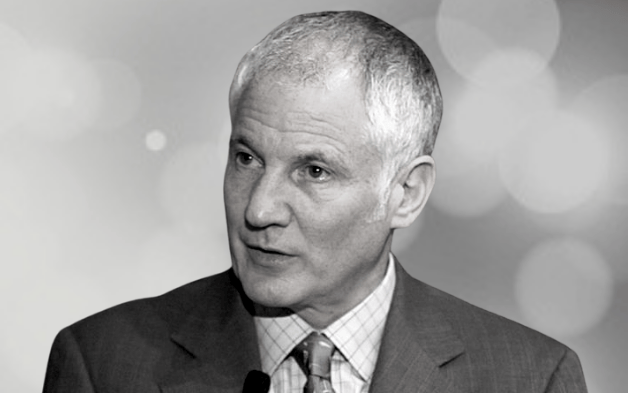

China is a simultaneous threat and an opportunity for investors. This discussion looks at how to navigate a worsening geopolitical situation and what it means for economic growth. Is the current course a steady state, or are big shocks, for the better or for the worse, possible and even likely? Geopolitical expert, Professor Stephen Kotkin, examines what lies ahead for investors.
About Stephen Kotkin
Stephen Kotkin is the John P Birkelund Professor in History and International Affairs at Princeton University. He is the co-director of the program in history and the practice of diplomacy and the director of the Princeton Institute for International and Regional Studies. He established the Princeton department’s Global History initiative and workshop, and teaches the graduate seminar on global history since the 1950s. Professor Kotkin received his PhD from the University of California, Berkeley in 1988, and has been a professor at Princeton since 1989. He is also a senior fellow at the Hoover Institution at Stanford University. At Princeton Professor Kotkin teaches courses in geopolitics, modern authoritarianism, global history, and Soviet Eurasia, and has won all of the university’s teaching awards. He has served as the vice dean of Princeton’s Woodrow Wilson School of Public and International Affairs, and chaired the editorial committee of Princeton University Press. Outside Princeton, he writes essays and reviews for Foreign Affairs, the Wall Street Journal, and the Times Literary Supplement, among other publications, and was the regular book reviewer for the New York Times Sunday Business section for many years. He serves as an invited consultant to defence ministries and intelligence agencies in multiple countries. His latest book is Stalin: Waiting for Hitler, 1929-1941 (Penguin, 2017). His previous book was a finalist for the Pulitzer Prize.
About Amanda White
Amanda White is responsible for the content across all Conexus Financial’s institutional media and events. In addition to being the editor of Top1000funds.com, she is responsible for directing the global bi-annual Fiduciary Investors Symposium which challenges global investors on investment best practice and aims to place the responsibilities of investors in wider societal, and political contexts. She holds a Bachelor of Economics and a Masters of Art in Journalism and has been an investment journalist for more than 25 years. She is currently a fellow in the Finance Leaders Fellowship at the Aspen Institute. The two-year program seeks to develop the next generation of responsible, community-spirited leaders in the global finance industry.
Amanda White is responsible for the content across all Conexus Financial’s institutional media and events. In addition to being the editor of Top1000funds.com, she is responsible for directing the global bi-annual Fiduciary Investors Symposium which challenges global investors on investment best practice and aims to place the responsibilities of investors in wider societal, and political contexts. She holds a Bachelor of Economics and a Masters of Art in Journalism and has been an investment journalist for more than 25 years. She is currently a fellow in the Finance Leaders Fellowship at the Aspen Institute. The two-year program seeks to develop the next generation of responsible, community-spirited leaders in the global finance industry.
What is the Fiduciary Investors series?
The COVID-19 global health and economic crisis has highlighted the need for leadership and capital to be urgently targeted towards the vulnerabilities in the global economy.
The COVID-19 global health and economic crisis has highlighted the need for leadership and capital to be urgently targeted towards the vulnerabilities in the global economy.
Through conversations with academics and asset owners, the Fiduciary Investors Podcast Series is a forward looking examination of the changing dynamics in the global economy, what a sustainable recovery looks like and how investors are positioning their portfolios.
The much-loved events, the Fiduciary Investors Symposiums, act as an advocate for fiduciary capitalism and the power of asset owners to change the nature of the investment industry, including addressing principal/agent and fee problems, stabilising financial markets, and directing capital for the betterment of society and the environment. Like the event series, the podcast series, tackles the challenges long-term investors face in an environment of disruption, and asks investors to think differently about how they make decisions and allocate capital.








Leave a Comment
You must be logged in to post a comment.
Login