
The spirit of green: how corporates can reduce externalities at no cost to shareholders

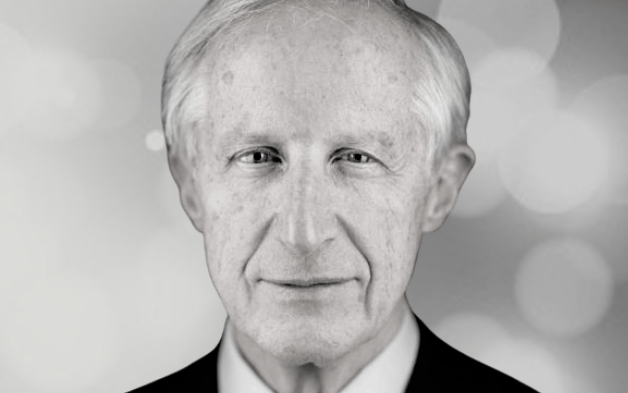
About William Nordhaus
William Nordhaus was born in Albuquerque, New Mexico (which is part of the United States). He completed his undergraduate work at Yale University in 1963 and received his Ph.D. in Economics in 1967 from the Massachusetts Institute of Technology, Cambridge, USA. He has been on the faculty of Yale University since 1967 and has been Full Professor of Economics since 1973 and also is Professor in Yale’s School of Forestry and Environmental Studies. Professor Nordhaus lives in downtown New Haven with his wife Barbara, who works at the Yale Child Study Center.He is a member of the National Academy of Sciences and a Fellow of the American Academy of Arts and Sciences. He is on the research staff of the National Bureau of Economic Research and has been a member and senior advisor of the Brookings Panel on Economic Activity, Washington, D.C. since 1972. Professor Nordhaus is current or past editor of several scientific journals and has served on the Executive Committees of the American Economic Association and the Eastern Economic Association. He serves on the Congressional Budget Office Panel of Economic Experts and was the first Chairman of the Advisory Committee for the Bureau of Economic Analysis. He was the first Chairman of the newly formed American Economic Association Committee on Federal Statistics. In 2004, he was awarded the prize of “Distinguished Fellow” by the American Economic Association.From 1977 to 1979, he was a Member of the President’s Council of Economic Advisers. From 1986 to 1988, he served as the Provost of Yale University. He has served on several committees of the National Academy of Sciences including the Committee on Nuclear and Alternative Energy Systems, the Panel on Policy Implications of Greenhouse Warming, the Committee on National Statistics, the Committee on Data and Research on Illegal Drugs, and the Committee on the Implications for Science and Society of Abrupt Climate Change. He recently chaired a Panel of the National Academy of Sciences which produced a report, Nature’s Numbers, that recommended approaches to integrate environmental and other non-market activity into the national economic accounts. More recently, he has directed the Yale Project on Non-Market Accounting, supported by the Glaser Foundation.He is the author of many books, among them Invention, Growth and Welfare, Is Growth Obsolete?, The Efficient Use of Energy Resources, Reforming Federal Regulation, Managing the Global Commons, Warming the World, and (joint with Paul Samuelson) the classic textbook, Economics, whose nineteenth edition was published in 2009. His research has focused on economic growth and natural resources, the economics of climate change, as well as the resource constraints on economic growth. Since the 1970s, he has developed economic approaches to global warming, including the construction of integrated economic and scientific models (the DICE and RICE models) to determine the efficient path for coping with climate change, with the latest vintage, DICE-2007, published in A Question of Balance (Yale University Press, 2008). Professor Nordhaus has also studied wage and price behavior, health economics, augmented national accounting, the political business cycle, productivity, and the “new economy.” His 1996 study of the economic history of lighting back to Babylonian times found that the measurement of long-term economic growth has been significantly underestimated. He returned to Mesopotamian economics with a study, published in 2002 before the war, of the costs of the U.S. war in Iraq, projecting a cost as high as $2 trillion. Recently, he has undertaken the “G-Econ project,” which provides the first comprehensive measures of economic activity at a geophysical scale

About Amanda White
Amanda White is responsible for the content across all Conexus Financial’s institutional media and events. In addition to being the editor of Top1000funds.com, she is responsible for directing the global bi-annual Fiduciary Investors Symposium which challenges global investors on investment best practice and aims to place the responsibilities of investors in wider societal, and political contexts.  She holds a Bachelor of Economics and a Masters of Art in Journalism and has been an investment journalist for more than 25 years. She is currently a fellow in the Finance Leaders Fellowship at the Aspen Institute. The two-year program seeks to develop the next generation of responsible, community-spirited leaders in the global finance industry.

What is the Fiduciary Investors series?
The COVID-19 global health and economic crisis has highlighted the need for leadership and capital to be urgently targeted towards the vulnerabilities in the global economy.
Through conversations with academics and asset owners, the Fiduciary Investors Podcast Series is a forward looking examination of the changing dynamics in the global economy, what a sustainable recovery looks like and how investors are positioning their portfolios.The much-loved events, the Fiduciary Investors Symposiums, act as an advocate for fiduciary capitalism and the power of asset owners to change the nature of the investment industry, including addressing principal/agent and fee problems, stabilising financial markets, and directing capital for the betterment of society and the environment. Like the event series, the podcast series, tackles the challenges long-term investors face in an environment of disruption,  and asks investors to think differently about how they make decisions and allocate capital.

Sponsored Content

Leave a Comment

Why Asian equities’ growth will outlast the AI-driven semiconductor cycle

Why Asian equities’ growth will outlast the AI-driven semiconductor cycle

In the latest episode of the Fiduciary Investors Series, Liao spoke with Top1000funds.com Asia Pacific correspondent Darcy Song on why the convergence of innovation, demographics and improving shareholder returns makes Asian equities an increasingly compelling diversification trade for asset owners navigating a geopolitically fractured world.

Sort content by

Treasurer Steiner on Oregon’s private equity future

Top1000funds.com editor Amanda White speaks to Oregon State Treasurer, Elizabeth Steiner, about the future role and expectations of private equity, how a maturing of the asset class puts pressure on returns, and the private/ public asset mix in the fund’s four-yearly asset allocation review which has just begun.

CalPERS’ Stephen Gilmore on the total portfolio approach

Listen to the detailed interview between Top1000funds.com editor Amanda White and CalPERS' CIO Stephen Gilmore to gain insights into how a TPA mindset has the potential, through a shared focus on the total portfolio, to add value, simplify accountability and open new opportunities for investments.

The world in flux and Trump’s role in a new equilibrium

The second Trump administration has so far brought a lot of things: market shocks, volatile trade policies, and turbulent foreign relationships. But beyond the chaos, renowned geopolitics expert Stephen Kotkin says Trump has an unwitting role to help the world rebalance and reach a “new equilibrium” in the global order.

Why Asia is the future

In the midst of the great power rivalry between the US and China, “we need to carve out a future that works well for all of us” says National University of Singapore’s Danny Quah, in a talk examining the global economy and the role of Asia. Listen here.

Reversal of investment themes demands investors change their assumptions

Investors are currently facing the end of uncertainty around assumptions they have made for decades, and need to shore up their portfolios with greater inflation protection, more active management, and by fostering innovation, according to chief strategist at the Investment Management Corporation of Ontario, Nick Chamie who spoke to Amanda White in the Fiduciary Investors Series

Mandates need innovating to encompass sustainable investing

As carbon emissions continue to rise investors need to innovate on the nature of investment mandates says Colin le Duc, a founding partner of Generation Investment Management. He says real world impact is going in the wrong direction, even though sustainable investing is booming, and the credibility of transition plans is under scrutiny.   What



