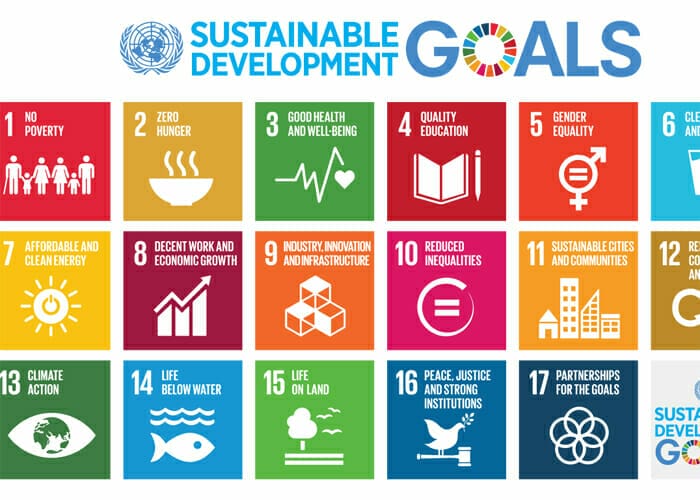
“The SDGs offer the greatest economic opportunity of a lifetime,” Unilever chief executive Paul Polman says in a new report from the Principles for Responsible Investment (PRI) and PwC on why the investment community should be active in making a real-world impact through implementation of the UN Sustainable Development Goals.

Polman, together with Mark Malloch-Brown, former UN deputy Secretary-General, created the Business Commission, which released research in January this year showing the delivery of the SDGs would create market opportunities of up to $12 trillion a year and up to 380 million new jobs by 2030.

“There is no business case for enduring poverty,” Polman said about the Business Commission research. “We have an opportunity to unlock trillions of dollars through new markets, investments and innovation. But to do so, we must challenge our current practices and address poverty, inequality and environmental challenges. Every business will benefit from operating in a more equitable, resilient world if we achieve the Sustainable Development Goals.”

Polman is one of many high-profile commentators quoted in a new report by PRI and PwC called The SDG investment case.

The report calls the investment community into action, stating that it should become more engaged with the SDGs not only because they are a critical part of their fiduciary duty, but also because they can be a guide to capital allocation.

Large institutional investors, which have portfolios exposed to growing and widespread economic risks, can protect their long-term financial performance by encouraging sustainable economies and markets, the report argues.

The authors explain that achieving the SDGs would be a fundamental driver of economic growth that, in the long term, would boost corporate revenues and earnings and, in turn, equities and other assets.

“A significant proportion of currently external costs, such as environmental damage or social upheaval, might at some point in the future be forced into companies’ accounts,” the report states. “The SDGs provide a clear risk framework for both companies and investors. Providing solutions to sustainability challenges offers attractive investment opportunities. Investors can implement strategies that target SDG themes and sectors, with opportunities available in most asset classes.”

Louise Scott, global sustainability director at PwC, says every investor should want to understand how to play their part in achieving the SDGs.

The full report can be accessed here :The SDG investment case


Support for infrastructure investment, the idea that asset owners should commit to long-term capital projects through a mix of debt and equity, is a powerful notion at the heart of several important public and investment policy areas. It has been much discussed. It has become a staple of high-level G20 and European Union meetings. It has traveled from obscure trade publications to the mainstream financial press. It has practically become fashionable.

Infrastructure investment has also long been the preserve of large, sophisticated players, because it is complex and relatively expensive, but the many smaller pension plans and insurers increasingly find themselves unable to avoid the question: ‘Why aren’t we investing in infrastructure yet?’

Especially now. With listed infrastructure, suddenly anyone can invest in ‘infra’. A liquid, easy-to-understand investment proposition offers to deliver all the benefits of private infrastructure investment without the hassle of locking up funds with a private manager or needing your own infrastructure deal team. Even your grandparents could do it. In fact, they do – or so they’re told.

In a new Ecole des hautes Etudes Commerciales du Nord (EDHEC) position paper, we document the dangerous rise of the so-called listed infrastructure asset class, an ill-defined series of financial products that initially targeted retail investors and is increasingly used by institutional investors, which now represent close to a third of the market.
Promising to deliver the benefits of the infrastructure investment narrative, listed infrastructure has been growing by 15 per cent annually for a decade, reaching at least $57 billion in assets under management (AUM) today.
But a review of published academic research shows that these products fail to deliver on their many promises. Listed infrastructure, as it is proposed to investors today, exhibits high drawdowns and volatility, does not have better risk-adjusted performance than broad market stock indices, and shows behaviour easily explained by a series of well-known factor tilts available to investors throughout the sharemarket.

The number of false claims made about this asset class is high enough to consider a mis-selling case, and in open letters to the United States Securities and Exchange Commission and the European Securities and Markets Authority, we recommend stricter regulatory oversight of these products, including the obligation to include the word ‘listed’ in their names to avoid misleading investors, along with the obligation to include information in marketing documents and information kits warning that listed infrastructure may not deliver the same performance as unlisted infrastructure investments.
For the new position paper, EDHEC reviewed the marketing documentation of 144 listed infrastructure products, representing 85 per cent of the sector by AUM, and concluded that such products typically make claims nearly identical to those of private infrastructure products.

We also performed new tests, extending existing research, that use the actual constituents of both passive and active listed infrastructure products, capturing most available listed investment products using the word ‘infrastructure’ in their name. We found even less convincing results than in previous studies, which relied on back-filled indices using data from a period when no listed infrastructure product even existed.
We found that active listed infrastructure managers have invested in close to 1900 different stocks over the last decade, half of which cannot possibly be considered infrastructure under any definition. They include brand names such as Amazon, Microsoft and Nintendo.
A growing shadow
The growth of listed infrastructure products is problematic because of the damage that their proliferation will eventually do to proper infrastructure investing.
We believe in the potential of infrastructure debt and equity investment for asset owners. We also see no reason why, in principle, some of the products used to access the characteristics of underlying infrastructure assets could not be listed on public markets.
But today’s fake infra will disappoint. It is comparatively expensive (fees are higher than for other mutual funds) and will leave investors without the promised low-risk, stable, inflation-linked returns. As a result, it could give a bad name to infrastructure investing in general.
Fake infra could reverse years of investor education about the potential of infrastructure assets as sources of portfolio diversification and liability hedging. It could also undo recent progress in the prudential area towards recognising the existence of a specific risk-return profile and capital-charge treatment for infrastructure debt and equity.
It may even jeopardise the involvement of institutional investors in the next generation of public-private partnerships that have come to underpin so much of the national infrastructure plans most Organisation for Economic Co-operation and Development governments have put forward.
Eventually, sharemarket regulators should aim to achieve a clear definition of the listed infrastructure space, within which, listed infrastructure products that are better and more transparent could be created, with the aim of delivering at least some of the promises of infrastructure investment to asset owners.
Such a definition was developed in the context of the prudential regulation of insurers, pension plans and banks. Sharemarket regulators can use it to define which underlying assets would qualify to be included in listed equity products, as with other categories or groupings of stocks.
Furthermore, asset owners should require transparency and that listed infrastructure asset managers always publish their constituents; they should require valid evidence of listed products delivering on the narratives of infrastructure investment; and they should benchmark listed infrastructure products against unlisted ones.

We hope that those asset managers who are truly committed to infrastructure investment will support our call for clarity in the public-equity space, so that listed vehicles can be used to create products that genuinely offer new, rewarded risk exposures and help support the worthy goal of matching long-term capital with the infrastructure needs of the world.


Frederic Blanc-Brude is director of EDHEC Infrastructure Institute.

Many US public pension funds have posted double-digit returns this year, after experiencing several years in the doldrums, mostly thanks to buoyant equity markets. America’s largest pension fund, the $330.2 billion California Public Employees’ Retirement System (CalPERS) returned 11.2 per cent, boosted by a 19.7 per cent return in its $150 billion public equity portfolio; public equity was also behind the second-biggest fund in the US, California State Teachers’ Retirement System’s (CalSTRS) 13.4 per cent return.

Another one of the best performers was the $12 billion Louisiana State Employees’ Retirement System (LASERS), which had one of its best years ever in 2016-17, returning 15.8 per cent.

LASERS has a chunky, 57 per cent allocation to diversified public equity that returned 20.9 per cent, with international and emerging stocks doing best. Chief investment officer Robert Beale, who has served at the fund since 1997, has overseen a strategy that balances risk and defensive assets, and passive and active strategies, while keeping a lid on fees and trying to ensure diversification in the event of equities plunging.

These endeavours are set against the challenge of navigating a continued equity bias for growth while LASERS’ deficit remains stubbornly high. LASERS is only 63 per cent funded and investment income is the main source of revenue for paying benefits to members and beneficiaries.

“Our funded status doesn’t really affect the investment strategy,” Beale insists in an interview from the fund’s Baton Rouge, Louisiana, headquarters. “We still have to earn a reasonable return of around 7.75 to 8 per cent over a very long time period, which will require an asset allocation similar to what we have now. Our funded status would have to be much higher, at over 80 per cent, before you could look at allocation changes or contribution changes.”

To cut costs, Beale has introduced index strategies in domestic equity (S&P 500, S&P 400, and S&P 600) and international equity (MSCI World Ex-USA and Terror-Free). This means LASERS staff now manage nearly one-third of total assets within these five allocations; however, while passive strategies helped cut costs by more than $9 million through 2015-16, the fund still has an active bias, with 68 per cent in active strategies versus 32 per cent passive.

Apart from the equity allocation, LASERS’ assets are divided between fixed income, private equity, absolute return and risk parity.

Big changes in alternatives

Beale is also midway through a shake-up in alternatives, where the hedge fund portfolio, in particular, has struggled. Alternatives account for just under a quarter of assets under management, divided between a 13 per cent allocation to private equity and an 8 per cent allocation to absolute return strategies; the fund ditched commodities a couple of years ago.

“Absolute return has had a tough time, return-wise, the last two to three years,” Beale says, although he is still committed to hedge funds, for their lack of correlation to the rest of the portfolio, and for their diversification and potential long-term returns. LASERS favours fund-of-funds and multi-strategy investments to allow access to top-tier funds and reduce individual fund and manager risk.

There is room for improvement. LASERS is halfway through a transition to a more concentrated, or best ideas, portfolio, in a restructuring that entails full redemption requests with some managers as portfolios are liquidated.

“We have been changing the way we structure our overall program to [be] more opportunistic; we are still moving in that direction,” Beale says.

The new strategy is multipronged. LASERS invests via a customised fund-of-funds portfolio managed by Prisma Capital Partners, while Bridgewater Associates handles macro strategies and EnTrust Capital has shaped a customised co-investment portfolio.

“The EnTrust portfolio focuses on unique investments that may require longer liquidity or flexibility on providing capital. Most of the deals are combinations of debt and equity structures and private and public securities,” Beale explains.

He is also rejigging managers in the global asset allocation – the risk parity portfolio, accounting for 7.4 per cent of total assets. Here, an optimal strategic allocation mix avoids bias to any one market environment, aiming for a balanced return stream. Now, AQR will manage part of the strategy, with funding coming from a reduction to the existing risk parity manager, Bridgewater, in a bid to diversify the manager base.

“It is a different way to allocate assets, so provides some diversification,” Beale says.

Pondering the future, given the low returns forecast from equity markets, he concludes: “The investment landscape is constantly changing…I think technological advances will make it easier to analyse all aspects of pension plans more accurately and efficiently going forward. Patience is always the key; in the end, our goal in managing the pension plan is to allocate assets in the most advantageous risk/return investments we can discover.”

Singapore’s S$275 billion ($203.5 billion) state-run investment company, Temasek’s, decision to open an office in San Francisco last February shines a light on the giant fund’s evolving investment strategy.

Where better for an active equity investor that favours technology, life sciences and non-bank financial services so much that its investments in these kinds of disruptive sectors have grown from 8 per cent of the portfolio in 2011 to 24 per cent today?

The sovereign fund seeks stakes in companies carving out a competitive advantage and taking something that has been successful across borders to new markets. It particularly wants to capture growth in middle-income populations and transforming economies: US West Coast companies developing tomorrow’s products and services will sell them way beyond their domestic market.

Sustainability is another central theme and Silicon Valley is full of companies making the world a cleaner, friendlier and better place to live. In August, Temasek invested $75 million in Impossible Foods, a Bay Area technology pioneer making burgers out of alternative protein; just the kind of opportunity the fund is now in pole position to gobble up.

“I’ve had a few of their burgers, and even as a very longstanding meat lover, I can tell you they taste really good!” said Michael Buchanan, head of strategy and senior managing director at Temasek Holdings, speaking at the fund’s 2017 review.

Flexibility lies at the heart of the fund’s equity strategy, which is notably free of any targets. It doesn’t matter if a company is public or private, early or mature, and investment varies in concentration and duration.

This allows Temasek to pile into a particular country, sector or single entity as it likes. At present, 18 per cent of the entire portfolio is invested in chunky 50 per cent stakes in listed companies, including local mobile operator Singtel, which alone accounts for 12 per cent. Other large, listed investments include China Construction Bank, DBS Group and Standard Chartered. It’s a markedly different strategy to Singapore’s other giant fund, GIC Private (formerly the Government of Singapore Investment Corporation), where clear allocation bands and diversification are the norm. GIC manages $343 billion, the Sovereign Wealth Center states.

Trends still emerge

Beneath this fluidity, deliberate trends stand out. Equity investment is mostly characterised by long-term, concentrated stakes and the fund now allocates a growing proportion to unlisted companies: up from 33 per cent in 2015 to 40 per cent today.

“Since 2002, our unlisted investments have, on aggregate, delivered better returns than the listed ones,” explains Sulian Tay, who came from Goldman Sachs to join Temasek as managing director in 2012.

Temasek accesses unlisted equity via private equity funds and by investing directly in privately held companies.

“These include both early-stage companies and large mature ones,” Tay says.

Investments with managers have been instrumental in helping the fund gain insight into new markets, and have provided co-investment opportunities with other institutional players. But unlike some private-equity investors, Temasek doesn’t play a particularly proactive role as an owner. It prefers to leave business to management, eschewing actions such as pushing for corporate restructuring or changing management. It does, however, insist on “sound corporate governance” and diverse and independent boards at its portfolio companies.

Asian bias

Temasek favours mature economies, with a 60/40 split in underlying exposure to developed economies and growth regions, respectively. And it has steadily increased its allocation to the US from 9 per cent of assets under management in 2015, to 12 per cent today. But Asian bias still defines strategy at the fund.

A quarter of investment is in Singapore – Temasek is the biggest investor in a third of the companies in Singapore’s benchmark Straits Times Index – and 68 per cent of the portfolio is invested in Asia, where, apart from Singapore, China dominates.

“We continue to invest in China’s economic rebalancing,” Buchanan says, adding that fast-growing online sales and the shift towards the services sector are bright spots.

“As China becomes richer, households are spending a smaller share of their income on essentials like food, clothes and household items, and more on services such as recreation, education and healthcare,” he explains.

In 2011, banks represented almost all of Temasek’s exposure to financial services. Today, non-bank financial services, including insurance providers, new payment platforms and financial technology, have grown to S$9 billion ($6.6 billion) worth of investments, representing one-sixth of the financial services portfolio. Also in 2011, telecoms made up the vast majority of the technology, media and telecoms portfolio. Today, technology and media make up more than one-quarter of that portfolio, at S$17 billion ($12.4 billion).

“Both of these areas represent strategic shifts within a sector to rebalanced areas where we see opportunities growing,” Tay says.

Divestments rise

The latest announcements from the fund do reveal another, more worrying, trend as well. High valuations and competition for assets in the last year resulted in Temasek divesting more than it invested, for the first time since 2009. Last year, it divested $18 billion, compared with $16 billion worth of investments, half the level of the previous year.

The fund doesn’t detail its cash holdings, but this suggests the dollars may be piling up, something other equity investors are also finding. Private-equity funds had $842 billion available for investment as of March 2017, alternative assets research firm Preqin says.

“Where we saw increased market valuations, we took the opportunity to divest into the positive momentum of some of our holdings,” Buchanan says. Key divestments included positions in US consumer lender Synchrony Financial, Indian telecoms group Bharti Airtel, building materials giant LafargeHolcim and German chemicals group Evonik Industries, along with part of a stake in Thai telecom group Intouch Holdings.

Temasek chief executive Ho Ching, the wife of Singapore Prime Minister Lee Hsien Loong, has been at the helm of the 43-year-old institution since 2004. Under her leadership, it has become a global investor run by 630 staff in 10 locations around the world; Temasek has also become an important investment itself, as others have sought to tap into its strategy.

The fund regularly issues debt, in an active bond program designed to increase its funding flexibility and expand its stakeholder base. Since 2005, it has issued 15 Temasek bonds with S$12.8 billion ($9.2 billion) in debt outstanding under medium-term note and Euro-commercial paper programs.

The portfolio isn’t managed in line with public market benchmarks, but Temasek usually outperforms market indices such as MSCI Singapore, MSCI Asia excluding Japan, and MSCI World. Robust equity returns last year produced a one-year total shareholder return to Singapore’s government of 13 per cent. Ten-year and 20-year TSRs are 4 per cent and 6 per cent, respectively, and since its inception, the fund has returned 15 per cent.

Tapping into tomorrow’s global champions promises more of the same.

Pension funds around the world watched in awe when Canada’s C$326.5 billion ($260 billion) Canada Pension Plan Investment Board took a stake in Chinese e-commerce giant Alibaba and hit the jackpot.

CPPIB, Canada’s biggest pension fund, first invested in Hangzhou-based Alibaba in 2011, when it was an unknown tech company; just a few years later, Alibaba became the world’s largest-ever sharemarket float, raising $25 billion.

Today, CPPIB’s $314 million stake in the company, which has more sales than Amazon and eBay combined, is one of its most prized assets.

Executives at CPPIB were quick to attribute this success to boots on the ground, strong local relationships and a robust understanding of the Chinese market, all nurtured long before 2011. As the fund’s commitment to emerging markets grows, it is these core principles, coupled with a steadfast commitment to the long term and a preference for in-house, active management, that is driving strategy.

Emerging opportunities

Back in 2000, more than 80 per cent of CPPIB’s portfolio was invested in Canada. Today, more than 80 per cent is invested outside Canada, and although the lion’s share remains in developed markets, China, India and Brazil’s influence on the portfolio are growing.

About 10 per cent of the fund’s assets are invested in emerging markets, and this is forecast to grow to 15 per cent in the next three to five years, with a particular focus on boosting the current 4.4 per cent allocation to China and 1.8 per cent allocation to India, where the fund opened a Mumbai office in 2015.

Recent stakes include a Chinese shopping mall, key telecoms infrastructure in India and prime real estate in São Paulo, with strategies set to span public and private markets across equity, credit, bonds and real assets.

“We firmly believe that our mandate to maximise returns at a targeted level of overall risk compels a substantial investment in emerging markets,” says Geoffrey Rubin, who was recently promoted to senior managing director and chief investment strategist. He leads the design and management of the overall portfolio.

“Without the diversification and risk-adjusted returns contributed by emerging-market investments, our overall portfolio performance would fall short of its full potential,” he says.

It’s a commitment being fanned by the evolution and growing sophistication of emerging markets. Until recently, barriers to large players such as CPPIB purchasing sizeable stakes, plus local resistance to foreign ownership and risks around picking partners, have put off investors.

“We have noticed a few key trends,” explains Rubin, who details how deal size has “scaled significantly in the last decade” and opportunities to have more control in transactions have grown.

“There are an increasing number of cross-border opportunities; professional management teams are more prevalent as founders of businesses are going through a generational change, and we also see both opportunities and threats from innovations related to the internet.”

CPPIB – which is forecast to have $296 billion under management by 2020 and contributions exceeding annual benefits paid until 2021 – has invested in logistics and warehouses, most recently committing $259 million to projects in Singapore and Indonesia with Australia’s Logos property group and Ivanhoé Cambridge, the real estate arm of Caisse de dépôt et placement du Québec.


Public markets

Equities account for the bulk of the emerging-market allocation, with 1.8 per cent in private equity and 5.7 per cent in public equity, allocations that posted returns last year of 15.4 per cent and 18.9 per cent, respectively.

A recent strategy includes the Hong Kong-based fundamental equities team doubling its active exposure in Asia to $4.8 billion, boosting investments in six different companies. Looking ahead, the internal team will increasingly tap opportunities in the renminbi-denominated China A-share market.

Overall, CPPIB achieved an 11.8 per cent return for fiscal 2017 but underperformed the 14.9 per cent return of its benchmark reference portfolio, a passive portfolio of public-market indices. Despite those bumper index returns, Rubin is steadfast in his commitment to costly active management in public equities. He is convinced better returns will ultimately outweigh the cost of active management in emerging markets.

“We feel strongly about the security selection or alpha returns from actively investing in these markets, for the simple reason that our comparative advantages of size, certainty of assets, long horizon, and strong partner relationships are even more pronounced in less-efficient markets.

“Our local presence and strong partner networks demonstrate a commitment that provides access to attractive opportunities and returns – net of all costs – that we believe will exceed those of the corresponding index over time.”

Private markets

The CPPIB strategy is also guided by a belief that private-market investment in emerging economies isn’t necessarily any riskier than investment in public markets.

The liquidity benefits of investing in public markets aren’t guaranteed because “in downturns, that liquidity profile will likely erode”, Rubin says. And because CPPIB invests for the long term, it is “willing to bear illiquidity risk if appropriately compensated”. So much so that once an opportunity has been identified, he spends little time worrying about entry and exit points.

“Given CPPIB is a long-term investor, we tend not to think in terms of entry and exit. Our due diligence process is very thorough; once we identify an opportunity we like, we tend to remain invested for multiple years.”

He also points out that private companies offer the best opportunity to tap emerging-market growth.

“Ironically, many emerging-market, public-market investments have less exposure to local economic growth because listed companies can have more globally diversified revenue and earnings footprints,” he explains. “Our private investments typically provide a more direct link to local economic performance.”

That said, some risks will always be greater in private markets: “Execution risk is higher for private investments, something that we mitigate by investing only with the highest-quality funds and partners.”

Relationships with managers

The right partner is particularly crucial in emerging markets, where finding suitable assets is often the easiest part of a long investment journey that involves due diligence, accurate valuations, complex negotiations, closing deals and ongoing management. At CPPIB, detailed manager screening and evaluation leads the fund to good partners, Rubin says, which include Beijing-based CDH Investments, China-focused CITIC Capital Partners and the India Value Fund.

“In our manager relationships, we look for well-researched investment opportunities, high-quality local experience and partners with whom we can build long-term relationships. We benefit from their expertise, which provides a good complement to our internal capabilities. We feel that an on-the-ground presence is critical to investing in emerging markets, so we tend to prefer country-specific managers with local language expertise who are based in the regions where they invest.”

And although the fund is committed to “strengthening its [general partner] network”, strategy in emerging markets is also focused on in-house management.

“The single biggest driver of cost in all geographies is direct versus indirect implementation; even with the cost of hiring and housing world-class talent in global hubs like London and Hong Kong, direct investment – which is expanding in our emerging-market portfolio – reduces overall costs,” Rubin says. “Whether investing directly or indirectly, we evaluate investment strategies on risk-adjusted returns net of all costs, so those with higher expenses must have proportionally higher gross return prospects.”

He says success in emerging markets hinges on seeing the different economies as separate entities. Rather than a “single emerging markets label being applied to a large and varied set of countries”, obscuring “the fundamental and diversifying differences among them”, he advises different approaches for different markets.

“Over the longer horizons, the fundamental economic performance unique to each geography will dominate. By spreading our emerging-market investments across a number of distinct geographies, industries, asset classes and risk factors, we can enhance long-term diversification.”

The case for gold as a financial asset divides investors and commentators like few other subjects. In one camp, you have those who see gold as the only unprintable currency and therefore an essential hedge against the debasement of fiat currencies. At the other end of the spectrum are those who view gold as just another volatile commodity offering no yield and reliant on the greater fool for price appreciation. In this article, we attempt to sketch out a moderate position in the sparsely populated middle ground between the gold bugs and gold bears.

A unique safe haven?

Gold has played a formal and an informal role in financial systems for millennia, with the first known coins containing gold having been struck in Lydia, Asia Minor, about 600 BC. Gold’s attractions as a currency include its durability, limited industrial use and relative stability of supply (in contrast to other precious metals). The most recent period in which gold had a widespread formal role in currency arrangements was in the post-war period from 1944 to 1971, under the Bretton Woods system, in which the world’s major currencies were pegged to the US dollar – which itself was convertible to gold at a fixed exchange rate. Although gold no longer has a formal role in currency arrangements, many central banks retain large holdings (the US being the most significant holder, with about 8000 tonnes).

A number of current factors arguably make the case for gold more interesting at the moment. Highly indebted governments (particularly in the developed world), the rise of populism and signs of increasing social conflict all point to an environment of heightened political uncertainty and risk. At the same time, financial assets have been inflated by almost a decade of ultra-stimulative monetary policy, leaving investors with few safe havens that are not exposed to the risk of a faster-than-expected unwind of monetary support.

Gold has exhibited attractive diversifying characteristics from both equities and bonds, especially in periods of rising inflation. In particular, in the stagflationary 1970s, gold provided strongly positive real returns; whereas equities and government bonds exhibited negative real returns. In addition, gold has tended to exhibit a negative correlation with equities during market crises; for example, during the financial crisis, the gold price rose by 28 per cent while, over the same period, developed equity markets fell by more than 50 per cent from peak to trough, Thomson Reuters data shows. Furthermore, the correlation between gold and equities tends to move further into negative territory the more extreme the downward move in equities. Therefore, gold is considered by some to be a valuable hedge against tail events and risk-off periods in general.

Or just a volatile commodity?

The primary challenge to gold as a financial asset comes from the absence of any yield or risk premium, making it difficult for many institutional investors to justify a long-term strategic holding. As noted in the 2012 Credit Suisse Global Investment Returns Yearbook, gold has produced low real returns over the very long term (about 1 per cent annually, in sterling terms, from 1900 to 2011).

The gold price is also highly volatile, more so than developed market equities. Further, during periods of low or falling inflation, with decent levels of economic growth, gold has tended to struggle. For example, during the Great Moderation, in which business-cycle volatility and inflation both reduced, the gold price fell by more than 80 per cent in real US dollar terms, Credit Suisse found.


These characteristics – a highly uncertain future return and high volatility – make sizing any allocation to gold challenging. If the allocation is too small, it will have a limited impact on overall risk-return. If the allocation is too large, it may act as a painful drag on returns during periods when the gold price falls. This perhaps supports a case for a tactical approach to gold. However, timing gold poses at least as many challenges as timing other market exposures and perhaps more, given the lack of any fundamental basis for making an assessment of fair value. Few institutional investors are set up to make tactical asset allocation decisions; therefore, we believe such activity is best left to macro and trend-following hedge funds.

Finally, there can be no guarantee that gold will exhibit the same risk-return characteristics it has in the past. The idea that it will relies on a belief that gold will continue to be perceived by a sufficient number of investors as an alternative currency of sorts. A few thousand years of being treated as such clearly provides some comfort, but at a time when digital cryptocurrencies are gaining attention, there can be no certainty that investors will always treat gold as the only unprintable currency.

Finding a role for gold

The investment case for gold will continue to polarise, and it is difficult to make sweeping generalisations about the types of investors for whom a strategic allocation might make sense. However, it is possible to suggest some of the characteristics of investors who are more likely to be open to the merits of gold. These include:

  • Investors highly sensitive to inflationary scenarios, while not being able to access other forms of inflation hedge, such as inflation swaps
  • Investors with a willingness to accept a potential drag on returns in normal scenarios, in order to access some protection against extreme scenarios; for example, one in which investors lose faith in the fiat money system
  • Investors with a willingness to view gold as a risk-management tool in a portfolio context, as opposed to an isolated exposure that is expected to deliver a consistent contribution to the total return.

Investors for whom an allocation to gold is less likely to be suitable include:

  • Investors with nominal liabilities or an alternative approach to hedging inflation risk
  • Investors with an alternative way of plugging any gap that arises from disappointing real returns; for example, a strong sponsor covenant for a pension scheme or other sources of income/support for an individual
  • Investors able to adopt a multi-decade time horizon with flexibility in their long-term liabilities, such that experiencing a decade of disappointing real returns from equities is not catastrophic; for example, a young defined-contribution investor.

Ultimately, consideration of gold will necessarily be an investor-specific decision. However, we believe some investors will find the diversifying characteristics of gold attractive in mitigating the impact of certain extreme scenarios. The views of gold bugs and gold bears will remain entrenched, but investors should aspire to achieve a rational and well-reasoned view on the merits and challenges of this precious metal, in the context of their own circumstances.