
Study gives evidence of value-add from TPA over SAA

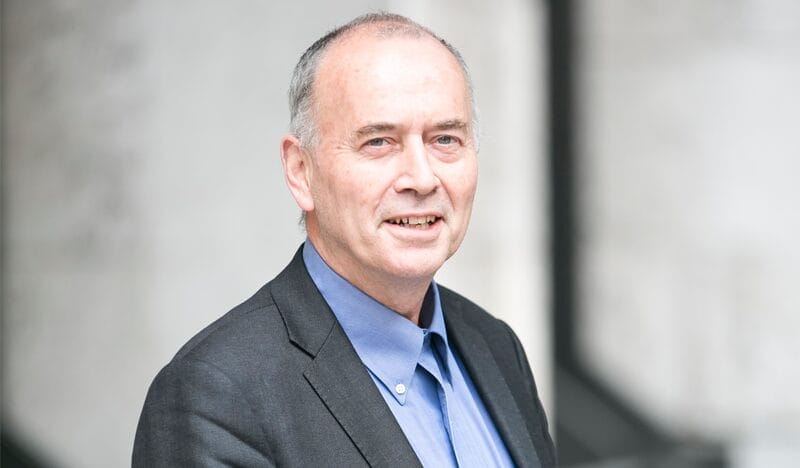
The funds that take a total portfolio approach added 1.8 per cent per annum over 10 years above those that use strategic asset allocation in a recent Thinking Ahead Institute study of 26 asset owners, including the Future Fund. And the systems-thinking TPA approach, with the benefits of dynamism and joined-upness, will help asset owners in an environment of increasing complexity according to the report’s author, Roger Urwin.

Urwin said the institute has research to back up those claims with the results of the TAI’s recent Global Asset Owner Peer Study in conjunction with the Future Fund the latest data in support. The study examined 26 asset owners and found the 36 per cent with a total portfolio approach (TPA) produced superior returns that make Urwin’s estimate of value add look conservative.

“It’s a crude test, but the TPA organisations outperformed the SAA organisations over the last 10 years by 1.8 per cent. And 1.8 per cent per annum is just a very, very substantial margin in our industry,” he said. “Quite honestly I’ve never seen a margin out of one factor as big as that before.”

Urwin emphasised that in part the two portfolio allocation approaches solve different problems.

“SAA basically solved a governance problem, and it did it well. But it didn’t solve the investment problem,” Urwin said. “TPA is a really important design feature by which organisations can probably get better performance.”

The most recent asset owner peer study found that the number of funds doing SAA was half what it was when the same study was conducted seven years ago, and the trend to TPA was continuing, with 20 of the 26 funds stating they were either at their maximum TPA or moving more towards TPA.

Sponsored Content

The benefits of the TPA approach include a more dynamic portfolio and more “joined-upness” which were both useful in a more complex environment, Urwin said.

Managing complexity was the number one concern of the 26 funds, cited by 73 per cent of the CEOs and CIOs who participated in one-on-one interviews.

“When we did this study in 2017 it wasn’t on the list, it wasn’t anywhere,” Urwin said. “But over that time complexity has become one of the most difficult things for organisations to cope with.”

One of the key takeaways from this result, according to Urwin, is that individuals are spending most of their time on business as usual and not enough time thinking about whether their organisations are adapting to the changing world.

The study also showed that 88 per cent of the fund’s investment teams expect systemic risks will grow in number and size. These include geopolitical confrontation and climate change.

Building more resilience including more agile organisational design, better culture and stronger risk frameworks – combined with the systems-thinking TPA approach – will help position asset owners in this environment, he said.

Asset Owner:Future Fund

Leave a Comment

Pension funds confront the question of who owns AI

Pension funds confront the question of who owns AI

As the use of AI within asset owners evolves, organisations are grappling with the governance question of where the strategy and accountability sit. Darcy Song looks at the treatment of AI organisationally within a number of high-profile funds, including OTPP, AustralianSuper, CPP and Norges Bank.

Sort content by

NBIM on AI cultural and organisational integration

By the evening of August 7, the same day GPT-5 was launched by Open AI, NBIM had it available to the entire organisation in a secure and scalable way. Joined on stage by CEO Nicolai Tangen at this year's Arendalsuka, the team behind AI integration explains their aggressive approach.

Responsible AI: Railpen lays out the risks

Much is written extolling the investor opportunities inherent in AI at a time policy makers continue to prioritise deregulation and innovation over safety, but a new report from £34 billion Railpen on the risks AI holds for investors' portfolio companies provides a valuable reality check.

Asset managers can’t have it both ways on sustainability

Asset managers have recently been trying to show that they could cater to all sides, from asset owners that have spent years integrating sustainability into their investment strategies to anti-ESG elected officials in states like Texas. But Hugues Létourneau writes that they can't have it all.

AP4: Why a dynamic, shorter term allocation is paying off

Volatile markets have provided a rich hunting ground and opportunistic best ideas have come thick and fast for AP4’s new five-pronged global allocation made up of systematic equity, currency and rates, asset allocation, hedge funds/external mandates and analysis. Magdalena Högberg explains the risks and opportunities of the best ideas allocation.

Change management in action: CalSTRS lays out how it’s integrating AI

In a recent board meeting, CalSTRS staff outlined how they are integrating AI into the investment process in line with its commitment to be an early adopter of the technology, including writing a set of generative AI policies and guidelines, conducting a cost-benefit analysis and identifying scalable use cases.

Large language models to spark ‘sea change’ in investment analysis

Andrew Lo, finance professor at the MIT Sloan School of Management, believes large language models can bridge the gap between fundamental and quantitative investing in a way that was unfathomable five or 10 years ago, and create ‘quantamental’ investment strategies which would bring together the best of both worlds.

Previous



