
Study gives evidence of value-add from TPA over SAA

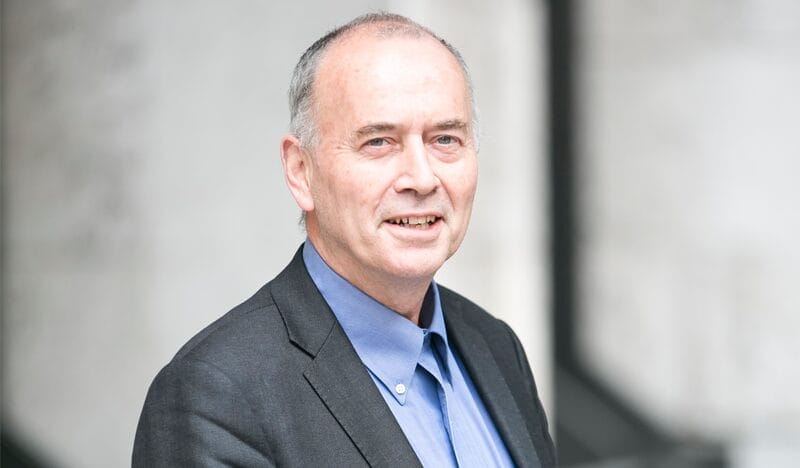
The funds that take a total portfolio approach added 1.8 per cent per annum over 10 years above those that use strategic asset allocation in a recent Thinking Ahead Institute study of 26 asset owners, including the Future Fund. And the systems-thinking TPA approach, with the benefits of dynamism and joined-upness, will help asset owners in an environment of increasing complexity according to the report’s author, Roger Urwin.

Urwin said the institute has research to back up those claims with the results of the TAI’s recent Global Asset Owner Peer Study in conjunction with the Future Fund the latest data in support. The study examined 26 asset owners and found the 36 per cent with a total portfolio approach (TPA) produced superior returns that make Urwin’s estimate of value add look conservative.

“It’s a crude test, but the TPA organisations outperformed the SAA organisations over the last 10 years by 1.8 per cent. And 1.8 per cent per annum is just a very, very substantial margin in our industry,” he said. “Quite honestly I’ve never seen a margin out of one factor as big as that before.”

Urwin emphasised that in part the two portfolio allocation approaches solve different problems.

“SAA basically solved a governance problem, and it did it well. But it didn’t solve the investment problem,” Urwin said. “TPA is a really important design feature by which organisations can probably get better performance.”

The most recent asset owner peer study found that the number of funds doing SAA was half what it was when the same study was conducted seven years ago, and the trend to TPA was continuing, with 20 of the 26 funds stating they were either at their maximum TPA or moving more towards TPA.

Sponsored Content

The benefits of the TPA approach include a more dynamic portfolio and more “joined-upness” which were both useful in a more complex environment, Urwin said.

Managing complexity was the number one concern of the 26 funds, cited by 73 per cent of the CEOs and CIOs who participated in one-on-one interviews.

“When we did this study in 2017 it wasn’t on the list, it wasn’t anywhere,” Urwin said. “But over that time complexity has become one of the most difficult things for organisations to cope with.”

One of the key takeaways from this result, according to Urwin, is that individuals are spending most of their time on business as usual and not enough time thinking about whether their organisations are adapting to the changing world.

The study also showed that 88 per cent of the fund’s investment teams expect systemic risks will grow in number and size. These include geopolitical confrontation and climate change.

Building more resilience including more agile organisational design, better culture and stronger risk frameworks – combined with the systems-thinking TPA approach – will help position asset owners in this environment, he said.

Asset Owner:Future Fund

Leave a Comment

Pension funds confront the question of who owns AI

Pension funds confront the question of who owns AI

As the use of AI within asset owners evolves, organisations are grappling with the governance question of where the strategy and accountability sit. Darcy Song looks at the treatment of AI organisationally within a number of high-profile funds, including OTPP, AustralianSuper, CPP and Norges Bank.

Sort content by

What does it take to succeed at scale?

As the Australian superannuation funds evolve and get bigger they face a question of whether to copy the organisational structures of their bigger, more sophisticated Canadian counterparts, or find their own way that more adequately befits some of their unique features and better serves members.

Costs drive ABP’s switch to passive in public markets

Managing costs is the central driver behind €470 Dutch civil service scheme ABP’s recent decision to switch much of its public market allocation to passive, index-led strategies, according to a spokesperson at the fund. The low-cost strategy at Europe’s largest pension fund is accompanied by sustainability and simplification priorities.

GPTB refines process to promote, even greater, transparency

Increased scrutiny on the transparency of disclosures is driving measurable improvements among some of the world’s largest asset owners, as refinements to the Global Pension Transparency Benchmark methodologies and board oversight boost attention on transparency.

CalPERS’ leadership trio on culture, mission and responsibility

CalPERS stands out among its global peers with three women leading the organisation as chair, CEO and CIO. Amanda White spent time (on zoom) with the group to find out what drives the leadership team and how collaboration and a shared mission are creating an innovative investment culture.

CIOs’ confidence wanes as agility becomes the focus

The 2023 CIO Sentiment Survey, a collaboration between Top1000funds.com and CaseyQuirk, finds asset owners focusing on agility as they observe dramatic market changes not seen in a generation. Only 36 per cent of CIOs are confident they will reach their return targets in 2023.

Why asset owners need to become ‘technologized investors’

The use of technology has the potential to transform the investment industry bringing down the cost of asset management, exponentially increasing innovation and building more resilient and adaptive portfolios. So investors need to move now to keep pace with the change. Amanda White talks to Herman Bril.

Previous



