
Study gives evidence of value-add from TPA over SAA

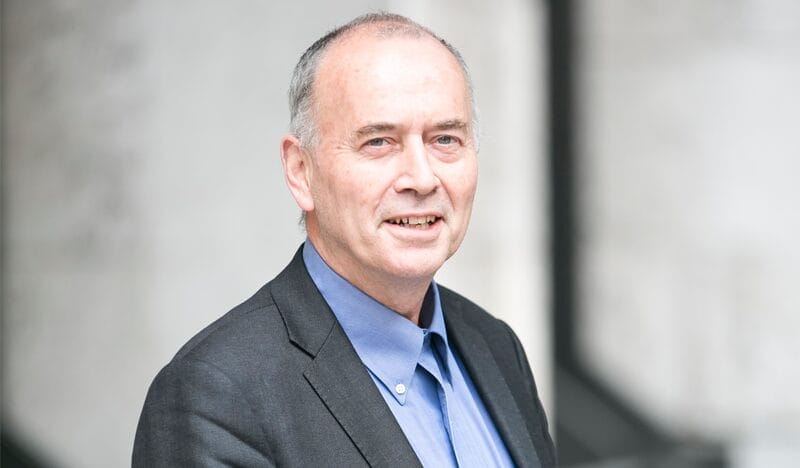
The funds that take a total portfolio approach added 1.8 per cent per annum over 10 years above those that use strategic asset allocation in a recent Thinking Ahead Institute study of 26 asset owners, including the Future Fund. And the systems-thinking TPA approach, with the benefits of dynamism and joined-upness, will help asset owners in an environment of increasing complexity according to the report’s author, Roger Urwin.

Urwin said the institute has research to back up those claims with the results of the TAI’s recent Global Asset Owner Peer Study in conjunction with the Future Fund the latest data in support. The study examined 26 asset owners and found the 36 per cent with a total portfolio approach (TPA) produced superior returns that make Urwin’s estimate of value add look conservative.

“It’s a crude test, but the TPA organisations outperformed the SAA organisations over the last 10 years by 1.8 per cent. And 1.8 per cent per annum is just a very, very substantial margin in our industry,” he said. “Quite honestly I’ve never seen a margin out of one factor as big as that before.”

Urwin emphasised that in part the two portfolio allocation approaches solve different problems.

“SAA basically solved a governance problem, and it did it well. But it didn’t solve the investment problem,” Urwin said. “TPA is a really important design feature by which organisations can probably get better performance.”

The most recent asset owner peer study found that the number of funds doing SAA was half what it was when the same study was conducted seven years ago, and the trend to TPA was continuing, with 20 of the 26 funds stating they were either at their maximum TPA or moving more towards TPA.

Sponsored Content

The benefits of the TPA approach include a more dynamic portfolio and more “joined-upness” which were both useful in a more complex environment, Urwin said.

Managing complexity was the number one concern of the 26 funds, cited by 73 per cent of the CEOs and CIOs who participated in one-on-one interviews.

“When we did this study in 2017 it wasn’t on the list, it wasn’t anywhere,” Urwin said. “But over that time complexity has become one of the most difficult things for organisations to cope with.”

One of the key takeaways from this result, according to Urwin, is that individuals are spending most of their time on business as usual and not enough time thinking about whether their organisations are adapting to the changing world.

The study also showed that 88 per cent of the fund’s investment teams expect systemic risks will grow in number and size. These include geopolitical confrontation and climate change.

Building more resilience including more agile organisational design, better culture and stronger risk frameworks – combined with the systems-thinking TPA approach – will help position asset owners in this environment, he said.

Asset Owner:Future Fund

Leave a Comment

Pension funds confront the question of who owns AI

Pension funds confront the question of who owns AI

As the use of AI within asset owners evolves, organisations are grappling with the governance question of where the strategy and accountability sit. Darcy Song looks at the treatment of AI organisationally within a number of high-profile funds, including OTPP, AustralianSuper, CPP and Norges Bank.

Sort content by

Penn PSERS trims leverage, adds fixed income and hones in on fees

The $71.9 billion Pennsylvania Public School Employees' Retirement System has reduced net leverage, added fixed income and continues to shave costs off its external investment management fees, mostly by reducing private allocations. The trimming and shifting of the portfolio is part of an adjusted SAA responding to ongoing market changes.

HOOPP: A boardroom view of how to approach governance around climate change

Boards face a vital role supporting governance around climate change. The board journey of Canadian fund HOOPP serves as a starting point for other boards feeling equally challenged by the complexity of the issue writes co-chair Gerry Rocchi.

India’s NIIF: A poster child for development finance

Sujoy Bose played a central role in setting up India's celebrated sovereign development fund, the National Investment and Infrastructure Fund. He explains how NIFF's governance combines a perfect combination of sovereign comfort for investors seeking Indian exposure alongside the discipline and freedom to hunt returns.

Navigating the opportunities, potential and risks of AI

The sprawling potential of AI presents asset owners with unprecedented opportunities as investors and as businesses. Asset owners from around the world will gather at Stanford University to hear from visionaries on the practical applications and ethical considerations of AI as a tool to improve decision making and efficiency.

What drives success at CPP Investments’ giant PE portfolio

Size and scale are not always advantages. Against the backdrop of tougher market conditions, CPP Investments' global head of private equity Suyi Kim says successfully managing what could be the world’s largest private equity allocation a program will depend on successfully managing the large team.

MassPRIM’s laser focus on fees

MassPRIM credits a crucial element of its investment success to a laser focus on controlling costs. Costs, alongside risk and return, comprise three philosophical pillars that shape investment and in the fiscal year 2024 cost saving measures include no-fee co-investments in private equity and direct investments in real estate.

Previous



