
RI at core of manager relationships

Responsible investment should be at the core of the relationship between asset owners and investment managers. More and more clients want it, regulators demand it and academic and industry evidence supports it.

Discussions around the integration of ESG issues and selection, appointment and monitoring (SAM) of investment managers have transformed since the Principles for Responsible Investment (PRI) was founded in 2006, when they were considered a “nice to-have”. Now, when leading asset owners work with their investment managers, they are starting to introduce activities such as minimum standards for shortlisting, incorporating clauses into contractual documentation and threatening to terminate relationships due to materialising ESG issues.

Asset managers now expect these types of requirements. But there is still a long way to go until responsible investment is systematically integrated into each step of the SAM journey, and asset owners have been calling out for tools to guide them on this.

That is why this week the PRI published three new guides that focus on each step of the SAM process, and are designed specifically for the PRI’s 550+ asset owner signatories.

The selection guide outlines attributes of leading approaches when selecting asset managers. The appointment guide includes 12 clauses that can be used by asset managers when writing and agreeing contractual agreements. And finally, the monitoring guide includes a set of questions or disclosures that can be used by asset owners during the regular monitoring process.

Encouraging, supporting and collaborating with asset owners is fundamental to the PRI’s theory of change, as this group of signatories plays a key role in influencing the entire investment manager industry. Asset owners, along with their advisers, must be empowered to challenge investment managers on practice, to uncover greenwashing and to really trigger changes in practice across ESG integration and engagement. We therefore hope the guides will support large and small asset owners and their advisers to incorporate ESG factors into how they relate to, co-operate with and challenge asset managers.

Sponsored Content

The guides draw on practices from the 2019 Leaders’ Group, as well as feedback from a series of workshops held during the year, to build a picture of leading practice and initiatives in this area. And I’m pleased to note that these leading practices are not just limited to large European asset owners. Our Asia Pacific workshop discussion on SAM reflects that these are now global practices.

This work program doesn’t stop here. These tools will be followed by SAM introductory guides – these guides have proved popular as a starting point to discover the PRI’s work. We will also be working on mandate design and are interested to hear from asset owners who have started to design mandates which incorporate ESG factors.

I would like to thank all the signatories who contributed to these guides and have been involved in our broader asset owner program. I hope they will contribute to the industry’s technical understanding of responsible investment and empower asset owners around the world to raise the bar on it too, creating a more equitable and sustainable future for our planet.

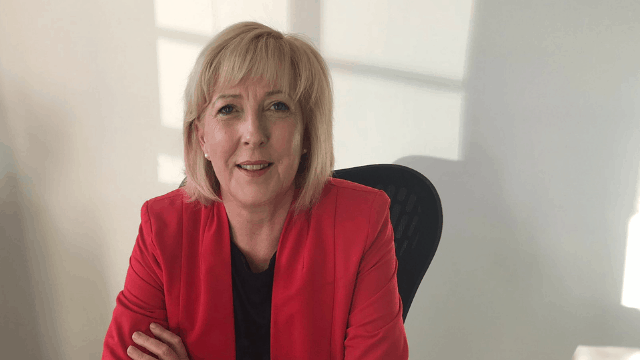
Fiona Reynolds is the chief executive of PRI.

One response to “RI at core of manager relationships”

  1. Toby Belsom

    Hopefully three practical guides and some useful resources for asset owners to develop their relationships with asset managers with respect to what needs to be a core consideration in today’s world…..follow the links for more details

Leave a Comment

Sweden’s FTN focuses on fees and returns in latest procurement

Sweden’s FTN focuses on fees and returns in latest procurement

Lower management fees and higher returns defined the latest selection process at the Swedish Fund Selection Agency in its latest awarding of active global equity mandates to 12 managers, its largest and most ambitious €20 billion ($23 billion) procurement so far.

Sort content by

Not all fees are created equal

Could investment management fees be different? Nick Sykes at Mercer, suggests that an alternative fee structure that focuses on “idiosyncratic alpha” could benefit asset owners and managers.

Ditch managers, invest in corporate America

Warren Buffett says although outstanding managers are invaluable, the net result of hiring professional management is a minus. “More money is made in Wall Street through salesmanship than investment ability”.

We don’t have to be friends

“I don’t have to like you, we don’t have to be friends,” says Chris Ailman, chief investment officer of CalSTRS.

NZ Super: on a higher plain

Self-reliance on asset allocation and employing a partnership style with its managers – based on the mutual exchange of ideas – are the cornerstone of New Zealand Super’s evolved investment approach founded on the confidence of its investment ideas. David Rowley visited the NZ$29.6 billion fund to find out how it does this.  On the climb towards the

Mercer capitalises on manager research

Mercer’s chief investment officer, Russell Clarke, explains how manager research helps create the 200 building blocks of an investment operation that has grown from $20 million a few years ago to $124 billion today and which covers – uniquely – all elements along the fixed income curve.   Starting from scratch in 1996, Melbourne was

USS powers into diversity

In the past few years the £34-billion ($54.7 billion) Universities Superannuation Scheme (USS) has substantially diversified its asset allocation, including a large alternatives allocation, and extended its investment team from 65 to 105. In the latest chapter of the fund’s investment department reincarnation, from October this year a separate but fully owned USS company, USS

Previous