
Ditch managers, invest in corporate America

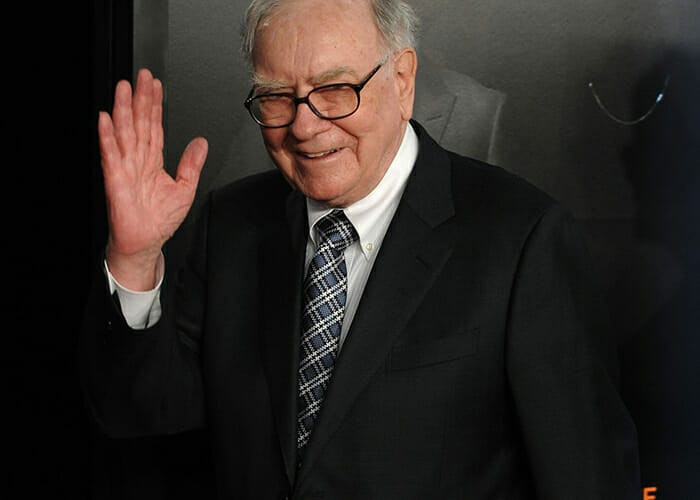
Avoid derivatives, diversify, hire good managers and don’t reward just profit. These were Warren Buffett’s key investment tips for his 40,000 shareholders packed into Omaha’s CenturyLink Centre and the devoted hoard of global followers, tapping into the Berkshire AGM online in an inaugural livestreaming of the event – also broadcast in Mandarin.

Speaking alongside his business partner Charlie Munger, 92, who peered through thick glasses with the same combination of hard-headed capitalism and humour as the Berkshire chairman, it was the investment fees paid by endowments and pension funds to consultants and managers that most riled him.

Back in 2008 in a charity bet “he hopes is an example,” Buffett invested $1 million in a low cost index tracker, wagering his investment would fare better than the same investment in five hedge funds.

Eight years and several hundred hedge funds later, the S&P 500 index fund is beating a portfolio of funds assembled by hedge fund manager Protégé Partners, by 44 percentage points.

“That’s a terrible result for hedge funds but not for their managers,” he observed, in reference to the two and twenty fee structure paid to hedge fund managers – comprising a fee of two per cent of the assets they manage and 20 per cent of all gains.

“The net result of hiring professional management is a huge minus,” he said, adding: “no consultant in the world is going to tell you, ‘Just buy an S&P index fund and sit for the next 50 years’. You don’t get to be a consultant that way, and you certainly don’t get an annual fee that way. Far more money is made by people in Wall Street through salesmanship than investment abilities. That’s my message.”

Sponsored Content

Good managers ‘feel about Berkshire how we feel’

Buffett also eulogised about the importance of good managers in a business. Berkshire relies on its managers to run its 80-odd subsidiary companies. Independent of Buffett, they are the people who produce the money for him to invest and his ability to spot managerial talent has been crucial to his success.

“Outstanding managers are invaluable. We want to align ourselves with them and have them feel about Berkshire how we feel about it,” he said. Their strategy for finding the best is to look for patterns in evaluating humans, and businesses; beware that “very smart people” can do “really stupid things” risking what’s “important to them” for something that’s not; avoid “self-destructive behaviour,” and choose people with patience and opportunism.

Amazon founder Jeff Bezos was singled out for glowing praise in an endorsement that included Buffett’s insight into the impact of the internet on traditional business models.

He said the “Amazon effect” – whereby online shopping and quick delivery are now the norm – is a huge economic trend that wasn’t on the radar 20 years ago and the ramifications of which are just as difficult to predict going forward.

“If I owned a bunch of shopping malls, I would be thinking plenty hard about what they might look like 10 or 20 years from now,” he said.

IBM-aside, Buffett has tended to avoid investing in the technology sector, preferring to own stock in companies whose business he better understands.

His advice in a fast changing world? Hold onto a diversified portfolio of companies.

“We went into department stores but we didn’t think about ourselves as department store guys. We didn’t think of ourselves as steel guys or tyre guys, or anything of that sort. We’ve thought of ourselves as having capital to allocate.”

Derivatives still ‘Weapons of Mass Destruction’

And Buffett added that diversification’s best friend was long-termism. Defending his struggling allocation to American Express, and tougher climes elsewhere in the portfolio like Berkshire’s packaged goods companies, he said: “The world changes and we can’t make a portfolio change every time something is a little less advantageous than it used to be.”

A lot of “great companies” are weaker than they used to be at their peak, he said.

Buffett has beaten the derivatives drum before, once calling the financial instruments “weapons of mass destruction”.

This year he reiterated his warnings despite Berkshire’s own substantial derivative exposure. He expressed doubts at auditors’ ability to effectively police derivative use and “hold behaviour in check;” arguing that derivatives make it difficult to value companies, and that they exacerbate turmoil in a crisis when markets are shut, like after the 9/11 attacks.

“If there is a major discontinuity you will have a lot of problems. When you open back up you have large gaps in the positions.”

And the inevitability of another major attack is something very much on his mind.

“Being in the insurance business, you know someday somebody will pull off something that will be harmful,” he said, calling the likelihood of a cyber, nuclear, biological or chemical attack “one disadvantage to innovation.”

Buffett refused to predict where oil prices – or any other commodity values for that matter – were headed, but said declining oil prices should be good for the US overall as a net oil importer.

“It will ultimately benefit consumers,” he said, although it would be “very bad for some businesses,” particularly hurting capital values.

The duo gave a glimpse into the Berkshire culture where there are no regular meetings, or standard corporate speak.

“We don’t have any committees. We might go to a baseball game together. I’ve seen the other type of operation and I like ours better,” he said.

He also explained Berkshire’s remuneration system which rewards profits alongside growing the business.

“I don’t want people to be worried about the profit that might be impaired by growing the business,” he said.

Buffett has come out in favour of Clinton in the US Presidential race, but he didn’t think America’s next President would dramatically impact Berkshire Hathaway in a pragmatism that encapsulated his overarching message of business as usual for 2016.

“The system works well. It will keep working. No presidential candidate or president will end this.”


Leave a Comment

NY Common joins allocator push on company AI transparency

NY Common joins allocator push on company AI transparency

The $273 billion New York State Common has upped the pressure on portfolio companies to report on how artificial intelligence usage is contributing to layoffs, as AI governance becomes a growing focus in the proxy voting and engagement activities of asset owners.

Sort content by

Dismantling DEI: Investors weigh the risks

Six months on from President Trump's executive order to dismantle once mainstream DEI programs, institutional investors reflect on concerns regarding returns, recruitment and engagement. Top1000funds.com surveys a variety of views amongst the disruption arguing it is an opportunity to reframe the issue and articulate what DEI means.

Lessons in governance at Alaska’s APFC

At a recent board meeting, trustees at Alaska's sovereign wealth fund APFC garnered insights on governance from recent turmoil at PSERS' and Ohio State Teachers.

Behind AustralianSuper’s global expansion

London-based AustralianSuper deputy CIO Damian Moloney oversees the global expansion plans of Australia’s largest superannuation fund. While a global presence has clear benefits for the fund and its members, Moloney’s advice to others contemplating the same is to plan extensively and build early.

Guardians of the Future: The evolution of New Zealand Super

New Zealand Super’s new chief executive Jo Townsend inherits an organisation with a strong culture but facing some challenges posed by rapid growth. An internal project aims to reduce complexity and focus on simplicity for a fund already rated by WTW as operating at global best practice levels.

Alecta doubles down on governance, risk management and culture

Sweden’s largest pension fund, the $126 billion Alecta, has spent much of the last year continuing to work on improving governance, risk management, competence and culture in the wake of a $2 billion loss in 2023 attributable to investments in US regional banks, including Silicon Valley Bank, turning sour.

How UK’s LGPS still has a long way to go creating a Canadian model

The UK’s new Chancellor of the Exchequer Rachel Reeves just returned from a trip to Toronto where was gleaning ideas from Maple 8 bosses on how to emulate a “Canadian style” pension model. But it will require a governance overhaul to create a Maple 8 in the UK.



