
CDPQ’s two-way street of efficient external manager relations

Like all good long-term relationships, external fund manager partnerships should be steeped in trust, open dialogue, patience and new ideas. Mario Therrien, head of funds at CDPQ explains the key to external partnership success and the important role external managers play in plugging knowledge gaps.

The investment funds team at the C$424 billion ($308.7 billion) CDPQ fills an important function for the large Canadian pension plan, aiming to plug knowledge gaps across the organisation.

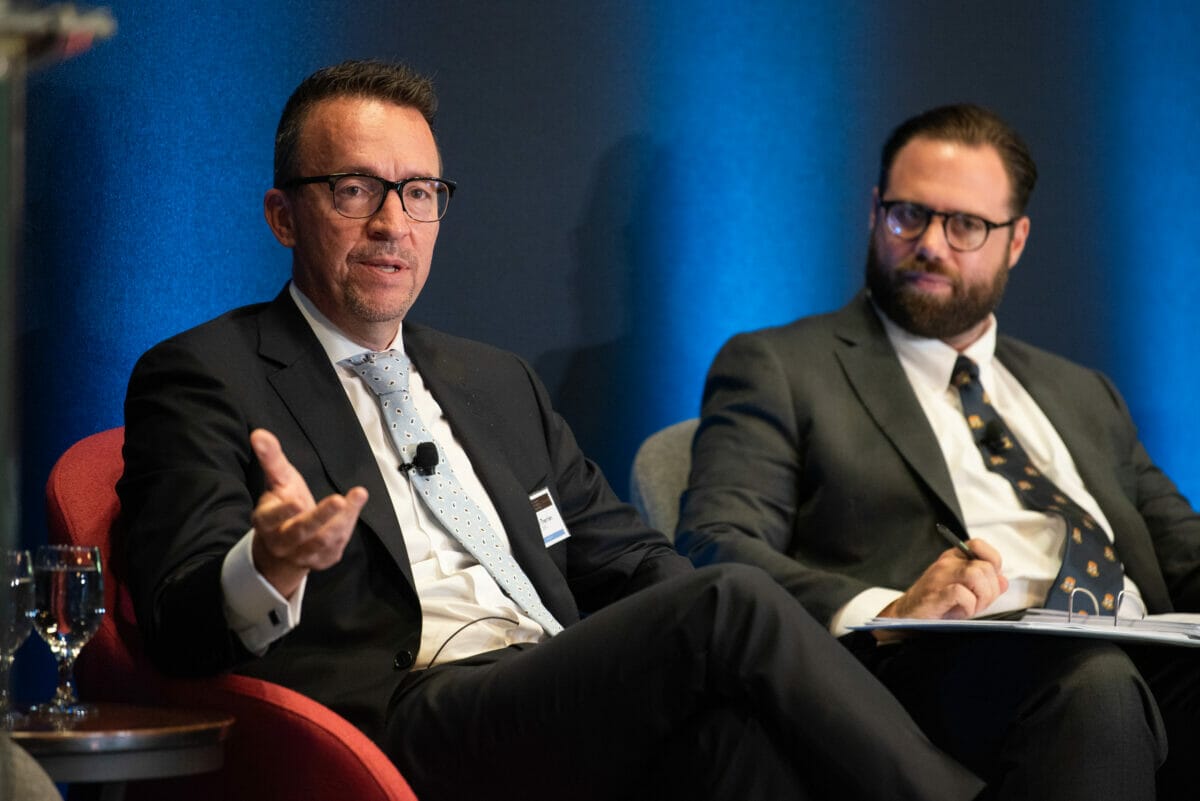
Mario Therrien, who heads the funds team, told delegates at the Fiduciary Investors Symposium at Stanford University that his team plays a crucial role as a manager of knowledge for CDPQ.

“Knowledge for us is a lever of value creation,” Therrien said. “It is important for our team to understand the knowledge gaps of the organisation, and while we better understand these knowledge gaps we work with partners and funds to see how they can help us fill those gaps.”

He said gaps arise within a pension fund not only from a lack of resources, skills, or ability to scale, but also from a lack of innovation.

“Knowledge gaps can also be explained by the challenge of boards to embrace innovation,” he said. “Sometimes it might be more complex to bring innovation in large firms, so we become the group, the engine of connectivity with these funds, to see how we can import innovation within the pension plan.”

Sponsored Content

Thierren’s team actively spends time with the fund’s internal teams to understand where the knowledge gaps are. And then it meets with GPs to understand how they have approached those issues – for example, implementing data science and AI within their own company.

“This allows us to go faster and avoid some of these land mines,” he said. “We organise sessions with these groups with a specific agenda and bring our internal specialists to that. This is what is most important for us.”

The funds team invests about 15 per cent of assets, or C$70 billion, across about 150 partners in public equity, private equity, venture, credit, and hedge funds.

“We do funds for the risk adjusted returns given by the fund managers but also it’s a complement to what we do internally,” Therrien said.

“In private markets one of the theses is to be able to access co-investments we use funds because we really feel we can learn a lot from them, there is a lot of sharing of intelligence. Using what they have to offer outside the risk adjusted returns is key here.”

The funds team of about 50 manages all the external manager relationships centrally and covers quantitative analysis, portfolio construction and investment and operational due diligence. The investment due diligence team is separated into public and private assets to preserve a minimum level of expertise for the team that evaluates and underwrites the managers. Ultimately the fund is looking to hire external managers to complement what it manages internally but there is some overlap and creative tension can arise.

“Usually we use the external funds to expand our bandwidth and be able to scale, that’s really important at our size,” Therrien said.

“But there is a bit of a creative tension between the external and internal managers. It is good to have that but if that creative tension is pushed too much it becomes very toxic. It is my role to make sure we manage that tension among our teams. As long as we understand that we are all in it together to build the best portfolio and there is a lot to gain and learn from the external funds.

“We connect external managers with internal managers, we travel to see our external managers with our internal managers around the world so they understand they can only become better as we are building this relationship.”

Elements of success

Using external managers helps innovation and creativity, builds breadth and scalability and brings new ideas to the internal teams. It also allows for a high level of customisation which Therrien said is particularly prevalent in capital solutions and lending to businesses where opportunities don’t fit neatly into existing asset classes.

It also works well in opportunities around climate change where meeting objectives is highly customised.

“We are very particular as to what we are looking for in a GP, which is why we have so many,” he said. “More and more it’s about finding the skill-set, platform and infrastructure and what they have to offer. When we find the skill-set and transform that into something we would like to have, then it is all about the benchmark and how you pay for that customised portfolio of strategies.”

For the model to work Therrien stresses it is important for the tone to come from the top.

“From the get-go when we created this large funds team at CDPQ about four years ago, the tone came from the top,” he said.

“It was important for our CEO and executive team that we decided to work like that and that it was the best way to execute our strategy with external funds.”

Partnership is a two-way street and Therrien says pension funds need to show managers they will be invested for the long run and be patient about the relationship.

“We need to enter into discussions on what is the strategic orientation and how the manager or fund can play a role and being able to give feedback is important,” he said.

“Partnership has to come from the top, it’s not easy and should not be easy. When it comes from the top, the organisation becomes more focused on the long-term relationship instead of being so fixated on performance all the time.”

Leave a Comment

Sweden’s FTN focuses on fees and returns in latest procurement

Sweden’s FTN focuses on fees and returns in latest procurement

Lower management fees and higher returns defined the latest selection process at the Swedish Fund Selection Agency in its latest awarding of active global equity mandates to 12 managers, its largest and most ambitious €20 billion ($23 billion) procurement so far.

Sort content by

How to find manager skill

The crisis has accelerated the industry’s adoption of technology for manager due diligence an area where it has traditionally lagged, according to founder of Inalytics Rick di Mascio who after 30 years in the job knows how to identify manager skill.

RI at core of manager relationships

When leading asset owners work with managers, they incorporate ESG issues into contracts and threaten to terminate relationships due to materialising ESG issues. To help make ESG considerations mainstream in investment management contracts the PRI has released a guide for investors on the manager selection and monitoring process.

APG, NPS collaborate on private assets

Two of the world’s largest pension funds, the $626 billion Dutch APG and the $660 billion National Pension Service of South Korea (NPS), have joined forces in a partnership to invest in private assets including infrastructure and private real estate.

Harvard endowment goes net zero by 2050

The Harvard endowment is about half way through its transition to external investment management and will work with its service providers to implement the university’s new directive, to position the portfolio in line with net-zero greenhouse gas emissions by 2050.

Oregon PE revamp shakes off GFC legacy

Oregon Investment Council has committed to investing $3 billion a year in private equity, with the smooth pacing strategy part a response to the fund’s overweight position to poor performing vintages as a result of its allocations before and after the GFC. The investor is also focusing on manager relationships with a focus on accessing new relationships and upsizing the best existing ones; and a new strategy that sees no provider in charge of more than 5 per cent of the portfolio.

India’s NIIF gathers steam

India’s new sovereign development fund has raised a further £1.3 billion, on top of the government's $3 billion, to finance domestic infrastructure and growth. Key to its success is the unique investor-owned structure, similar to Australia's IFM Investors, and generous co-investment terms.

Previous