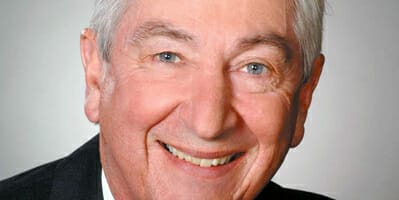

Invert the business model to focus on members: Ambachtsheer

There is a lot more work to do in raising the quality of governance of pension boards around the world, Keith Ambachtsheer told a conference of Australian superannuation fund trustees and staff last week.

“We have to stop thinking about organisational needs and think about member needs. The business model must invert from serving organisational needs to serving member needs. That is the mission of the business and you should not forget it. It is not about achieving market share, it is not about having the highest returns in the league tables,” he told delegates at the Australian Superannuation Fund Association conference in Melbourne.

“To do that requires strong governance. A good board is able to ask the right strategic questions. They have to ask what they are doing to reach their goals.”

Ambachtsheer, who is president and founder of KPA Advisory Services and director emeritus of the Rotman International Centre for Pension Management,  says an effective board requires people who are both publicly minded and have the collective requisite skill and experience to do the job.

Ambachtsheer cited a periodic survey of 80 pension fund organisations which were asked to rank themselves by 23 different metrics in 1997, 2005 and 2014. In all three surveys board selection process ranked low, he said.

“Some of the comments received from funds who answered the survey were that ‘The board selection process for our organisation is seriously flawed’, and ‘we have a wonderfully dedicated board, but they fly just above the tree tops rather than at a strategic fiduciary altitude’.

Sponsored Content

“Clearly the message is that we are not done yet in raising the quality of governance of pension boards around the world. There is more work to be done,” Ambachtsheer said.

Ambachthseer reiterated that the more funds know about their members the better they can meet their needs.

“Funds should build a database on member facts and attitudes. They should provide members with pension targets and investment plans on how to get there and then provide regular progress reports towards targets, and they need to develop longevity insurance options for the decumulation phase. All this will create a strong connection between an organisation and its membership,” he said.

“If we have certain goals to achieve for our members through income replacement or the ability to maintain their standard of living, that should become a central focus for organisational success. You also need to think about the investment and members services’ program. Are we giving value for money? We need more feedback loops,” he said.


Ambachtsheer began his presentation quoting from Peter Drucker’s 1976 book “The Unseen Revolution”, whereby Drucker listed six metrics, which Ambachtsheer believes are still relevant to be a good performing fund today:

1 Mission clarity

2 strong governance

3 strong member interface and interaction with the members

4 sensible investment beliefs

5 competitive compensation for its own professionals

6 strong feedback loops.

“I believe those are the key performance metrics, the six key success metrics. We are getting better over time, but we have got a long way to go,” he said.

In terms of sensible investment beliefs, Ambachtsheer gave delegates a guide or starting set of beliefs:

  • We articulate a clear investment stance and live it
  • We have separate programs for long term wealth creation and providing short term payment safety
  • Our long term wealth creation program invests in real businesses
  • Our primary asset is human capital
  • We balance conviction and humility.

Ambachtsheer estimates, very roughly, that there is probably 75 basis points of savings if funds followed this five points.

The barriers to success, he says, include sensitivity to short term peer relative performance, an inability to insource high cost investment programs, and an inability to create success metrics for long term wealth creation programs.

“There needs to be a set of metrics where the board can say how the long term investment program is doing,” he said.


Leave a Comment

NY Common joins allocator push on company AI transparency

NY Common joins allocator push on company AI transparency

The $273 billion New York State Common has upped the pressure on portfolio companies to report on how artificial intelligence usage is contributing to layoffs, as AI governance becomes a growing focus in the proxy voting and engagement activities of asset owners.

Sort content by

CalSTRS positions for the future with new investment team structure

CalSTRS has restructured the investment team with an eye on its future growth and the best people to achieve its mission. This includes examining the complexity of the portfolio and the skills required to manage it effectively in the future. Amanda White spoke to deputy CIO, Scott Chan.

Don’t ignore culture in trying to solve the investment puzzle

Better internal investment integration and co-ordination will underpin long-term returns for two of the world’s largest investors, CPP and CalSTRS, but they’re also closely focused on how cultural issues – including diversity and team-building – affect whole-enterprise performance.

Nordic countries top Mercer CFA Institute Global Pension Index

Iceland, the Netherlands and Denmark topped the Mercer CFA Institute Global Pension index for the second consecutive year, each earning an A grade for their sustainable and well-governed pension systems.

There is no substitute for due diligence

Principal-agent problems in asset management means there is no substitute for sound due diligence of asset managers. But how do you know if a manager is aligned with your long-term goals? Ariel Babcock and Matthew Leatherman from FCLTGlobal have some tips.

What long-term looks like: Tips for structuring mandates

The third edition of FCLTGlobal’s report, Institutional Investment Mandates: Anchors for Long-Term Performance provides a toolkit for mandate processes and behaviours to reorient towards the long term, including a rethink of KPIs that asset owners can use to evaluate their managers.

Alaska’s recruitment challenges threaten performance and reputation

Recruitment and retention of investment and operations staff at the $79.4 billion Alaska Permanent Fund Corporation is now so acute the fund is exposed to operational risk with potential adverse impacts on performance and corporate reputation.

Previous



