
CDPQ balances equity gains with real estate woes

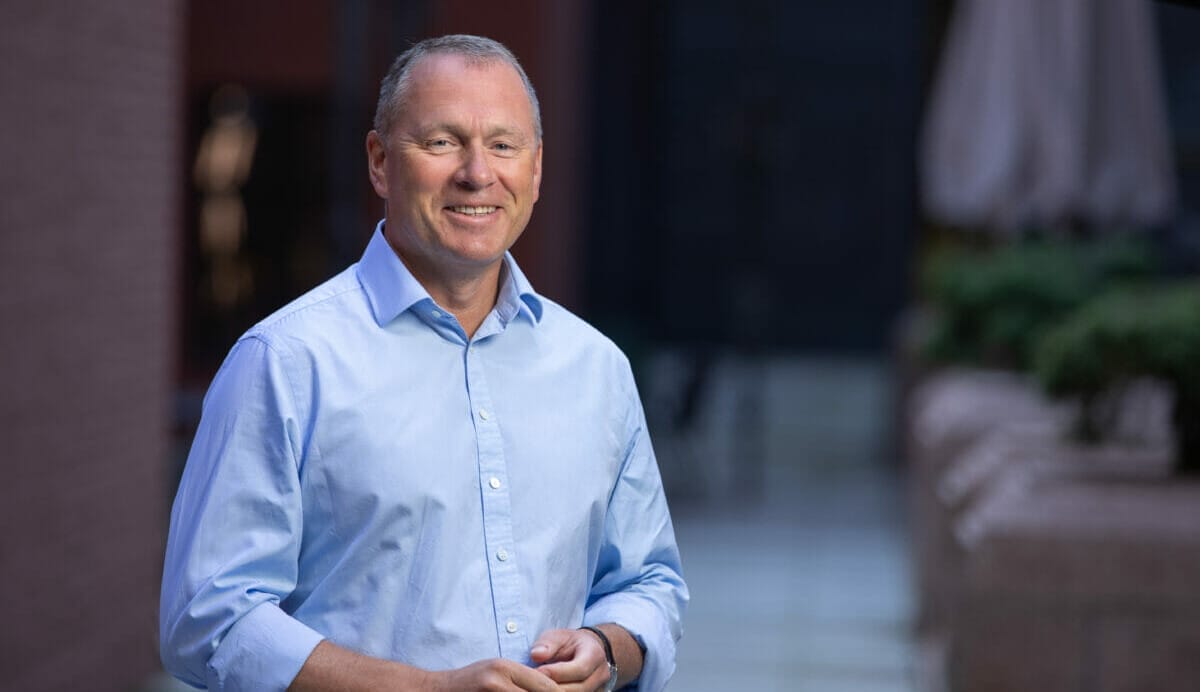
Charles Emond

Equity and infrastructure drove gains at C$473 billion ($329 billion) Caisse de Depot et Placement du Quebec (CDPQ), the Montreal-based asset manager which oversees the investment of Québec Pension Plan for more than six million Quebecers alongside many other pension and insurance plans.

CDPQ’s public equity portfolio was the standout performer due to the investor’s increasing exposure in recent years to growth and tech stocks that have been propelled by advances in AI. CDPQ also attributed gains to “holding the course on a diversified approach” and  “quality execution by portfolio managers.” The 25.5 per cent return surpassed the benchmark index’s 24.1 per cent.

Over five years, the portfolio’s annualised return was 10.5 per cent, just below the index’s 11.1 per cent, a difference CDPQ attributed to its significant underweighting in major US tech stocks in 2020.

Private equity shook off the impact of high interest rates that had impacted the portfolio in 2023 to rebound in 2024 generating a return of 17.2 per cent. CDPQ linked gains to sustained growth in the profitability of portfolio companies, particularly in the industrial and consumer goods sectors.

Infrastructure was another strong performer, returning 9.5 per cent off the back of the “excellent performance” of port, energy and telecommunications assets. Recent strategies in the allocation have included significant sales in the airport sector in Europe.

Amidst ongoing geopolitical uncertainty, Charles Emond, CDPQ’s president and CEO said diversification is more important than ever. 

Sponsored Content

“While uncertainty is high, particularly due to ongoing tariff negotiations, discipline and the sound diversification of our portfolio will remain key to delivering the long-term returns our depositors need. Their plans remain in excellent financial health, and our results for one, five and ten years have made a significant contribution, despite the turbulence,” he said.

Real estate woes

On the downside, CDPQ’s latest results flag “persistent headwinds” in the $41.8 billion real estate allocation given the fund’s above benchmark exposure to US offices in poorly performing cities New York and Chicago. Real estate suffered a 10.8 per cent loss, worse than the portfolio’s 2023 loss of 6.2 per cent and is the third loss in five years. Over five years, the portfolio’s annualised return was -2.2 per cent below the index’s 0.7 per cent return.

In contrast, CDPQ said the logistics sector and shopping centres have been resilient despite the global slowdown.

In January 2024, CDPQ announced plans to bring its real estate subsidiaries in-house to cut back on costs. In an ongoing process (it will take over two years), CDPQ has been integrating Ivanhoé Cambridge and Otéra Capital Inc. into its investment and corporate services teams, targeting an annual saving of C$100 million. The strategy also aims to increase the focus on investment expertise, maximise business relationships and partnerships and strengthen analytical capacity.

The latest losses come despite enduring efforts to overhaul the allocation. In 2019, two-thirds of CDPQ’s real estate allocation with Ivanhoe Cambridge was invested in office and retail assets. By 2023 two-thirds was invested in logistics and residential real estate alongside a growing allocation to alternative life sciences facilities and office and retail assets are in the minority in a complete reversal.

Focus on Québec

Investments in Québec have reached $93 billion, bolstered last year by C$4.3 billion in new investments and commitments that put the fund close to achieving the ambition of $100 billion in 2026.

Some of its investments in the province last year included a C$500 million investment to support National Bank of Canada in acquiring Canadian Western Bank and a C$158 million investment in WSP Global to help it buy U.S.-based Power Engineers. Elsewhere, CDPQ invested in Nuvei, a technology providers in the global payments industry, and QSR International, a key maritime logistics player headquartered in Québec City.

Less successful investments on home soil comprise a $150 million investment, now written down, in electric vehicle battery maker Northvolt. The Swedish firm, which announced plans in 2023 to build a factory outside Montreal, filed for bankruptcy protection last year.

Other Canadian investors that ploughed into the company include C$138.2 billion Ontario Municipal Employees Retirement System and C$699.6 billion Canada Pension Plan Investment Board and the C$77 billion Investment Management Corp.

Leave a Comment

Returns, resilience and reinvention: What private markets’ top brass are worried about

Returns, resilience and reinvention: What private markets’ top brass are worried about

Senior executives from some of the world's largest private market managers gathered in Berlin this month with a collective understanding: managers who move slowly on AI face not just weaker returns but the risk of owning businesses that have been competitively displaced before they can exit.

Sort content by

High-stakes succession at US Fed brings investors to crossroads

Donald Trump’s next appointee as the Federal Reserve chair will be a defining moment for global investors, potentially escalating current market caution into a widespread exit from US assets, warns leading Stanford economist and finance academic Ross Levine. He outlines how the choice would impact the US debt and currency.

GIC ups US equities allocation despite valuation worries

Singapore's GIC boosted its US equities allocation in the year to March 2025 despite the expectation that high valuations could "provide a challenging backdrop for forward returns”, according to the fund's latest annual report released on Friday. 

Sydney University’s private asset portfolio under scrutiny for defence ties

An external panel has recommended that Australia's Sydney University minimise investments in defence and security-related industries within its A$770 million ($510 million) private asset portfolio rather than divest and book a A$67 million loss. 

KIC eyes pivot to total portfolio approach in latest review

The $206.5 billion Korea Investment Corporation has become the latest asset owner weighing a shift into the total portfolio approach in an attempt to boost investment returns. After putting out an RFP for a consulting partner in May, it will conduct a review into early next year about TPA's feasibility.

Real assets, public equity the key as Oregon PERS gets climate mandate

The US state of Oregon is on the cusp of passing a legislation that will require the $100 billion Oregon Public Employees Retirement System to invest in clean energy wherever possible as it aims for a net-zero portfolio by 2050.

Mega pools: Brunel and ACCESS become casualties in ongoing LGPS shake-up

Brunel Pension Partnership, renowned for its leadership in sustainable investment, and ACCESS have been told to merge with other LGPS pools in the latest step on the UK government's quest to create mega pools and boost investment in so-called productive assets.

Previous