
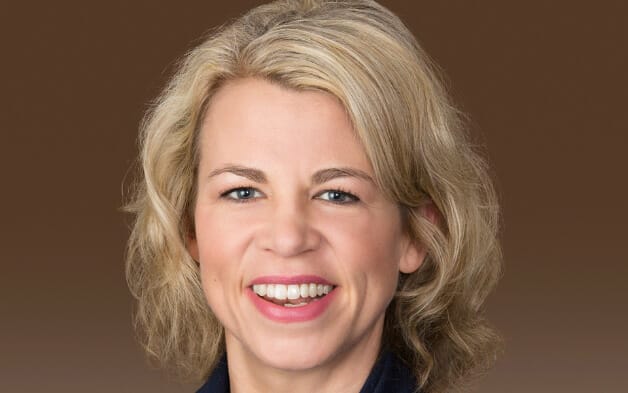

Last month, Allyson Tucker, chief executive officer of the $192 billion Washington State Board of Investment, was invited to Illinois by long-standing private equity partner KKR to mark the sale of one of its portfolio companies. After seven years, KKR was selling its stake in C.H.I. Overhead Doors, a garage door business, for $3 billion.
Countless numbers of companies have passed in and out of WSIB’s $44.9 billion private equity portfolio since it began investing in the asset class in the 1980s, but C.H.I was different. The company’s 800 employees had all been made owners in the business when KKR bought it back in 2015, and Tucker was in town to celebrate their windfall.
At exit, in addition to around $9,000 in dividends earned since 2015, C.H.I employees received, on average, $175,000 on their equity stake with the most tenured employees earning substantially more. In stark contrast, only a select few portfolio company executives cash in with a traditional private equity model.
“It was emotional,” recalls Tucker who became chief executive in January, an internal hire after 12 years on the investment team, most recently as CIO.
“The financial impact for these frontline workers was truly transformational. They received dividends, multiples of their annual salary and they get to remain in the company.”
Alongside the financial gains, she heard how broad-based employee ownership had given C.H.I staff a much greater stake in company decisions, workplace dignity and transformed health and safety at the company.
Pete Stavros, KKR’s co-head of the Americas, has been pioneering broad based employee ownership in private equity for a while and C.H.I employees weren’t the first to benefit from the inclusive stock ownership model. But after seeing its impact for herself, Tucker now wants WSIB’s other 40-plus private equity partners to consider the same model.
“We are encouraging our partners to explore bringing ownership all the way through to the front line. It really is a win-win if it’s executed properly: more profitable firms that give access to one of the greatest wealth generation mechanisms we have in the US.”
That encouragement starts by steering WSIB GPs towards Ownership Works, a not-for-profit set up by Stavros earlier this year that provides a toolkit for GPs, LPs, and banks on the process.
“Nineteen GPs have already signed up; each one has committed to transitioning three portfolio companies every year or two and we are targeting $20 billion of wealth for lower income workers over the next decade. We are really trying to create a movement,” she says, explaining that the structure keeps control in the hands of GPs: there is no regulatory control vested with employees and it is not an employee stock ownership plan.
Influence
WSIB adding its weight to the cause won’t go unnoticed in the industry given the pension fund’s outsized and celebrated portfolio, part of a huge 48 per cent target allocation to private markets. And as more pension funds like WSIB increase their allocations to private equity, reducing public equity exposure where companies are more subject to governance oversight and shareholder pressure, the ability of LP investors to influence ESG is keenly watched.
All the while manager selection will come under more scrutiny as pressure on private equity returns grows and studies like Harvard Business School’s George Serafeim and others show that ESG integration can lead to outperformance.
Tucker, for one, is keenly aware that rising interest rates are starting to have an impact on leverage levels in the asset class, creating a differentiator.
“Rising interest rates will make things much more challenging for private equity,” she says. “Our priority is to make sure our managers are evolving in a way that allows them to respond. On average, it is very difficult for private equity managers to outperform markets on a leverage-adjusted basis, but through manager selection, you can create that alpha.”
Environmental
Tucker is not just focused on how broad employee ownership models could transform private equity’s integration of the S in ESG. She also wants private equity managers to do much more to integrate the E given private equity’s poor track record when it comes to tackling climate change.
For her, all those red flags represent potential currents of value creation and an opportunity to differentiate.
“I would say there is a lot of opportunity for private equity partners to outperform in climate. Those red flags might be what we consider the advantages,” she says.
WSIB’s investment in three TPG Rise funds and one climate fund run by the private equity group which invests in companies driving social and environmental impact alongside returns, encapsulates that opportunity.
“It’s the first institutional scale private equity fund with private equity returns also targeting social impact of its kind,” she says.
Still, the allocation also underscores WSIB’s inherent caution regarding these kinds of investments. The initial allocation to the three TPG Rise funds falls under its innovation fund program that tests out ideas not covered by the main investment program.
“We might not have made the leap to the social impact side if we’d been limited to our main investment programs,” she says. “It’s still early days, private equity takes a long time to prove successful, and we are only five years into these TPG programs.”
She adds: “It may take us more time to move forward on climate integration than some of our peers, but we will be well served in the long-run; we are going for full integration, but it takes time.”
WSIB’s total exposure to fossil fuels stood at $5.3 billion or 3.3 per cent of the 17 commingled retirement fund assets at the end of last year. During 2022, that exposure figure has risen because of the jump in oil and energy prices.
Outlook
Tucker sees much uncertainty ahead from the end of QE to inflation; shifting geopolitics and climate change. But she believes WSIB’s strong tolerance for market volatility and ability to respond rather than be reactive will stand it in good stead. Reducing the public equity allocation in favour of private real estate, private credit and allocations to tangible assets has built in diversification and inflationary protection and she isn’t planning any major tactical changes, although the fund is holding a little more cash than normal.
She can rely on WSIB’s governance and single mission; lessons learnt from the past and a swathe of new talent and fresh ideas as a new team in key leadership roles take the reins.
“We do get through things right; we do come out on the other side. We do make it through,” she concludes.








Leave a Comment
You must be logged in to post a comment.
Login