
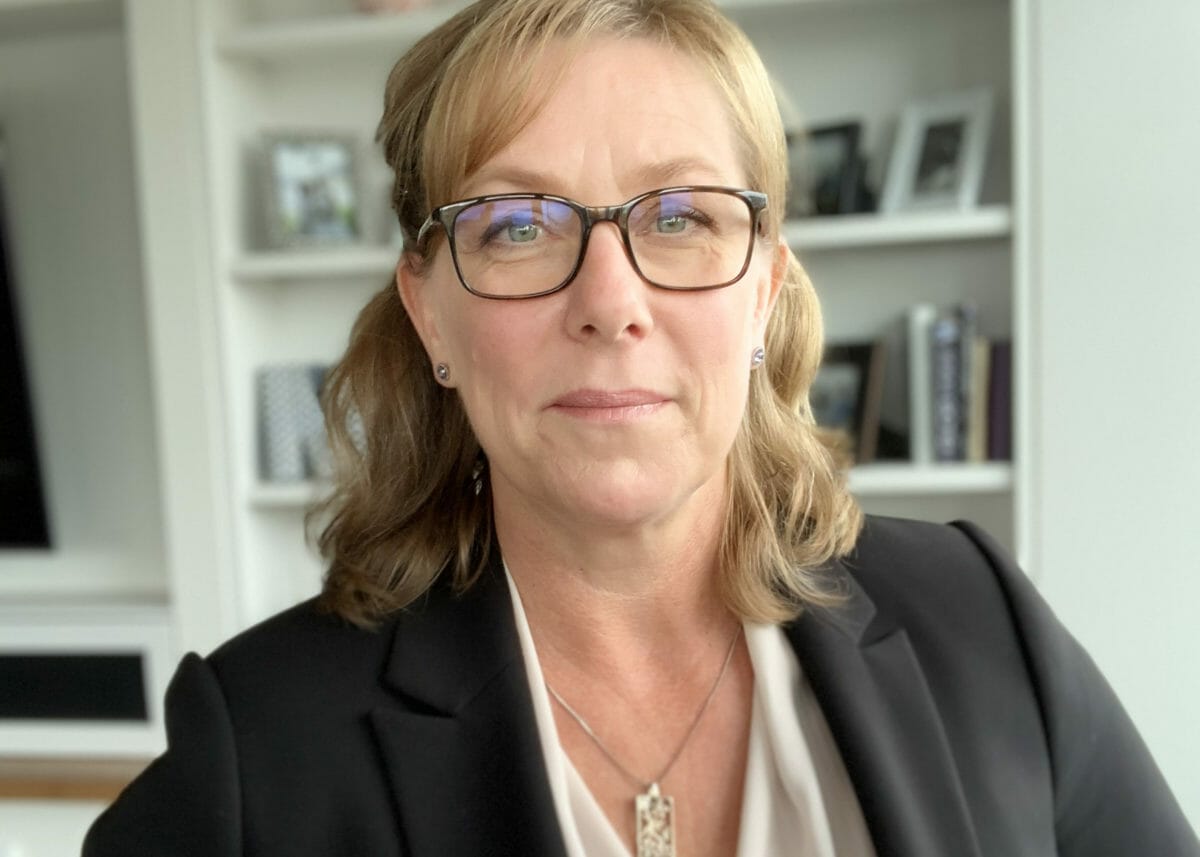

Michelle Ostermann, managing director of investments at the £30 billion Railpen discusses the pension fund’s continued evolution including ongoing organisational change, more assets in-house, a new investment decision making framework, and an increased allocation to private assets.
Michelle Ostermann had only been in the role of managing director of investments at Railpen a few months when the COVID-19 economic crisis hit.
“So it was a real trial under fire,” she says. “But looking back now I realise it was a strong opportunity to understand the portfolio and its fortitude to withstand events like this and watch the team in action. So I look back and see it as a relatively positive experience.”
It’s testament to Ostermann’s mind-set that she can view such an extraordinary event – potentially testing the portfolio in real time more than any potential theoretical scenario – as a learning opportunity, as well as the subsequent debrief of the portfolio, the decision making and how the team handled the situation.
Railpen, which manages £30 billion ($39 billion) for the Railways Pension Schemes in the UK, has been under a journey of organisational change for some years now. Ostermann was originally hired in January 2019 as chief fiduciary officer, a role she sees really sets the pension fund apart from the pack, at least in the UK.
The fiduciary management role shapes the pension fund’s top-down decisions including asset liability management and actuarial work, asset allocation and risk tolerance as well as ESG considerations and client and stakeholder management. The CIO’s investment team then executes the bottom up implementation through the management of the pooled funds.
“This combination of fiduciary and investment teams is what differentiates us,” Ostermann says.
“Railpen is strong in its approach to how it manages such a large number of distinct complex client schemes and that is the cornerstone of what makes us most unique and is given a tonne of priority. The concert and hand-off between the two teams [fiduciary and investment] is really important, and together it makes for a fairly sophisticated investment management approach.”
Mads Gosvig, formerly head of investment strategy at ATP in Denmark, has been appointed to the chief fiduciary officer position when Ostermann moved into the MD role in December after the retirement of Julian Cripps.
“Pensions in the UK are becoming more challenging. As more schemes are closing, and more risk management is required, we will need that fiduciary team even more,” Ostermann says.
From an internal organisational point of view, there’s been a lot of change at Railpen in the last little while. In addition to Gosvig’s appointment, in the past year there has been a new trustee board chair, a new investment board chair, a new head of strategy and planning as well as the boosting of some of the internal teams such as the real assets team with new hires.
A focus on culture and building the team has been a key effort of Ostermann’s since she has been in the new role.
“Nothing matters more to me than culture,” Ostermann says. “What attracts me to a business is the culture and the purpose that underlies why we investment. Most people in our organisation are attracted to that, it’s an extra special motivation and pride in what we do.”
Diversity and inclusion has also been front and centre for Ostermann as she’s put the management team together, which now consists of four women and four men.
“The majority of my role as a leader is shaping those intangible aspects of a business, and trying to patiently and firmly encourage and create those dialogues, and give permission for the business to go through difficult conversations and opportunities to look, work and act differently,” she says.
“You can often see that dynamic inside of the team, and it’s a really enjoyable experience, they have enormous respect for one another.”
Soon after the onset of COVID-19, Ostermann said the investment board was convened quickly to discuss the impact on the portfolio and what the future looks like.
At a strategy day called “Post-COVID: So what?” the team looked at the risks and opportunities, emerging investment trends and themes, and how those should or could be implemented through changes to pooled fund strategies or allocation shifts.
“Looking at a single asset and a single deal is always fun. But as a big investor with long-term patient capital we make or break on those long-term strategic positions. We put a lot of emphasis on things like that,” Ostermann says. “The central theme was to think carefully about inflation.”
In addition to the inflation/deflation/reflation debate, the team looked at the impact of long-term trends on the portfolio such as the resilience of companies, the emphasis on localism rather than globalism, remote working and the impact on real estate, the impact of the leisure and travel industry disruption, as well as regulatory risk and potential subsidies.
“Our CIO Richard Williams has really been the star of the show leading us through this event,” she says. “We have an exceptionally strong investment team and I feel very confident about the positioning they are doing to take us into the next decade.”
During the volatility of March and April Railpen did not make any stark or extreme changes to the portfolio.
“We were very careful not to over-react to the short-term volatility, and we didn’t make any material changes to the portfolio. It was more us thinking about where we find opportunities and what we might de-emphasis, or look to divest from,” she says.
One example of that is in the real estate portfolio where a shift out of retail continues. The team has also been looking more seriously at distressed debt, may increase its infrastructure commitments, and has been looking to increase its allocation to fundamental equities.
“We believe there will be an increased opportunity to identify potential winners/losers given the environment so we will be increasing our allocation to internal fundamental equities,” she says.
Ostermann joined Railpen from British Columbia Investment Management Corporation where she was senior vice president responsible for investment risk, strategy, research and corporate relations. She’s bringing a number of the positive attributes of the pension funds from her native Canada to the UK including an attention on governance, private assets and inhouse management.
“Railpen’s vision is to have more of those characteristics, and I will leverage what I do know and make it homegrown, apply what is relevant and put a UK spin on it,” she says.
Most recently the fund has been working closely on governance aspects including some new thinking on risk management, and the board recently approved a new framework for investment decision making.
“We are starting to rethink governance as a whole. Given our recent transformation and the massive shift in how we manage assets, we’re looking at what that means for our governance and what we need to modernise.”
Railpen manages pensions on behalf of 107 different clients and Ostermann says the Canadian’s multi-client model – seen in BCI but also funds like AIMCo, CDPQ and IMCO – is what Railpen does just as well.
“We have quarterly pension committee meetings for a quarter of those clients, so we have had to build much of a front-office function for a traditional asset manager. Through our fiduciary team we bring that multi-client perspective and stakeholder knowledge into the investment business.”
To listen to the full interview and other podcasts in the Fiduciary Investors Series, click here.








Leave a Comment
You must be logged in to post a comment.
Login