Railpen: good partners add skills

Earlier this year, RPMI Railpen, investment manager for the £28 billion ($37 billion) pension fund serving the UK’s railway workers, embarked on a joint venture with the $66 billion Alaska Permanent Fund and Kuwait’s Public Institution for Social Security (PIFSS) to better access private markets.

Like many other asset owners, the trio have found competition and elevated prices has made accessing private markets difficult. The hope is that combining firepower and expertise in a joint venture will open up more opportunities. The joint venture, Capital Constellation, will invest in private equity and alternatives managers, and plans to deploy more than $1.5 billion in the next five years. The three funds manage about $200 billion in assets between them.

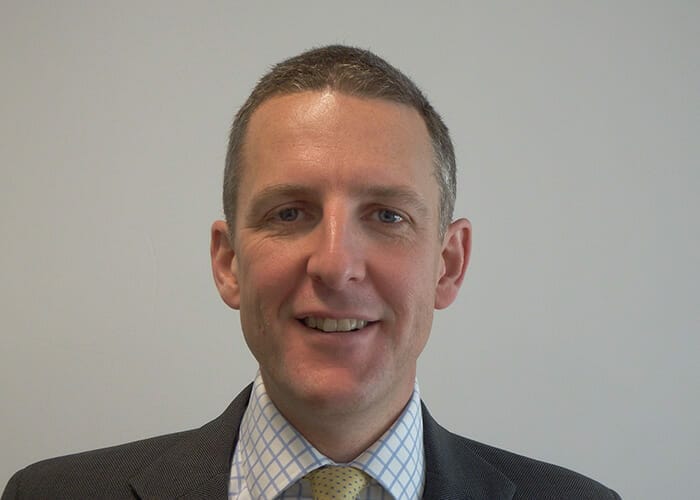
The project has revealed important lessons, Railpen chief investment officer Richard Williams says. First, asset owners should partner with investors that bring different elements to the party. In Railpen’s case, this means finding partners that can complement its ESG experience and UK presence, he says.

“It is also about finding heterogeneous skill sets that blend together,” Williams says. “There are lots of hurdles to jump through and we would like to do more initiatives like Capital Constellation, but only time will tell if we do. It won’t be for lack of intention.”

Preparing the ground at the beginning of a collaboration in case things grow tricky and parameters shift in the future is important as well, he says.

“It is a little bit like a prenup [prenuptial agreement],” Williams says. “If it doesn’t work out, all parties need to know how they can separate without it getting too acrimonious. I’m not suggesting the best marriages have to have a prenup, but sometimes love isn’t enough.”

Sponsored Content

For more on Railpen’s strategy see our profile Railpen reaps benefits of in-house team.

Leave a Comment

How CPP is evolving risk management for a faster, more interconnected world

How CPP is evolving risk management for a faster, more interconnected world

In an environment where multiple risks are emerging and their effects are compounding on the portfolio, CPP Investments' chief risk officer Priti Singh says the $572 billion fund is rethinking risk management from the ground up, shifting from reaction to preparation and embedding risk thinking earlier in investment decisions. She speaks to Amanda White about the fund's risk approach.

Sort content by

Dutch fund bolsters bonds, chills on bricks

Things are suddenly looking cheerful again in the world of Dutch pensions. The country’s famous tulip fields might not be set to bloom until April, but investors already have a harvest to delight at from a good year of investing. For instance, Hans de Ruiter, chief investment officer of the €2.5-billion ($3.36-billion) TNO pension fund

How is the Tesco fund faring aged one?

According to the latest figures, an ambitious turnaround plan at the United Kingdom’s biggest supermarket chain, Tesco, has helped reverse falling profits. Last year the retailer, one of Britain’s largest private sector employers and a landmark in every town since founder Jack Cohen opened his first store in North London in 1929, also changed strategy

Finnish fund diversifies out of Europe

Over the past five years, Finland’s 5.4 million people have watched with alarm as the eurozone they joined as founder members has descended into financial turmoil. So it is no surprise that Keva, which manages €34.4 billion ($47.1 billion) on behalf of Finland’s municipalities, as well as administering state and Evangelical Lutheran Church of Finland

Vita Sammelstiftung puts bond holdings under microscope

Samuel Lisse, chief executive of Switzerland’s Vita Sammelstiftung (Vita), is currently in the process of hiring a new head of investment. The new appointee will have plenty resting in the in-tray, it appears, as she starts to assist the investment committee that governs the strategy of the 8.5-billion-Swiss-franc ($9.1-billion) joint foundation. That is not because

ATP reunites alpha and beta after 6 years

Alpha and beta rely to a large extent on exposures to systematic risk factors, so goes the “2013 thinking” of ATP in reversing the decision to separate alpha and beta in its investment portfolio six years ago. ATP has separate hedging and investment portfolios, with the hedging portfolio significantly larger at around DKK 670 billion

Environment Agency fund: a natural progression

It’s hardly surprising that a pension fund for employees working for an organisation charged with reducing climate change and its consequences invests according to strict green criteria. Yet the investment strategy of the United Kingdom’s £2.1-billion ($3.29 billion) Environment Agency Pension Fund (EAPF) definitely has the capacity to surprise. The EAPF posted a total return

Previous




